

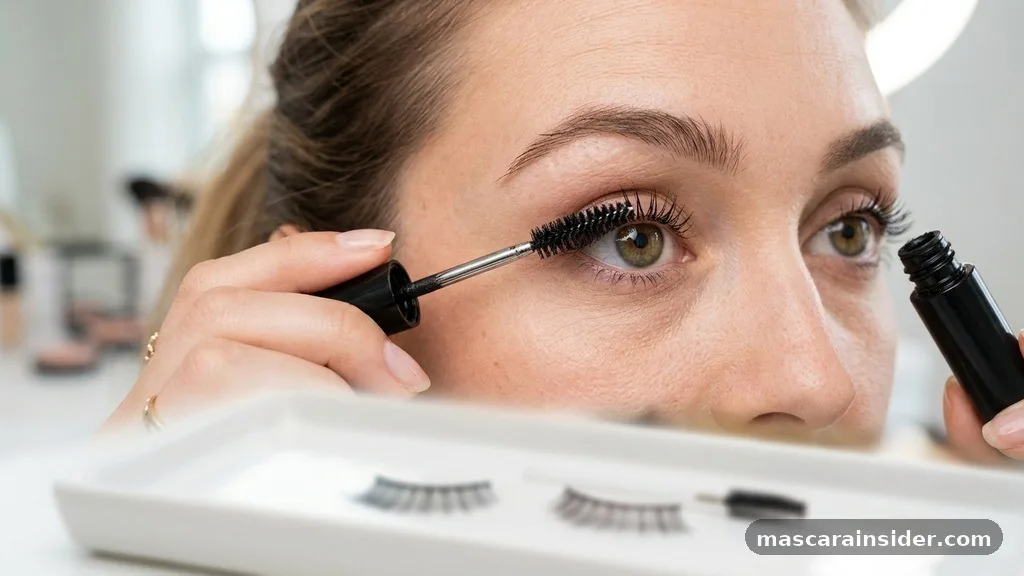
Deciding whether you should apply mascara before or after your false lashes often leaves makeup enthusiasts scratching their heads. While many believe a coat of mascara acts as a helpful base, others worry it complicates the process or ruins their falsies.
Understanding the nuance of when you put mascara on before fake lashes is the key to achieving a polished, seamless look that stays put all day. By balancing the needs of your natural hairs with the structural integrity of your chosen falsies, you can avoid common mistakes that lead to a messy finish or damaged lashes.
The Logic Behind Pre-Application Mascara
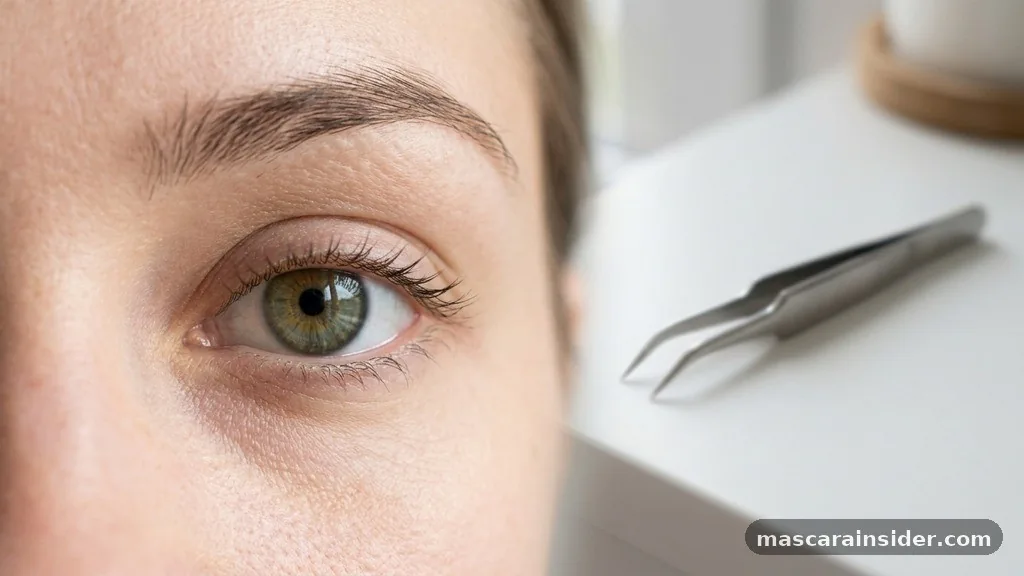
Applying a light coat of mascara before you reach for your strip lashes can provide a necessary foundation. For those with light or straight natural hairs, this step helps blend your real lashes with the false ones.
When you coat your natural lashes first, you create a shelf or a platform that supports the lash band. This makes the false eyelash application process much easier, as the weight of the falsies has something to grip onto rather than just sliding off your bare, slippery hairs.
However, moderation is the absolute rule here. You want just enough product to darken and hold the curl, not so much that your lashes become clumpy or stiff. If you apply a thick, wet layer, the lash glue may struggle to bond effectively to your natural hairs, which can lead to premature lifting at the corners.
Think of this initial layer as a primer rather than a full-volume coat. Using a mascara wand to lightly sweep the product through your natural hairs is all that is required to provide the structural support necessary for a secure hold.
Why You Might Skip Mascara Initially
There are valid reasons why some makeup artists advise against putting mascara on before fake lashes. If you are using high-quality strip lashes that are designed to look natural, adding excess product can actually make the final result look heavy or “spidery.”
Furthermore, if you are a beginner, working with clean, bare lashes is often less messy. You don’t have to worry about transfer or smudging as you maneuver the eyelash adhesive toward your lash line.
If you have very curly or naturally voluminous lashes, you might find that adding a coat of mascara just gets in the way. In these cases, the falsies can sit comfortably on top of your natural hairs without any extra help.
You can always apply a final coat of mascara after the glue has dried to marry the two layers together, which is often a cleaner approach. This technique is particularly effective if you want to avoid the risk of clumping your natural lashes before the falsies are even in place.
Best Practices for Different Lash Types
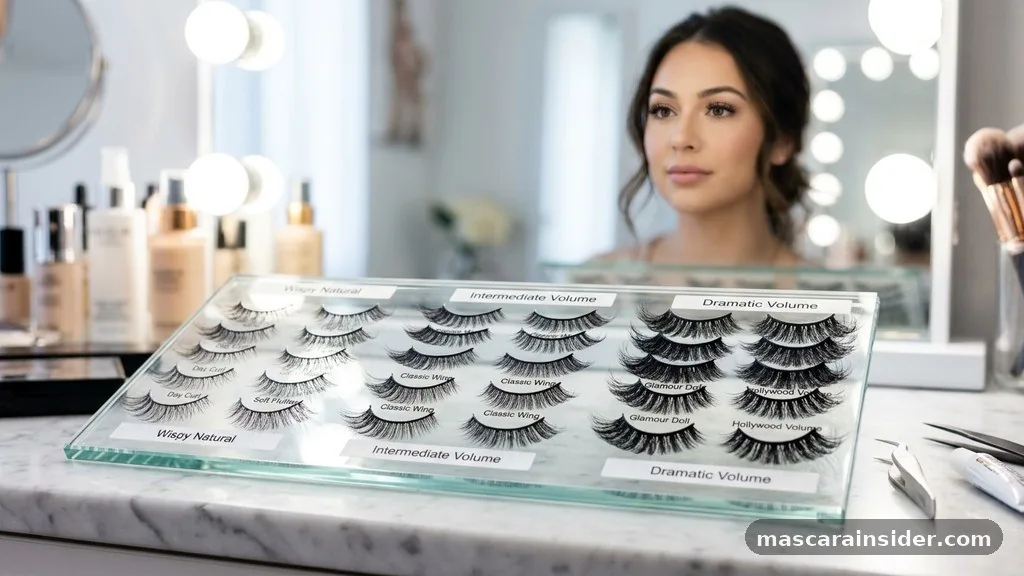
The rules change slightly depending on whether you are using traditional strips or smaller, more customizable options. When working with lash clusters, for instance, you typically apply them directly to your natural lashes or the lash line.
Because these clusters are smaller and lighter, they benefit significantly from a light base coat. This helps the clusters mimic the look of professional lash extensions without the long-term commitment or expense.
The table below outlines the recommended approach based on the type of lashes you are using:
| Lash Type | Mascara Timing | Reasoning |
|---|---|---|
| Strip Lashes | Optional (Light coat) | Provides a shelf for the band to rest on. |
| Lash Clusters | Recommended | Helps blend segments with natural hairs. |
| Magnetic Lashes | Avoid | Mascara can create a barrier for magnets. |
Regardless of the style, always ensure your eye makeup routine accounts for the longevity of your falsies. If you use a waterproof mascara, be aware that it can be harder to clean off the false lashes later, potentially shortening their lifespan. Using a gentle, oil-free makeup remover at the end of the day is essential for maintaining both your falsies and your eye health.
Addressing Common Application Challenges
A major concern for many is the risk of damaging their natural hairs during the removal process. If you apply too much mascara, the glue bonds to the mascara-coated hairs rather than the lashes themselves.
When you peel off the falsies, you risk pulling out your real lashes along with them. This is why many professionals emphasize the importance of using a high-quality eyelash adhesive and being patient during removal.
Another common issue is the “gap” that sometimes appears between your natural lash line and the false lash band. This is where a thin line of eyeliner becomes your best friend. By applying eyeliner before you put on the falsies, you camouflage the band and make the transition look more natural.
If you find that your lashes are still not blending, a quick touch-up with a mascara wand after the glue has fully set will resolve the issue. Always wait at least five minutes for the adhesive to become tacky before attempting to press the falsies into place, as this ensures a stronger, more reliable bond.
Frequently Asked Questions
Is it better to put mascara on before or after fake lashes?
It is generally better to apply a light coat before for support and a final coat after for blending.
Can you put mascara on lash clusters?
Yes, applying a light layer of mascara helps the clusters blend more seamlessly with your natural lash line.
Does mascara ruin fake eyelashes?
Excessive mascara, especially waterproof formulas, can make fake lashes clump, look dirty, and become difficult to clean properly.
Should I curl my lashes before applying falsies?
Yes, using an eyelash curler beforehand helps your natural lashes match the lift and curve of the false lashes.
How do I remove mascara from my fake lashes?
Use an oil-free makeup remover on a cotton swab, gently swiping along the band to break down the adhesive.
Can I wear mascara with magnetic lashes?
It is best to avoid mascara with magnetic lashes, as it can interfere with the connection between the magnets.
How does mascara affect lash glue?
If the mascara is too wet or thick, it can prevent the lash glue from adhering properly to your lashes.
Achieving Professional Results at Home
Whether you decide to apply mascara before or after your false lashes, the ultimate goal is a comfortable and secure fit that enhances your natural beauty. By experimenting with these techniques, you can determine what works best for your specific eye shape and lash texture. Remember that maintaining your eye health is paramount, so always remove your makeup thoroughly before heading to bed.
Consistent practice will eventually turn these steps into a seamless part of your daily routine. If you ever feel like your lashes aren’t sitting quite right, don’t be afraid to take them off, clean them, and start again—mastering the art of false lash application is a process that rewards patience and persistence. If you have questions about specific products or techniques, feel free to reach out for more tailored beauty advice.


