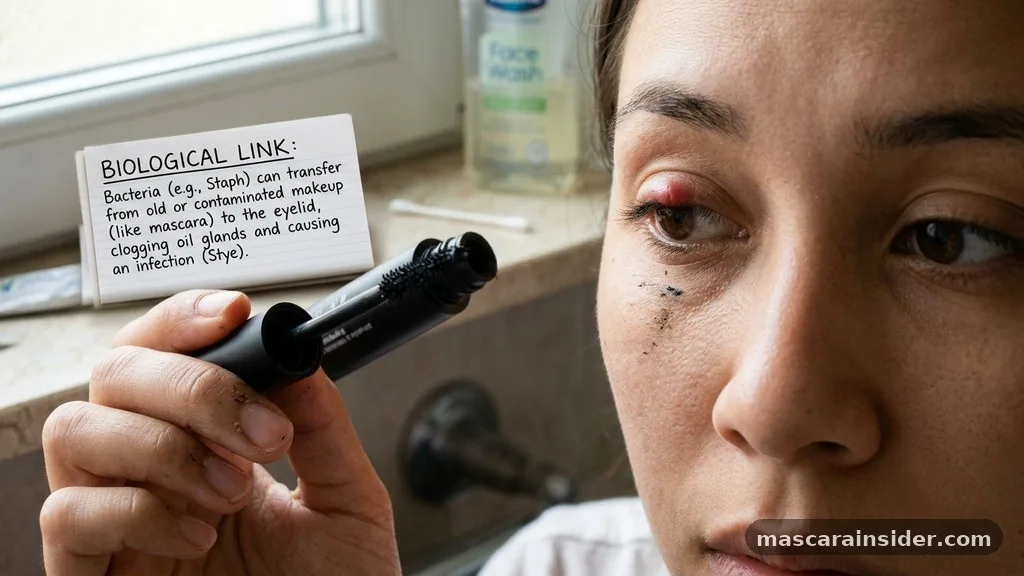
Waking up to a painful, swollen bump on your eyelid can be alarming, and many beauty enthusiasts often wonder if their daily routine is to blame. Specifically, when people ask does mascara cause styes, they are usually looking for a clear link between their cosmetic habits and these uncomfortable ocular irritations. A stye, or hordeolum, is essentially a localized infection of the oil glands near the lash line.
While your makeup itself isn’t always the primary culprit, the way you store, apply, and remove it plays a massive role in eye health. Understanding how product usage interacts with your meibomian glands can help you keep your eyes clear and irritation-free.
The Biological Link Between Makeup and Styes
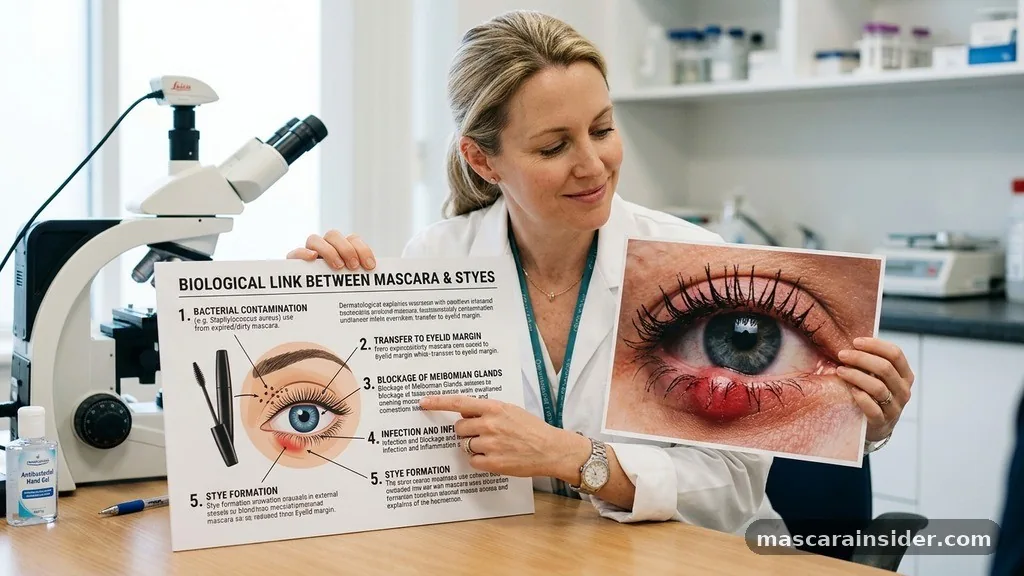
A stye occurs when an oil gland becomes blocked or infected, typically by Staphylococcus aureus bacteria. Because mascara is applied directly to the lashes, it creates a bridge between the external environment and your sensitive eyelid margin. If your mascara wand picks up bacteria from your skin or the air, that microorganism gets deposited back into the tube.
Over time, this transforms your makeup container into a breeding ground for pathogens. When you reapply that contaminated product, you are essentially introducing a concentrated dose of bacteria directly to your oil glands.
This process is particularly risky if your natural tear film or hygiene practices are already compromised. The meibomian glands located along the inner lash line produce oils that prevent your tears from evaporating too quickly. When these glands get clogged by makeup debris or bacterial buildup, the resulting stasis allows for inflammation.
This blockage is the perfect precursor to a painful, red bump. While healthy eyes can often fight off minor bacterial exposure, consistent irritation from old or improperly applied mascara shifts the balance in favor of an infection.
Why Product Expiration and Hygiene Matter
The most frequent reason people experience eye infections related to cosmetics is the neglect of the shelf life of their products. Every bottle of mascara has an expiration date, usually ranging from three to six months after opening. Using a product past this window is dangerous because the preservatives designed to keep the formula sterile break down over time.
Once those preservatives lose their efficacy, the formula becomes prone to rapid bacterial contamination. Many users ignore these timelines, assuming the product is fine as long as it isn’t dry or clumpy.
Beyond the expiration date, the physical tools you use to apply your makeup are often overlooked. Makeup brushes and mascara wands are porous, meaning they can trap dead skin cells, oils, and bacteria deep within their fibers or bristles. If you share makeup with others, you are significantly increasing your risk of transferring foreign bacteria into your eyes. Maintaining strict ocular hygiene involves:
- Discarding mascara exactly three months after the first use, regardless of how much product remains.
- Replacing all eye makeup immediately if you develop a stye or conjunctivitis.
- Cleaning your makeup application tools at least once a week with a gentle, fragrance-free cleanser.
- Never “pumping” the mascara wand, as this forces air and bacteria deep into the tube.
Identifying High-Risk Habits and Product Types
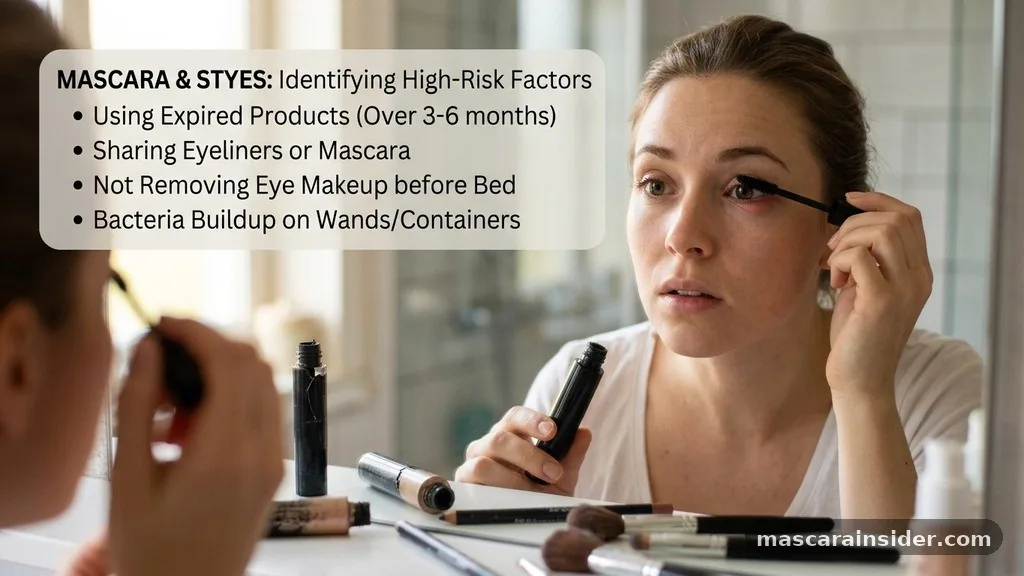
Not all eye makeup routines carry the same level of risk. Your application technique is often more critical than the brand you choose. For instance, applying mascara to the very base of the lashes—the waterline or the rim where the meibomian glands open—increases the likelihood of physical blockage.
This area is highly sensitive, and any particulate matter, such as dried flakes of mascara, can easily work its way into the gland openings. Furthermore, failing to perform a thorough eye makeup remover routine at night allows residual product to sit on the eyelids while you sleep, further irritating the skin.
Some product formulations may be safer than others for those prone to recurring issues. Tubing mascara is a popular choice for sensitive eyes because it forms small, water-resistant “tubes” around each lash rather than coating them in pigment that might flake off. Because these tubes are removed with warm water rather than harsh rubbing, they are less likely to leave behind debris that could clog your pores. If you suffer from frequent styes, consider the following comparison of product styles:
| Feature | Traditional Mascara | Tubing Mascara | Hypoallergenic Mascara |
|---|---|---|---|
| Removal | Requires oil or makeup remover | Warm water only | Standard |
| Flaking Risk | High if dry | Very Low | Moderate |
| Bacterial Growth | High over time | Moderate | Low |
| Best For | Volume and drama | Sensitive, watery eyes | Allergy-prone users |
Addressing Common Misconceptions and Gaps
A frequent gap in information is the role of existing chronic conditions like blepharitis. This condition causes inflammation of the eyelid edges, often leading to crusting and persistent redness. People with this condition are far more likely to develop styes, and their makeup habits can exacerbate the underlying inflammation.
If you have been diagnosed with this condition, simply switching your mascara isn’t enough; you must prioritize daily eyelid cleansing. Many people incorrectly assume that a stye is purely caused by “bad” makeup, when in reality, it is often a reaction to poor eyelid health that makes the skin vulnerable to bacteria that are already present.
Another common point of confusion is whether you can continue to wear makeup while a stye is active. The answer is a definitive no. Applying makeup over a stye will almost certainly contaminate your mascara wand and the entire tube.
Once the infection is present, you must stop using all eye products until the bump has fully cleared. Furthermore, if you are prone to styes, you should look for a hypoallergenic mascara that is free of common irritants like heavy fragrances or waxes that might clog the pores near your eyes. Always prioritize the health of your lid margin over the cosmetic appearance of your lashes.
Does mascara cause styes even if it is high quality?
Yes, even expensive or luxury mascara can cause a stye if it is old, contaminated, or applied improperly. The quality of the ingredients does not prevent the growth of bacteria once the tube is opened and exposed to the environment.
Can I keep my mascara after a stye heals?
No, you should always throw away any eye makeup used shortly before or during the development of a stye. The wand is almost certainly harboring the same bacteria that caused the infection.
Are there specific ingredients in mascara that clog glands?
Waxes and heavy polymers in some formulas can contribute to clogging, especially if not removed completely at night. Look for lightweight, water-based formulas if you are worried about gland blockage.
How can I tell if my mascara is contaminated?
If the product has a strange smell, a change in texture, or if you notice your eyes becoming red or itchy after application, it is likely contaminated and should be discarded immediately.
What is the most effective way to treat a stye?
The gold standard for treating a stye is a warm compress applied for 10 to 15 minutes several times a day. This helps liquefy the trapped oil and encourages the gland to drain naturally.
Does waterproof mascara increase the risk?
Waterproof formulas are harder to remove and often require more vigorous rubbing. This mechanical stress and the potential for leftover residue can increase the risk of irritation and gland blockages.
How does blepharitis change my makeup routine?
If you have blepharitis, you must be extremely diligent about cleaning your lids with a specialized wash before applying any makeup. You should also replace your eye products more frequently than the standard three-month window.
Maintaining healthy eyes requires balancing beauty routines with strict hygiene. While mascara itself is not inherently “evil,” it requires careful management to prevent the bacterial growth that leads to styes. By respecting the shelf life of your products, keeping your brushes clean, and ensuring you remove every trace of pigment before sleep, you can significantly lower your risk of infection.
If you find yourself dealing with recurring bumps, it is always a good idea to consult an optometrist to rule out underlying issues like chronic gland dysfunction. Keep your eyes clean, replace your makeup regularly, and you’ll maintain both your style and your ocular health.