

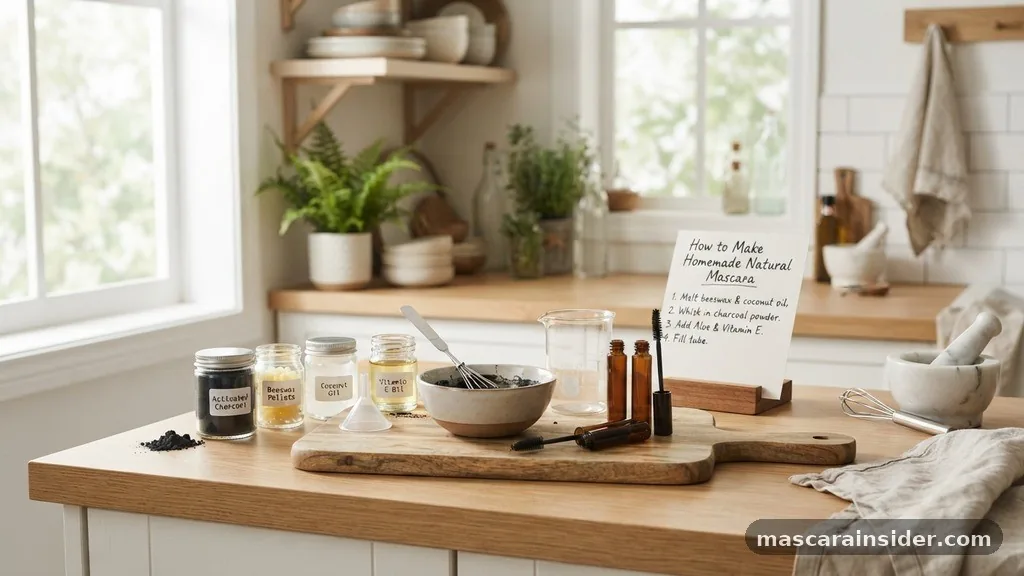
Creating your own eye makeup allows you to control exactly what touches your delicate lashes. Many commercial products contain synthetic polymers, parabens, and fragrances that can cause irritation, especially for those with sensitive skin. By learning how to make homemade mascara, you gain the ability to customize the consistency, color, and ingredients to suit your personal preferences.
This DIY approach focuses on natural pigments and nourishing oils, effectively turning your beauty routine into a skincare-focused ritual. Whether you want to avoid specific chemicals or simply enjoy the satisfaction of crafting your own cosmetics, this process provides a cleaner alternative to store-bought options.
Essential Ingredients for Natural Mascara
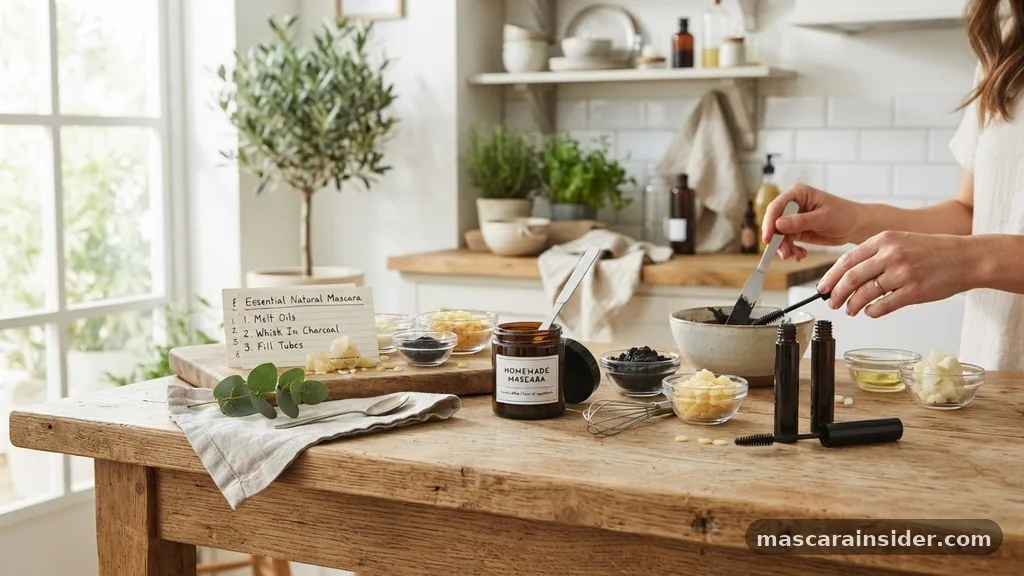
When you decide to start making homemade mascara, the quality of your base ingredients determines both the performance and the safety of the final product. You need a mix of binding agents, pigments, and emollients to achieve a texture that coats your lashes without flaking or smudging.
- Activated charcoal or food-grade mica powder for deep, rich color.
- Beeswax pellets to provide structure and water resistance.
- Coconut oil to act as a softening agent for smooth application.
- Bentonite clay to improve density and help the product cling to lashes.
- Aloe vera gel as a soothing, water-based component for easier application.
These components work together to mimic the thickening and lengthening effects of traditional formulas while supporting overall eyelash health. Always opt for high-quality, organic ingredients whenever possible, as these are being applied directly to the eye area.
The Science of Emulsification and Texture
To achieve the right consistency, you must understand how these materials interact during the mixing process. The combination of oil-based waxes and water-based gels requires careful heating to ensure a stable emulsification. Without proper blending, your mascara might separate inside the tube, leading to an uneven application or a gritty texture that feels uncomfortable on the eyes.
Using a Double Boiler for Safety
The safest way to melt your ingredients is using a double boiler setup. This method prevents the oils and waxes from reaching a temperature that would cause them to burn or lose their beneficial properties. By gently heating the beeswax pellets and coconut oil until they are fully liquid, you create a smooth, homogenous base that will hold the pigment firmly in suspension once it cools.
| Ingredient | Primary Function | Recommended Ratio |
|---|---|---|
| Beeswax | Structure/Waterproofing | 1 part |
| Coconut Oil | Moisturizing/Texture | 1 part |
| Activated Charcoal | Color Pigment | 1/2 part |
| Aloe Vera Gel | Binding/Application | 1/4 part |
Step-by-Step Formulation Process
Once you have gathered your materials and prepared your workspace, the assembly process is relatively straightforward. Cleanliness is paramount when you are making homemade mascara, as you are working with products that lack industrial-grade stabilizers.
Begin by melting the beeswax pellets and coconut oil in your double boiler on low heat. Once completely liquid, stir in your chosen pigment—activated charcoal for a classic black or cocoa powder for a softer, brown tint. If you are adding aloe vera gel or bentonite clay, incorporate these slowly to prevent clumping.
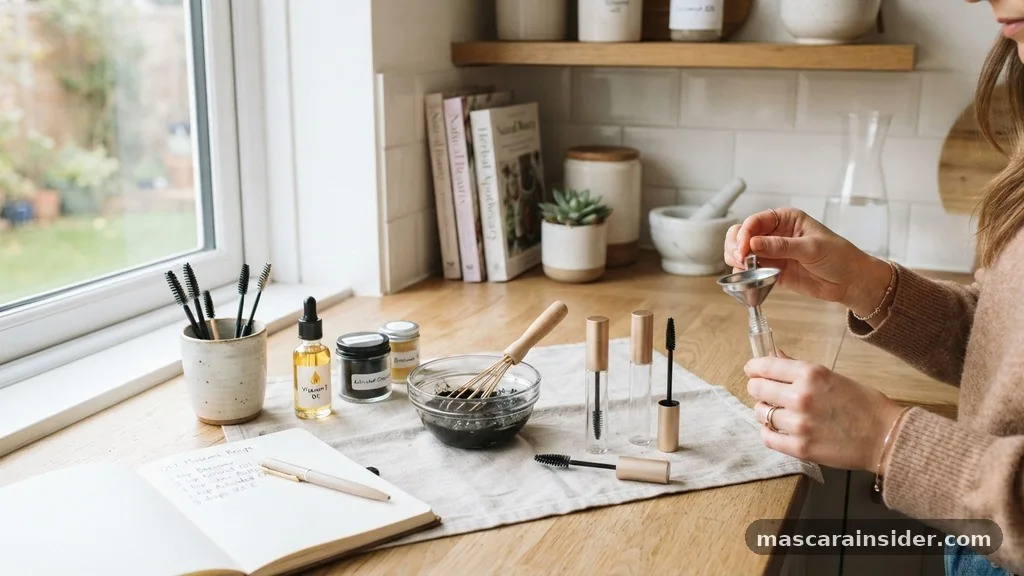
Stir the mixture continuously until it reaches a smooth, velvety consistency. Once the mixture is thoroughly blended, remove it from the heat and allow it to cool slightly before transferring it into a sterile cosmetic container. Use a small funnel or a piping bag to fill your tube, and insert a fresh mascara wand to complete the set.
Maintaining Eyelash Health with DIY Products
One of the primary benefits of making homemade mascara is the inclusion of ingredients that actively nourish the hair follicles. Many commercial mascaras dehydrate the lashes, making them brittle over time. By incorporating coconut oil and aloe vera gel, your DIY formula acts as a conditioning treatment that keeps your lashes supple.
Regular use of natural ingredients can prevent the breakage often associated with heavy, drying formulas. Because these products are preservative-free, they do not contain the harsh chemicals that can strip the natural oils from your lashes.
However, this also means you must be diligent about the cleanliness of your tools. Always ensure your mascara wand is sanitized between uses, or replace it frequently to prevent bacterial growth.
Addressing Common Topical Gaps in Homemade Cosmetics
Many people interested in DIY beauty often struggle with the limitations of natural formulas compared to high-street brands. One common frustration is the lack of longevity or “smudge-proof” performance. To improve the staying power of your creation, ensure that your beeswax pellets ratio is accurate; the wax creates a barrier that resists moisture.
Another frequent question is how to adjust the color depth. If you find your mixture isn’t dark enough, you can slowly increase the amount of activated charcoal. Be careful not to add too much, as this can make the product crumbly.
If your mixture feels too thick, a tiny drop of additional oil can help, but do not overdo it, or the mascara will slide off your lashes. Always document your ratios in a small notebook so you can replicate your favorite batch later.
Storage and Shelf Life Considerations
Since you are making homemade mascara without synthetic preservatives, it is vital to acknowledge the shorter shelf life of your product. Commercial mascaras are packed with stabilizers that allow them to last for months, but your natural version should be treated differently.
Store your finished product in a cool, dark place, away from direct sunlight or humidity. A sterile cosmetic container is essential to minimize contamination. If you notice a change in smell, texture, or color, dispose of the product immediately.
Most experts recommend making small batches that you can use up within two to four weeks. This practice ensures you are always using a fresh, potent product and significantly reduces the risk of eye infections. It is a small trade-off for the peace of mind that comes with knowing exactly what is in your makeup.
Integrating Natural Pigments Effectively
The choice of pigment changes the performance of your makeup. Activated charcoal is the gold standard for black mascara because of its intense color and ability to absorb excess oil. If you prefer a more subtle look, cocoa powder works beautifully, though it provides a lighter hold.
Some recipes call for mica powder, which can add a slight shimmer to the lashes. When working with these powders, ensure they are fine-milled; gritty pigments can be extremely uncomfortable if they get into your eyes.
Always sift your powders before mixing them into the melted wax base to ensure a silky application. By taking the time to prepare your pigments, you avoid the common pitfalls of homemade products that feel heavy or irritating on the eyelids.
Conclusion
Mastering the process of making homemade mascara is a rewarding endeavor that puts you in full control of your beauty routine. By selecting high-quality beeswax pellets, coconut oil, and natural pigments, you create a product that supports eyelash health while providing the coverage you desire. Remember that because your formula is preservative-free, keeping your tools clean and making small, fresh batches is the key to a safe experience.
This transition to natural cosmetics not only eliminates unwanted chemicals from your daily habits but also connects you more deeply with the items you put on your face. Start with a small test batch today, experiment with the ratios that work best for your unique lash type, and enjoy the confidence that comes with wearing a product you crafted yourself. If you have questions about specific ingredient substitutions or need advice on refining your technique, feel free to reach out and share your results.
Frequently Asked Questions
Is it safe to make homemade mascara at home?
Yes, if you use high-quality, food-grade ingredients and maintain strict hygiene with your tools and containers.
How long does homemade mascara typically last?
Without synthetic preservatives, homemade mascara usually stays fresh for two to four weeks when stored properly.
Can I use coconut oil as a base for mascara?
Yes, coconut oil is an excellent emollient that helps the mascara glide on smoothly and condition lashes.
What is the best alternative to beeswax in this recipe?
Candelilla wax is a great vegan alternative that offers similar structural integrity and water resistance to beeswax.
Why does my homemade mascara smudge easily?
Smudging usually occurs if the wax-to-oil ratio is off; try increasing the beeswax pellets for better hold.
Should I add a preservative to my DIY mascara?
It is difficult for home crafters to source safe, effective preservatives; making small, fresh batches is safer.
Can I use activated charcoal for other eye makeup?
Yes, activated charcoal is commonly used in homemade eyeliners and eyeshadows due to its intense pigment properties.


