

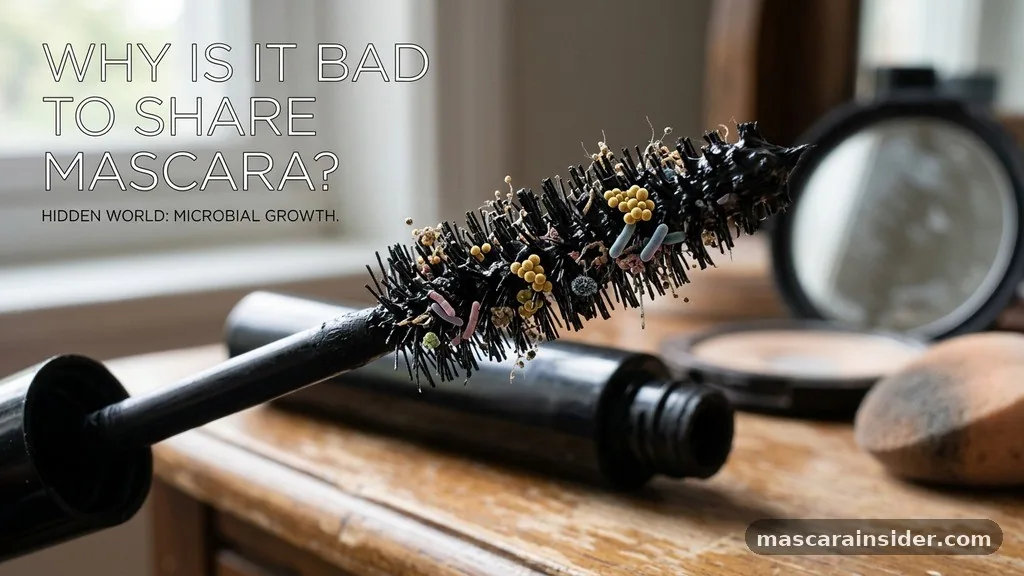
Understanding why it is bad to share mascara is essential for anyone who values their ocular health and wants to avoid painful, avoidable infections. While borrowing a swipe of makeup from a friend might seem like a harmless gesture during a night out, the hidden reality is that mascara tubes are breeding grounds for pathogens.
The dark, moist environment inside a tube creates a perfect sanctuary for unwanted guests that can compromise your vision. By learning the science behind why it is bad to share mascara, you can protect your eyes from long-term damage and keep your beauty routine safe and sanitary.
The Hidden World of Microbial Growth
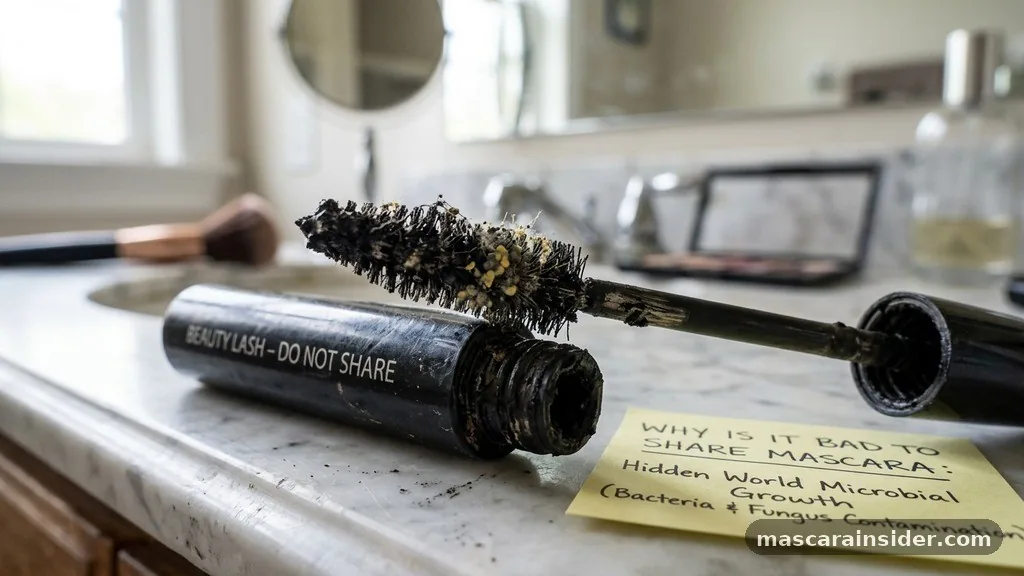
It is bad to share mascara primarily because the product’s container creates an environment that facilitates rapid microbial growth. Every time you pull the wand out and push it back in, you are potentially introducing skin cells, oils, and environmental debris into the tube.
Once these biological materials enter the dark, liquid formula, they begin to break down, providing nutrients for bacteria. Because mascara is a liquid-based cosmetic, it doesn’t have the same resistance to contamination as a pressed powder.
Think of your mascara tube as a self-contained ecosystem. When you use it on your own lashes, you are introducing your personal flora to the tube. While your body is accustomed to your own bacteria, your immune system may react aggressively to the foreign bacteria introduced by someone else.
Even if your friend appears perfectly healthy, they could be a carrier for harmful microbes that thrive in the rich, nutrient-dense environment of a mascara formula. Once these microbes take hold, they multiply exponentially, turning a simple beauty product into a potential health hazard.
Understanding Bacterial Contamination and Pathogens
When considering why it is bad to share mascara, you must account for the specific types of bacterial contamination that frequently occur. The most notorious culprit is Staphylococcus aureus, a type of bacteria commonly found on human skin.
While it often lives harmlessly on the surface of your body, it can trigger severe infections if it migrates to the sensitive mucous membranes of the eye. Other pathogens, including those that cause pink eye or conjunctivitis, can easily survive in the liquid base of mascara.
Because the eye lacks the protective barrier of thick skin, it is incredibly vulnerable to direct infection. When you share mascara, you are essentially creating a bridge for viral pathogens to travel from one person’s lashes directly into another’s eye.
Even if you don’t notice immediate symptoms, the buildup of bacteria can lead to chronic issues. The preservatives in makeup are designed to handle a certain level of contamination, but they are not miracle workers capable of neutralizing massive amounts of external bacteria introduced during a shared use.
The Risk of Developing Ocular Infections
The most direct answer to why it is bad to share mascara involves the high risk of developing painful eye infections. Beyond simple pink eye, sharing makeup can lead to blepharitis, which is an inflammation of the eyelid margin that causes redness, irritation, and crusting.
In more severe cases, bacteria can migrate into the hair follicles of your eyelashes, leading to a painful stye. These infections aren’t just uncomfortable; they can cause significant swelling and irritation that keeps you from wearing makeup for weeks while you recover.
The delicate nature of the eye means that even a minor infection can escalate quickly if not treated properly. When you introduce foreign bacteria into your eye via a shared wand, you are bypassing your body’s natural defenses.
The conjunctiva, the thin membrane covering the eye, is highly susceptible to irritation. By the time you notice symptoms like burning, itching, or excessive watering, the bacteria may have already established a colony within your eye or on the applicator wand itself, creating a cycle of re-infection that is notoriously difficult to break.
Why Cosmetic Expiration Dates Matter
You might think that if a product is relatively new, it is safe to pass around, but cosmetic expiration dates exist for a reason. Mascara has a shorter shelf life than almost any other makeup product, usually recommended for replacement every three months.
This is because every application degrades the preservatives inside the formula. Once these chemicals lose their potency, they are no longer effective at stopping the growth of microorganisms that have been introduced into the tube.
Sharing a mascara that is nearing the end of its life is particularly dangerous. At this stage, the preservatives are already exhausted, and the bacterial load within the tube is likely at its peak. If you use a product past its prime, you are already inviting infection; sharing that same product multiplies the risk significantly.
Always check the period-after-opening symbol on your packaging, which looks like a small jar with a number on it. That number indicates how many months the product remains safe after you first break the seal.
The Role of Preservatives in Mascara
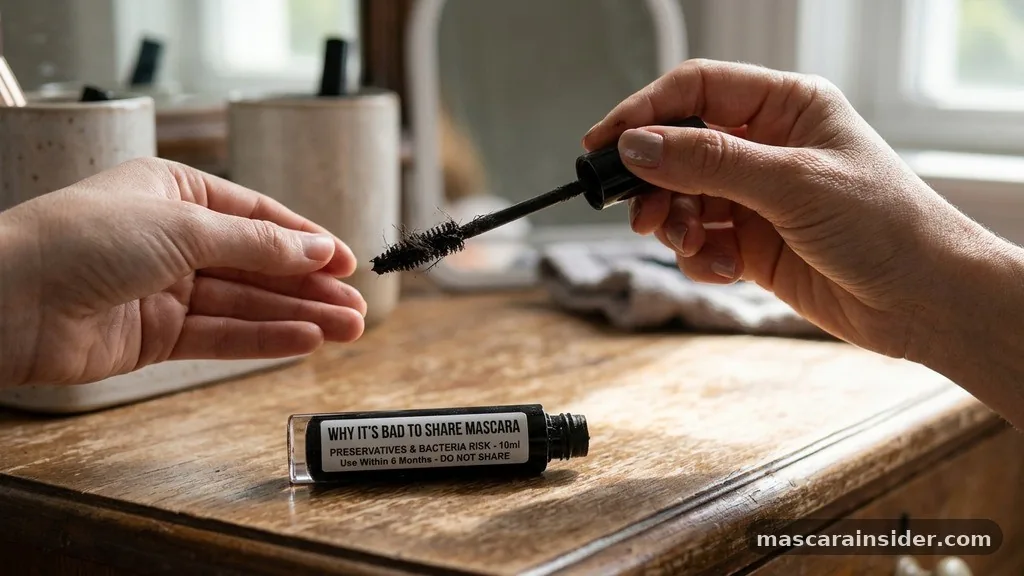
Many consumers mistakenly believe that all makeup is created equal, but the chemical composition of mascara makes it unique. Manufacturers include specific antimicrobial agents—the preservatives—to help keep the product stable.
However, these agents are formulated to combat a specific amount of bacteria under normal, solo-use conditions. When you share mascara, you are drastically changing the volume and variety of bacteria present, effectively overwhelming the product’s defenses.
If you are wondering why it is bad to share mascara even with family members, remember that your personal hygiene habits are different from theirs. Even family members can carry different strains of bacteria that your own eyes aren’t equipped to fight.
The preservative system is designed as a safety net, not a sterilization machine. Once you exceed the intended use-case of the product, you are operating outside the parameters of the safety testing performed during the manufacturing phase.
Cross-Contamination and Personal Hygiene
Cross-contamination is the primary mechanism that makes sharing makeup so risky. When you use a mascara wand, it picks up everything on your lashes and deposits some of it back into the tube.
If your friend has a cold, an undiagnosed eye condition, or even just a different set of skin bacteria, all of that material is now inside your makeup tube. This isn’t just about sharing germs; it’s about altering the chemical balance of your product.
To maintain better makeup hygiene, consider the following best practices:
- Never apply tester mascara in a store directly to your lashes using the provided wand.
- Always use disposable, sterile applicators when experimenting with products that aren’t your own.
- Replace your mascara every three months, regardless of how much product is left in the tube.
- If you have had an eye infection, discard all eye makeup immediately to prevent re-infecting yourself.
- Avoid pumping the wand in and out, as this pushes air and bacteria deep into the formula.
- Store your makeup in a cool, dry place rather than a steamy bathroom to slow bacterial reproduction.
Addressing Common Misconceptions
Many people believe that because they only share makeup with “close” friends or family, they are safe from infection. This is a dangerous myth. Bacteria do not care about your social relationship or how well you know the person you are sharing with.
In fact, you are more likely to share makeup with people you trust, which increases the frequency of this risky behavior. The reality is that anyone can be a carrier of common skin bacteria that, while harmless on the elbow or cheek, can wreak havoc inside the eye.
Another misconception is that cleaning the wand with soap or alcohol will make it safe to share. While sanitizing the wand might remove some surface bacteria, it does nothing to address the contamination already inside the tube.
Once the product inside is compromised, the entire unit is essentially a lost cause. Relying on cleaning a wand gives you a false sense of security that can lead to more frequent and risky sharing habits.
| Feature | Solo Use | Shared Use |
|---|---|---|
| Bacterial Load | Minimal/Personal | High/Diverse |
| Infection Risk | Low | Very High |
| Preservative Efficacy | Intact | Overwhelmed |
| Product Longevity | Standard | Significantly Reduced |
Answering Topical Gaps Regarding Makeup Safety
A frequent question that arises is why we can share other cosmetics, like lipstick or eyeshadow, but mascara is treated as a “no-go.” The reason lies in the combination of the applicator and the formula. Mascara wands are designed to be porous and textured, which helps them grab lashes but also makes them perfect traps for bacteria.
Lipsticks can be wiped clean or sanitized, and powder products are generally less hospitable to bacterial life due to their lack of moisture. Mascara is a perfect storm of a wet, nutrient-rich environment and an applicator that is almost impossible to sterilize.
Another gap in common knowledge is how to spot early signs of contamination. If your mascara starts to smell slightly different, has changed texture, or is clumping significantly more than usual, it is time to toss it.
These physical changes are often indicators that the formula has broken down or that a microbial colony has begun to thrive. Don’t wait for your eyes to turn red or itchy; if the product feels off, trust your instincts and dispose of it immediately.
The Importance of Professional Makeup Kits
For those who enjoy professional makeup artistry or work in the beauty industry, the standards for hygiene are much higher. Professionals are trained to understand why it is bad to share mascara, which is why they never use the same wand on multiple clients.
They rely heavily on sterile applicators, using a fresh, disposable spoolie for every single application. This practice is the gold standard for preventing the spread of eye infections in a commercial setting.
If you find yourself needing to share makeup for a special event or a makeover, adopt this professional mindset. Never let someone use your personal wand on their eyes. Instead, dispense a small amount of the product onto a clean, disposable surface and use a new, clean applicator to apply it.
This keeps your personal tube free from external contamination while still allowing you to help a friend or client. By adopting these professional habits, you elevate your own hygiene standards and minimize the risks associated with cosmetic sharing.
Final Thoughts on Protecting Your Vision
Protecting your eyes is a lifelong commitment that starts with small, daily decisions in your beauty routine. Understanding why it is bad to share mascara is a foundational piece of that puzzle. By keeping your products to yourself and adhering to strict replacement schedules, you are actively preventing the growth of harmful bacteria and safeguarding your ocular health.
Remember that your eyes are one of your most precious assets; don’t compromise their safety for the sake of a quick touch-up. If you have been sharing your makeup, take this as a sign to refresh your kit and establish safer habits starting today. Reach out to an eye care professional if you notice persistent irritation, and always prioritize long-term health over momentary convenience.
Is it ever safe to share mascara if I use a disposable wand?
It is much safer if you dispense the product onto a palette and use a new, sterile applicator.
Can I sanitize a mascara wand to make it safe for others?
No, sanitizing the wand does not remove the bacteria that have already contaminated the liquid inside the tube.
How often should I replace my mascara to avoid infections?
You should replace your mascara every three months or sooner if it shows signs of texture or odor changes.
What are the symptoms of a mascara-related eye infection?
Symptoms include redness, itching, burning, swelling, discharge, or the development of a painful bump like a stye.
Why is mascara more prone to bacteria than other makeup?
Mascara is a wet, nutrient-rich formula stored in a dark tube, creating an ideal environment for rapid microbial growth.
Does waterproof mascara have a lower risk of infection?
No, the chemical differences in waterproof formulas do not negate the risks associated with introducing foreign bacteria.
What should I do if I accidentally used someone else’s mascara?
Monitor your eyes for any signs of irritation and avoid using that specific mascara again; consider replacing your product.


