

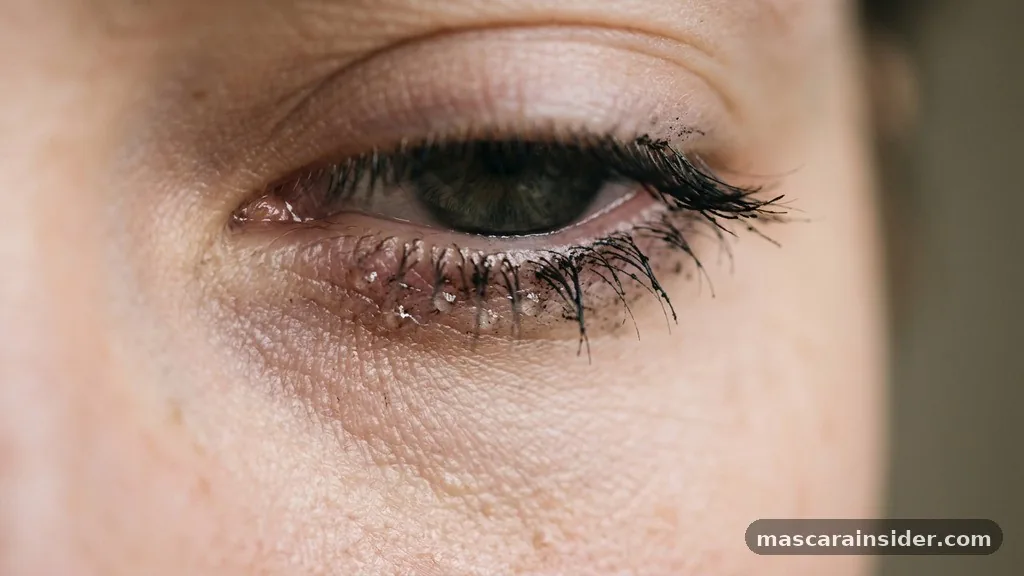
Dealing with the frustration that arises when my mascara smear under my eyes happens halfway through the day is a common beauty struggle. It often feels like no matter how much effort you put into your makeup routine, gravity and natural skin oils win the battle, leaving you with unwanted dark circles.
Understanding the root causes of this phenomenon—from the chemical composition of your makeup to the unique anatomy of your face—is the first step toward achieving a flawless, long-lasting look. By identifying why your products fail, you can make smarter choices and adopt techniques that ensure your lashes stay perfect from morning until night.
The Role of Sebum Production in Smudging
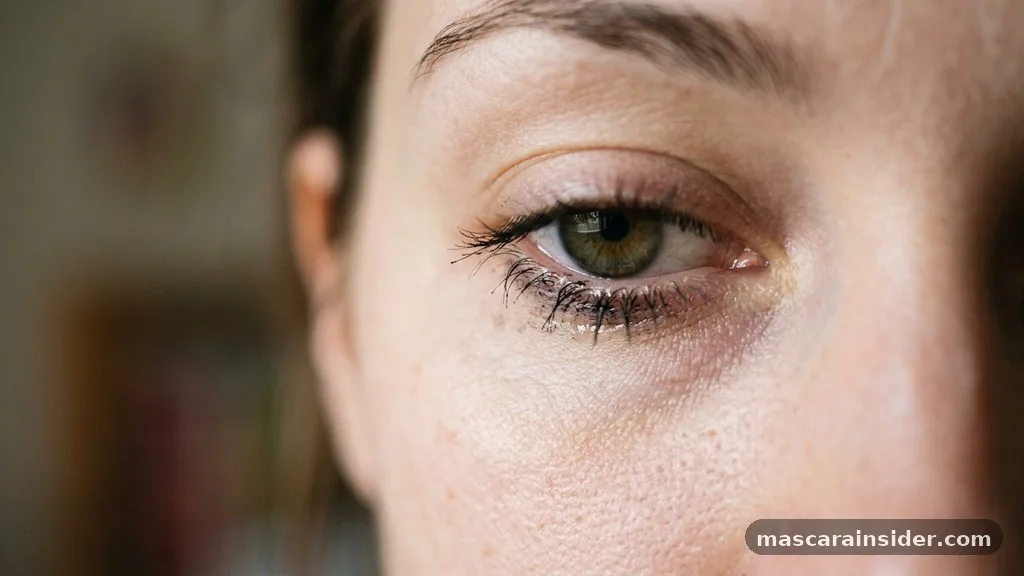
The most frequent culprit behind makeup migration is the natural sebum production of your skin. Your eyelids and the area surrounding your eyes are home to numerous oil glands that keep the skin hydrated and protected.
Throughout the day, this oil travels down toward your lash line, where it inevitably meets your mascara. Because many traditional mascaras rely on oil-soluble waxes to provide texture and pigment, they essentially dissolve when they come into contact with your skin’s natural oils.
When your skin is naturally oily, these formulations act like a magnet for sebum. Once the wax breaks down, the pigment is freed to travel, resulting in those telltale smudges below your lower lash line. If you have an oily complexion, you might notice this happening faster than someone with dry skin.
It is not necessarily a reflection of the quality of the mascara, but rather a chemical incompatibility between your skin type and the product ingredients. Managing this oil is essential for anyone who struggles with persistent smudging.
Understanding Eyelid Hoodedness and Eye Shape
Your unique eye shape plays a significant role in how your makeup wears throughout the day. If you have eyelid hoodedness, where the skin of the upper lid folds over the lash line, your lashes are constantly brushing against the skin.
This physical contact creates a friction point that can lift mascara off the lashes and transfer it onto the lid or the area under your eye. Even if you don’t have hooded eyes, deep-set eyes or lashes that are naturally long can create a similar issue by touching the skin under the brow or near the cheekbones.
The movement of your eyes during blinking also acts as a constant mechanical trigger. Every time you blink, you are pressing the mascara against the skin of the lower lash line. If your mascara has not fully set or is prone to flaking, this repeated motion will inevitably lead to transfer.
Recognizing your eye shape helps you adjust your application technique or select formulas that dry down to a more rigid, transfer-resistant finish. Sometimes, simply applying less product to the very tips of your lashes can minimize the physical contact that leads to smudging.
The Science of Tubing Mascara
For those who have tried everything else, tubing mascara often serves as the final solution to the smudging problem. Unlike traditional mascaras that paint your lashes with pigments suspended in wax or oil, tubing formulas utilize advanced polymer technology.
These polymers wrap around each individual lash like a tiny tube or sleeve. Because these tubes are physically bonded to the lash and are not oil-soluble, they do not break down when they encounter sebum or sweat.
The major benefit of this technology is its resistance to smudging. You can rub your eyes or spend the day in a humid environment, and the tubes will remain intact. When it is time to remove your makeup, you don’t need harsh cleansers or excessive rubbing.
Warm water and gentle pressure cause the polymers to slide off the lashes in clean, small pieces. This makes them ideal for sensitive eyes as well. If you are tired of the “raccoon eye” effect, switching to a tubing formula is one of the most effective changes you can make to your routine.
Waterproof vs. Water-Resistant Formulas
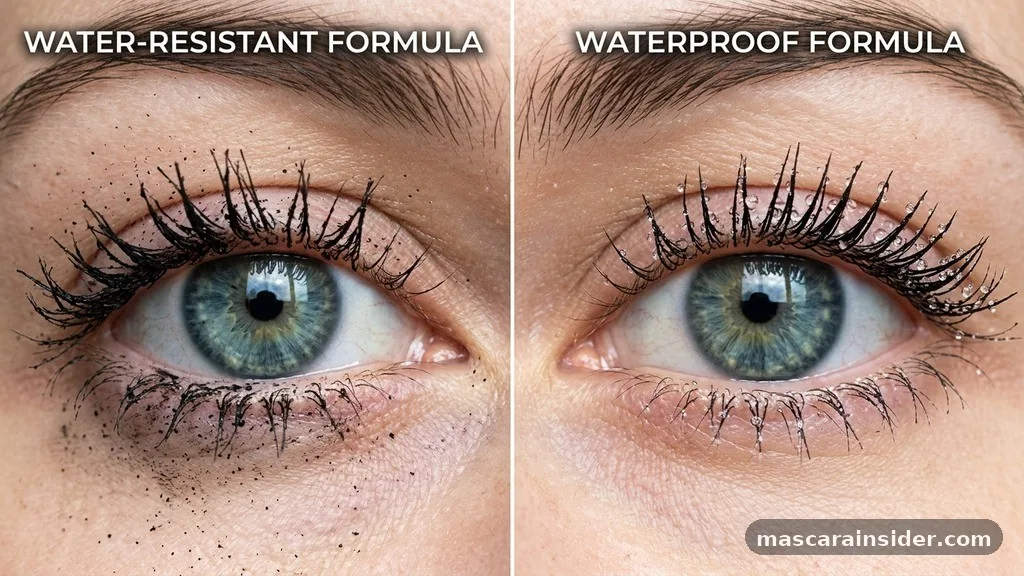
Many people assume that “waterproof” is the ultimate answer to every smudging issue, but this is a common misconception. Waterproof vs. water-resistant labels often lead to confusion regarding how a product performs. Waterproof mascaras are designed to withstand water, which makes them excellent for swimming or crying.
However, they are often still vulnerable to oil. Because your skin produces oil rather than water, a waterproof mascara can still break down if the formula relies on oils to stay flexible.
Water-resistant formulas are designed to handle moisture, but they are generally less heavy-duty than true waterproof versions. If you choose a waterproof mascara, look for one that is specifically labeled as smudge-proof as well. Some waterproof products are actually designed to be very waxy, which makes them prone to smudging on oily skin.
It is important to look for formulas that dry quickly and don’t remain tacky. If a mascara feels sticky after it dries, it is likely to attract dust and oil, which will eventually lead to that dreaded smear under your eyes.
Applying Setting Powder and Eye Primer
Using the right prep products can dramatically change how your mascara behaves. An eye primer is not just for eyeshadow; it creates a dry, smooth base that prevents oils from migrating from your eyelids down to your lashes.
By applying a thin layer of primer, you are essentially creating a barrier that keeps your skin’s natural oils in check. This is particularly useful if you have oily lids that tend to make your eyeliner and mascara run.
After applying your base, using a setting powder is another vital step. Lightly dusting a translucent powder under your eyes and along the lash line absorbs excess oil before it has a chance to reach your mascara. This creates a matte surface that keeps the surrounding area dry.
You can also use a small brush to press a little powder right beneath the lower lashes. This technique creates a physical buffer that prevents the mascara from sticking to the skin if it does happen to flake or touch the area during the day.
Addressing Topical Gaps in Smudge Prevention
When investigating why mascara fails, many people overlook the role of ingredients like glycerin or heavy emollients in their skincare routine. If you apply a rich, oily eye cream or moisturizer right before your makeup, you are essentially setting yourself up for failure.
These products can linger on the skin, creating an environment that dissolves even the most resilient mascara. Always allow your skincare to fully absorb for at least ten minutes before applying any makeup.
Another factor is the use of a setting spray. While great for the face, you should be careful not to oversaturate your lashes with a setting spray that contains alcohol or oils. Some sprays can actually soften the mascara film, causing it to run.
If you use a setting spray, aim it at your face and avoid getting too close to the eye area. Keeping this area clean and dry is the ultimate goal.
Finally, check your lower lash line application. If you have very long lower lashes, applying heavy mascara there is a recipe for disaster; consider using a lighter coat or skipping the lower lashes entirely.
Comparing Mascara Types
Choosing the right formula depends on your skin type and environment. The following table compares how different types of mascara handle common causes of smudging.
| Mascara Type | Oil Resistance | Water Resistance | Best For |
|---|---|---|---|
| Traditional Wax-Based | Low | Low | Volume and drama |
| Waterproof | Moderate | High | Swimming or events |
| Tubing | High | Moderate | Everyday smudge-free wear |
Humidity and Environmental Factors

Your environment has a massive impact on your makeup’s longevity. Humidity is a major factor because it changes the way your skin behaves and how your makeup sets. In high-humidity environments, your skin may produce more sweat, and the air itself carries moisture that can soften certain mascara formulas. This is why a product that works perfectly in a dry climate might fail miserably in a tropical one.
If you live in a humid area, you need to rely on formulas that are specifically designed for long-wear performance. Look for products that mention “humidity-resistant” on the label. Furthermore, temperature plays a role; heat can cause your skin’s natural oils to become more fluid, making them travel faster down your face.
In these conditions, wearing a lash primer can be a game-changer. A high-quality lash primer acts as a protective coat, locking in the lash hair and providing a better surface for your mascara to cling to without smudging.
Smudge-Proof Application Techniques
Refining your application is just as important as the product you choose. Smudge-proof application techniques start with a clean canvas. Before applying mascara, wipe your lashes with a clean spoolie or a cotton pad dampened with micellar water to remove any residual oil or skincare product. This ensures that the mascara adheres to the lash hair itself rather than a layer of grease.
When applying, start at the root and wiggle the wand to build volume, but avoid over-applying at the very ends of the lashes. The weight of the mascara on the tips of the lashes is often what causes them to droop and touch the skin. If you want a more dramatic look, focus the intensity at the base and leave the tips lighter.
Additionally, consider using a lash curler before applying your mascara. Curled lashes are lifted away from the skin, which physically prevents them from brushing against your under-eye area throughout the day.
Maintenance and Removal Habits
The way you maintain your makeup throughout the day can also prevent smudges. If you notice your mascara flaking, take a clean, dry spoolie and gently brush through your lashes to remove any loose bits before they fall onto your cheeks. Avoid touching your eyes during the day, as the oils from your fingertips can easily transfer to the lashes and destabilize the formula.
Proper removal is equally critical. If you don’t remove your mascara thoroughly at night, the residue left behind can mix with your morning skincare, creating an oily sludge that ruins your fresh application. Use an oil-based cleanser if you are wearing waterproof mascara, or warm water if you are using a tubing formula.
Be gentle; rubbing your eyes aggressively can damage your lashes and cause the skin around your eyes to lose elasticity, which only makes the hoodedness and smudging issues worse over time. Consistency in your routine will ensure your eyes look clear and bright every day.
Frequently Asked Questions
What is the best way to keep mascara from smudging under my eyes?
Use a tubing mascara, set the under-eye area with powder, and avoid heavy oil-based creams nearby.
Does using a lash primer help prevent smudges?
Yes, a lash primer creates a protective barrier that helps the mascara adhere better to your lashes.
Why does my waterproof mascara still smudge?
Waterproof mascara is often oil-soluble, meaning it breaks down when it comes into contact with skin oils.
Should I avoid putting mascara on my lower lashes?
Yes, if you struggle with smudging, skipping lower lash mascara is the most effective way to prevent transfer.
Does eye shape affect mascara smudging?
Yes, hooded or deep-set eyes cause lashes to touch the skin, leading to more frequent makeup transfer.
How do I remove tubing mascara safely?
Simply use warm water and gentle pressure to slide the polymer tubes off your lashes without scrubbing.
Can my moisturizer cause my mascara to run?
Yes, if your moisturizer hasn’t fully absorbed, its oils will break down your mascara throughout the day.
The secret to avoiding the frustration of seeing my mascara smear under my eyes lies in a combination of product selection and smart application. By switching to a tubing formula, incorporating a setting powder, and being mindful of your skincare routine, you can effectively manage the oils and environmental factors that cause smudging. Your eyes are the focal point of your face, and you deserve a makeup look that remains crisp and clean from morning until night.
Don’t be afraid to experiment with different techniques until you find the perfect balance for your skin type. If you have found a routine that works for you, feel free to share your favorite smudge-proof products and tips with others facing the same common beauty challenge.


