

Removing mascara at the end of a long day is a non-negotiable step for maintaining healthy, vibrant eyes. Many people underestimate the impact that improper removal techniques have on their delicate lash line, often leading to premature shedding or irritation.
Learning how to take off mascara without damaging your lashes ensures that your natural hair stays strong and your skin remains clear of pore-clogging debris. By choosing the right products and adopting a gentle, methodical approach, you can turn a tedious chore into a soothing nighttime ritual that supports long-term beauty.
Understanding the Importance of Proper Mascara Removal
Removing mascara effectively is fundamentally about lash health. Leaving product on your lashes overnight causes them to become stiff and brittle, which significantly increases the risk of eyelash breakage when you roll around on your pillow or wash your face in the morning.
When you learn how to take off mascara correctly, you are essentially preventing the accumulation of grime that leads to inflammation along the lash line. Consistent, thorough cleansing helps maintain the structural integrity of every individual hair, ensuring that your lashes look full and healthy even when you aren’t wearing any makeup.
Beyond the physical health of your lashes, failing to remove product thoroughly leads to residue buildup around the delicate skin of the eyes. This buildup can trap pollutants and bacteria, potentially causing styes, clogged oil glands, or persistent irritation.
If you have sensitive skin, this is particularly critical, as lingering pigments and waxes can trigger redness or contact dermatitis. Prioritizing a clean eye area every single night is the simplest way to avoid these common dermatological issues and keep your eyes looking bright and rested.
Selecting the Ideal Cleanser for Your Needs
Choosing between different types of removers depends heavily on the formula of the product you are wearing. For standard, water-soluble formulas, a gentle micellar water is often the gold standard because it effectively lifts pigment without requiring harsh rubbing.
If you frequently reach for waterproof mascara, however, a more robust solution is necessary. These formulas are designed to resist sweat and water, meaning they require an oil-based cleanser or a specialized bi-phase remover to break down the resilient polymers that coat each lash.
If you prefer a more luxurious or thorough experience, a cleansing balm is an excellent choice. These solid oils melt into a liquid upon contact with warm skin, allowing you to massage them into the lashes to dissolve even the most stubborn waterproof layers.
For those who prioritize natural ingredients, coconut oil or jojoba oil can serve as effective alternatives. However, you must be careful to choose high-quality, non-comedogenic oils that won’t leave a heavy, greasy film that clouds your vision or clogs the pores around your orbital bone.
| Cleanser Type | Best For | Application Method |
|---|---|---|
| Micellar Water | Everyday formulas | Soaked cotton pad |
| Cleansing Balm | Heavy/Waterproof makeup | Massage into dry skin |
| Bi-Phase Remover | Stubborn waterproof mascara | Shake and press |
| Natural Oils | Dry skin/Natural routines | Massage and wipe |
The Technique of Gentle Friction and Pressure
The most common mistake people make when learning how to take off mascara is using too much force. Vigorous scrubbing is the primary cause of mechanical lash loss, as the friction physically pulls the hair from the follicle. Instead of scrubbing, you should use gentle friction combined with a pressing motion.
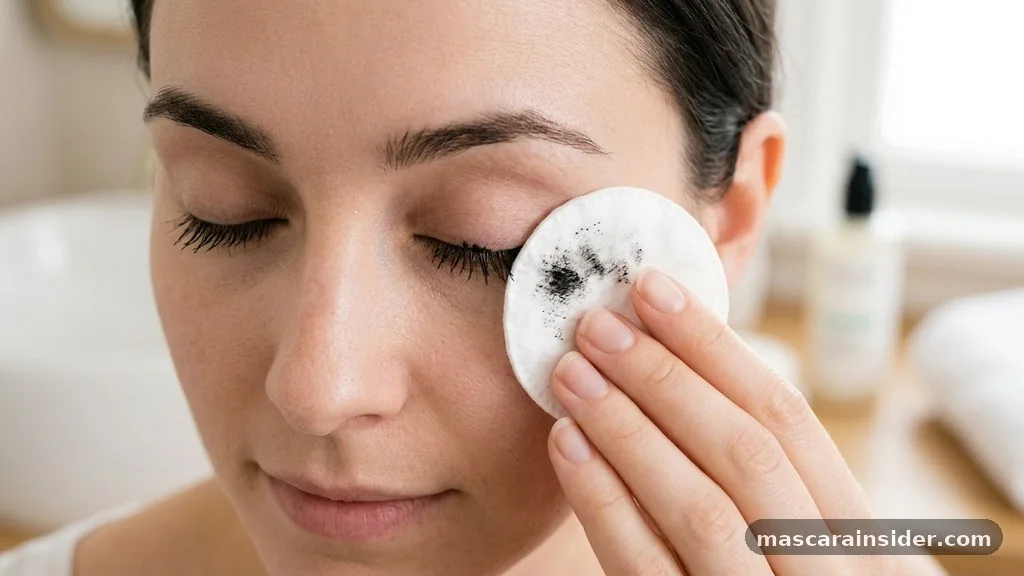
By holding a soaked cotton pad against your closed eyelid for thirty to sixty seconds, you allow the solvent in your cleanser to soften the mascara. This patience does the heavy lifting for you, dissolving the product so it slides off effortlessly when you finally wipe.
Once the product has been softened, use a downward sweeping motion rather than rubbing back and forth. Start at the base of the lashes and move toward the tips, mirroring the path you took when applying the product.
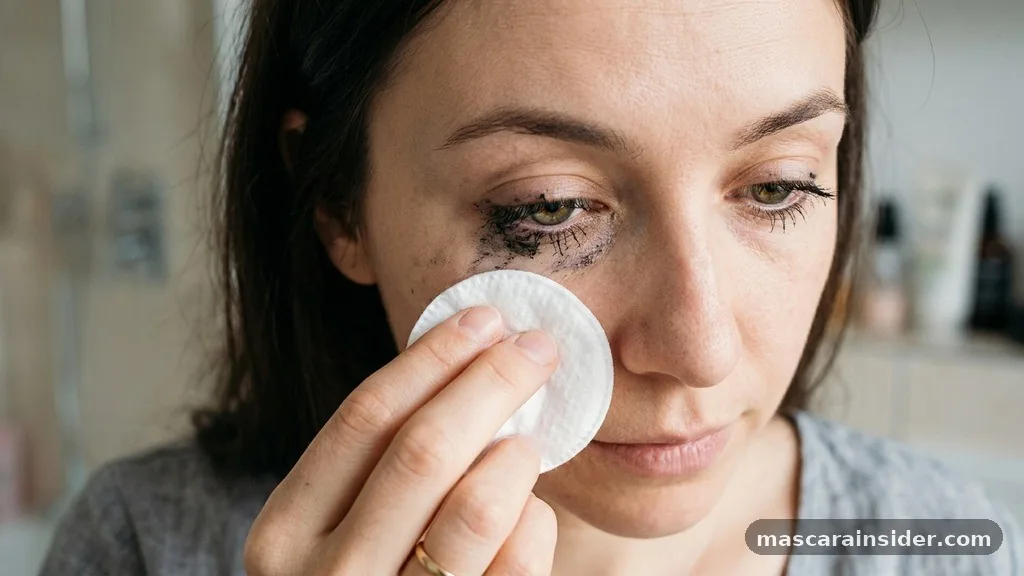
This directional cleansing ensures that you aren’t pushing pigment into your eyes or stretching the thin, fragile skin around the lids. If you still see dark smudges, repeat the process with a fresh area of the pad rather than pushing harder with the same dirty spot.
Addressing Topical Gaps in Mascara Removal
One common question that often goes unaddressed is how to handle the “inner corner” buildup that persists after a standard wash. Many people struggle with tiny flakes of mascara hiding right where the lashes meet the tear duct.
To solve this, you can use a clean, damp cotton swab dipped in a tiny amount of micellar water to precision-clean those hard-to-reach areas. This targeted approach prevents the accumulation of old makeup that can lead to morning eye crust or discomfort.
Another gap in standard advice concerns the use of makeup remover wipes. While these are convenient, they are often abrasive and do not contain enough solvent to truly lift mascara without significant tugging. If you must use them, prioritize alcohol-free, oil-infused versions and always follow up with a rinse or a proper cleanser.
Furthermore, always check if your mascara is “tubing” or “wax-based.” Tubing mascaras require only warm water and a gentle pull to slide off in little sleeves, whereas wax-based formulas absolutely require an oil-based solvent to remove effectively.
The Role of Double Cleansing in Eye Care
Incorporating double cleansing into your evening routine is a game-changer for those who wear heavy makeup. This process involves using an oil-based product first to break down the oil-soluble mascara and foundation, followed by a water-based cleanser to remove any remaining impurities or oil residue.
This ensures that your skin is completely clean, allowing your nighttime serums or eye creams to penetrate effectively. By removing the mascara in the first step, you ensure that you aren’t just moving dark pigment around your face during the second wash.
This method is particularly effective for preventing the dreaded “raccoon eyes” that occur when a single, недостаточно thorough cleanse fails to remove all the pigment. When you double cleanse, you treat the mascara removal as its own dedicated event before you even touch the rest of your face.
This separation of tasks allows you to focus specifically on the lashes, ensuring that every bit of residue is lifted before you move on to your broader skincare routine. It is a simple habit, but it pays off in clearer skin and healthier, stronger lashes over time.
Safe Alternatives When You Lack Specialized Products

If you find yourself without your usual supplies, knowing how to take off mascara with household items is a useful skill. Petroleum jelly is a widely available and effective option for breaking down stubborn waterproof pigments. Apply a very thin layer to your lashes with your fingertips, let it sit for a moment to soften the product, and then gently wipe it away with a soft cloth or pad. While it works well, be aware that it is heavy and can cause temporary blurry vision if it gets inside your eye, so use it sparingly.
If you don’t have petroleum jelly, a gentle, non-comedogenic facial oil or even a mild baby oil can work in a pinch. The key is to keep the oil away from the actual eyeball to avoid irritation.
Always follow up with a thorough rinse of your face to ensure no oily residue remains to clog your pores. While these emergency methods are effective, they shouldn’t replace a balanced, formulated cleanser in the long run, as they lack the soothing agents and pH-balanced ingredients found in dedicated eye makeup removers.
Preventing Lash Breakage During Removal
Lash health is a delicate balance of maintenance and care. To prevent eyelash breakage, you must avoid the temptation to pick or pull at your lashes if they feel “crunchy” from the mascara.
If the product isn’t coming off, it means your cleanser isn’t strong enough or you haven’t given it enough time to work. Rushing this process is the fastest way to lose lashes, as the hair is most vulnerable when it is coated in drying, hardened cosmetic pigments.
Another aspect of prevention is the condition of your tools. Using old, dirty cotton pads or abrasive washcloths can lead to micro-tears in the delicate skin of the eyelid and cause unnecessary stress on the lash follicles. Invest in soft, reusable bamboo pads or high-quality cotton rounds that don’t leave fibers behind.
Fibers trapped in the lashes can lead to irritation and infection. By treating your lashes like fine silk, you ensure they remain full, long, and healthy for years to come.
Managing Sensitive Skin Around the Eyes
For those with sensitive skin, the process of removing makeup can be a source of stress. The skin around the eyes is the thinnest on the body, making it highly susceptible to reactions from fragrances, alcohol, or harsh preservatives found in some removers.
When choosing a product, look for labels that specify “ophthalmologist-tested” and “fragrance-free.” These formulations are specifically designed to minimize the risk of contact dermatitis and stinging.
If you notice persistent redness or swelling after removing your mascara, switch to a fragrance-free micellar water that requires no rinsing. Sometimes, the water itself or the ingredients in your secondary cleanser can be the culprit.
By simplifying your routine and using only the most gentle, non-irritating products, you can maintain a clean lash line without compromising the health of the surrounding skin. Always perform a patch test on your inner arm if you are trying a new brand, especially if you have a history of allergies.
Long-Term Benefits of Consistent Eye Hygiene
Adopting a rigorous approach to how to take off mascara does more than just keep your lashes looking good; it supports the overall function of your eyes. Proper hygiene prevents the buildup of debris that can block the Meibomian glands, which are responsible for secreting the oils that keep your eyes lubricated.
When these glands become blocked due to poor makeup removal, it can lead to dry eye syndrome and chronic discomfort. By ensuring your lash line is clear every single night, you are actively protecting your ocular comfort.
Consistency is the secret ingredient to success. Making mascara removal a non-negotiable part of your evening, regardless of how tired you are, prevents the cumulative damage that occurs when makeup is left on for days at a time.
It also allows you to inspect your lash line regularly, making it easier to notice any changes in growth or health. When you value the health of your eyes as much as the aesthetic result of your makeup, you create a sustainable beauty routine that rewards you with bright, clear, and healthy eyes for a lifetime.
Addressing Common Concerns
Is it okay to not wash off mascara?
No, leaving mascara on overnight can lead to lash breakage, eye irritation, and clogged oil glands.
What can I use to remove mascara if I don’t have makeup remover?
You can use a small amount of petroleum jelly or a gentle, non-comedogenic oil like jojoba oil.
Can I use Vaseline to remove mascara?
Yes, it effectively breaks down mascara, but be careful to avoid getting it into your eyes.
How do you take off mascara without damaging your lashes?
Use a gentle, oil-based cleanser, press a soaked pad against the lids, and wipe downwards without rubbing.
Does waterproof mascara require a special remover?
Yes, waterproof formulas contain polymers that typically require an oil-based cleanser to dissolve them completely.
How can I tell if my mascara removal method is too harsh?
If you notice redness, stinging, or lash shedding after cleansing, your method or product is likely too harsh.
Why do I still have black smudges under my eyes after washing?
This is often caused by residue buildup in the lash line; use a cotton swab for precision cleaning.
In summary, taking off mascara effectively is a vital habit for anyone who values both aesthetic beauty and ocular health. By ditching the habit of rubbing and instead embracing the power of gentle, oil-based cleansers and patient pressing, you protect your lashes from unnecessary breakage and your skin from irritation. Whether you use a specialized cleansing balm or a simple, high-quality oil, the key is to ensure every trace of product is removed before you sleep.
Start implementing these gentle techniques tonight and notice how much healthier and more refreshed your eyes look by morning. If you found these tips helpful, consider sharing them with a friend who might be struggling with their own nightly routine, and always prioritize products that respect your skin’s delicate nature.


