

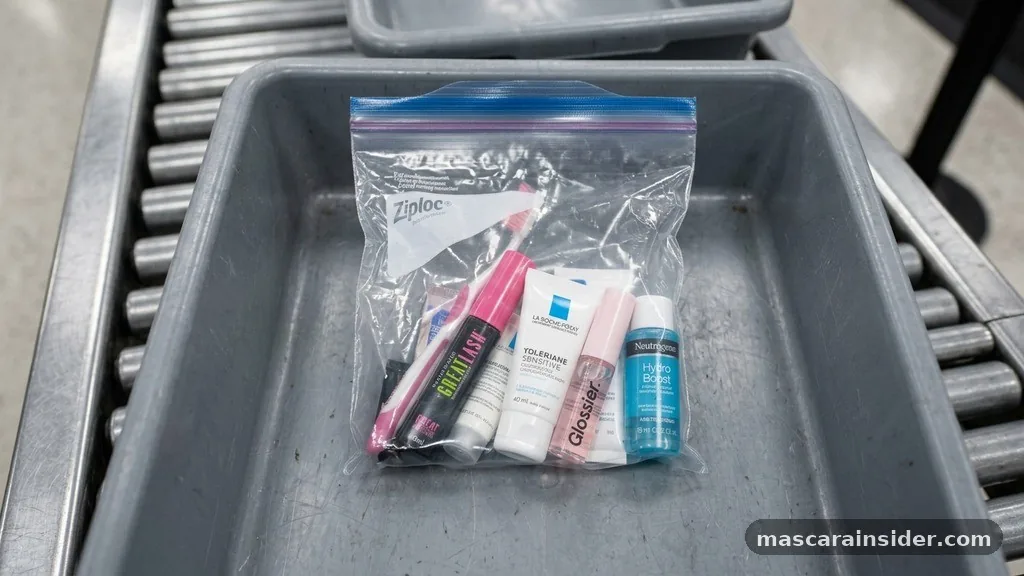
Figuring out whether your favorite beauty products will sail through security or end up in the trash bin is a common travel stressor. If you have ever wondered does mascara count as a liquid TSA agents will scrutinize, you are certainly not alone. The Transportation Security Administration maintains strict guidelines regarding what constitutes a liquid, gel, or aerosol in your carry-on luggage.
Because the consistency of eye makeup often falls into a gray area for passengers, understanding these specific regulations is essential for a smooth journey. This article breaks down exactly how security officers classify these items so you can pack your vanity bag with complete confidence before heading to the airport.
Understanding the TSA 3-1-1 Rule for Cosmetics
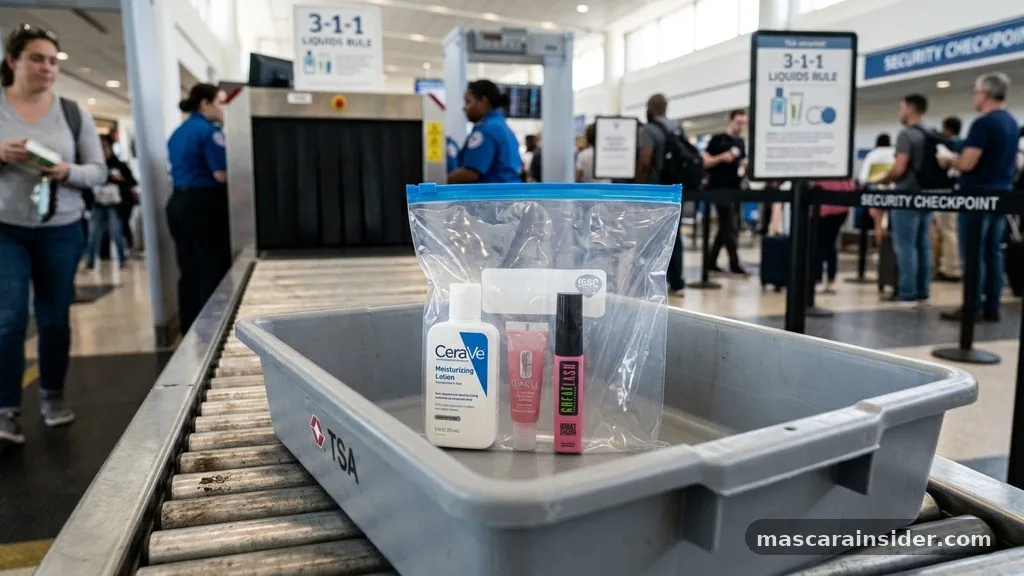
The core of your packing strategy should revolve around the TSA 3-1-1 rule, which dictates how you must transport liquids, gels, and aerosols in your carry-on baggage. This regulation requires that all liquids, gels, and aerosols be stored in containers no larger than 3.4 ounces (100 milliliters) each.
Furthermore, all these individual containers must fit comfortably inside a single, transparent, quart-sized bag. When you arrive at the airport security screening checkpoint, you are expected to remove this bag from your carry-on and place it in a bin for separate inspection.
Mascara is almost always classified as a liquid or gel by security personnel. Even though a standard mascara tube is much smaller than the 3.4-ounce limit, it still falls under the umbrella of liquid makeup restrictions. Because it is a viscous substance rather than a dry solid, it counts toward your total allowance of liquid-based products.
If you try to pack a massive collection of mascaras that exceeds the volume capacity of your quart-sized bag, you may be asked to discard some items or check your luggage. Following the 3-1-1 guideline ensures your makeup remains compliant while moving through the scanner.
Why Mascara Consistency Triggers Security Scrutiny
The primary reason agents flag certain items is their cosmetic viscosity. The Transportation Security Administration focuses on the physical state of a substance rather than its specific brand or intended use. If a product can be spread, smeared, pumped, or poured, it is generally treated as a liquid or gel.
Mascara is a perfect example of a gel-based cosmetic that maintains a fluid state within its container. While it is not as runny as water, its chemical composition allows it to flow, which is why it receives the same technical classification as lotions, creams, or hair gels.
When you go through the X-ray machine, the density of your items appears on the screen. Because mascara is contained in a metal or thick plastic tube, it can look like a solid object. However, the nature of the formula inside is what matters to the agents.
If you are ever pulled aside for a secondary search of your bags, it is usually because the density of your personal care items triggered a closer look. By keeping these items in a clear, accessible bag, you help the screening process move faster, reducing the likelihood of having your luggage manually searched.
Distinguishing Between Solid and Liquid Makeup
Knowing the difference between solid versus liquid makeup is the best way to bypass unnecessary stress at the checkpoint. Generally, if a product is a powder, it is considered a solid. Pressed eyeshadows, loose mineral powders, and traditional blushes in powder form are not subject to the 3-1-1 rule.
You can leave these items in your makeup bag without worrying about the quart-sized plastic bag limit. Conversely, anything that has a creamy, oily, or gel-like texture is subject to the standard toiletry limitations imposed on all air travelers.
To help you categorize your kit, consider this breakdown of common beauty items and their typical status during security screenings:
- Mascara: Liquid/Gel (Must be in your quart-sized bag)
- Pressed Powder: Solid (Can stay in your makeup bag)
- Liquid Foundation: Liquid (Must be in your quart-sized bag)
- Cream Eyeshadow: Gel/Liquid (Must be in your quart-sized bag)
- Lipstick (Traditional): Solid (Exempt from liquid rules)
- Lip Gloss: Liquid/Gel (Must be in your quart-sized bag)
- Eyeliner Pencil: Solid (Exempt from liquid rules)
- Liquid Eyeliner: Liquid (Must be in your quart-sized bag)
Packing Strategies for Your Travel Makeup Kit
Efficiency is the name of the game when you are preparing for a flight. Since you already know that mascara and other travel-size toiletries like liquid concealers or primers must be grouped together, use a high-quality, clear toiletry bag that zips securely.
This prevents leaks from ruining your clothes and makes it incredibly easy to pull the items out during the airport security screening process. If you have a large collection of products, consider investing in travel-sized versions of your favorite liquids to save space in your quart-sized bag.
Avoid the temptation to stuff your bag until it is bursting at the seams. Security officers need to be able to see the contents clearly, and an overstuffed bag can cause delays or lead to the removal of items. If you find that your makeup collection is too large to fit in a single quart-sized bag, you have two options.
You can either move some items to your checked luggage, where liquid restrictions are much more lenient, or you can purge the items you don’t truly need for the trip. Prioritizing your essential products will keep your travel experience stress-free.
Addressing Common Topical Gaps in TSA Knowledge
Many travelers are confused about items that seem solid but have a melting point or a semi-solid state. For instance, stick foundations or thick balms can be tricky. Technically, if a product is a solid at room temperature, it is treated as a solid.
However, if it softens significantly or behaves like a gel, it is safer to treat it as a liquid. When in doubt, place the item in your quart-sized bag. It is always better to be slightly more conservative with your packing than to have a favorite product confiscated at the gate.
Another common question relates to aerosol containers, such as dry shampoo or setting sprays. These are definitely considered liquids and must adhere to the 3-1-1 rule, provided they are under 3.4 ounces. If you are carrying a large aerosol can, it will not be allowed through the checkpoint, regardless of whether it is a cosmetic or a cleaning product.
Always check the volume printed on the side of your bottles. If you cannot find a volume label, assume the item will be scrutinized and keep it with your other liquids to ensure you remain within the established toiletry limitations.
Does deodorant count as a liquid TSA regulation?
Standard stick or solid deodorant is considered a solid and does not need to go in your quart-sized bag. However, gel or spray-based deodorants must follow the 3-1-1 rule for liquids and gels.
Is concealer considered a liquid for flying?
Yes, liquid and cream concealers are classified as liquids. They must be stored in your quart-sized bag alongside your mascara and other fluid-based beauty items.
Comparing Liquid vs. Solid Cosmetic Requirements
| Product Type | Classification | TSA Requirement |
|---|---|---|
| Liquid Foundation | Liquid/Gel | Must be in 3-1-1 bag |
| Pressed Powder | Solid | No restriction |
| Mascara | Gel/Liquid | Must be in 3-1-1 bag |
| Eyeliner Pencil | Solid | No restriction |
| Setting Spray | Liquid/Aerosol | Must be in 3-1-1 bag |
| Cream Blush | Gel/Liquid | Must be in 3-1-1 bag |
| Lip Balm (Stick) | Solid | No restriction |
This table serves as a quick reference guide for your next trip. By categorizing your items before you start packing, you eliminate the guesswork. Remember that the Transportation Security Administration officers have the final say at the checkpoint.
If they determine an item poses a security risk, regardless of its classification, they can prohibit it. Maintaining a tidy, transparent, and compliant bag is the most effective way to ensure your items pass through without incident.
Handling Prohibited Items and Travel Restrictions
It is vital to recognize that some prohibited items are not about consistency, but about pressure and safety. While your mascara is fine, you should never try to smuggle large, full-sized aerosol cans or pressurized containers that exceed the 3.4-ounce limit. Even if the product is a standard beauty item, the rules are non-negotiable regarding container size.
If you arrive at the airport with a 6-ounce bottle of setting spray, it will be confiscated. Planning ahead by purchasing travel-sized versions of your favorite liquids is a smarter investment than risking the loss of full-sized products.
Furthermore, keep an eye on international travel rules. While the TSA 3-1-1 rule is standard for flights departing from the United States, other countries may have even stricter regulations.
Always check the specific requirements of the airport you are flying out of, especially if you are returning from an international destination. Being aware of these policies prevents the last-minute scramble at the security line and ensures that your expensive makeup collection remains safely in your possession throughout your travels.
The Role of Security Officers in Your Journey
The officers working at the airport security screening checkpoint are trained to prioritize safety above all else. When they look at your bag, they are looking for threats, not judging your makeup routine. Because mascara comes in a tube that can potentially hide other items, officers might occasionally pull it out for a quick check.
This is standard procedure and is not a reflection of your packing abilities. Staying calm and cooperative during this process is the best way to keep the line moving and maintain a positive attitude.
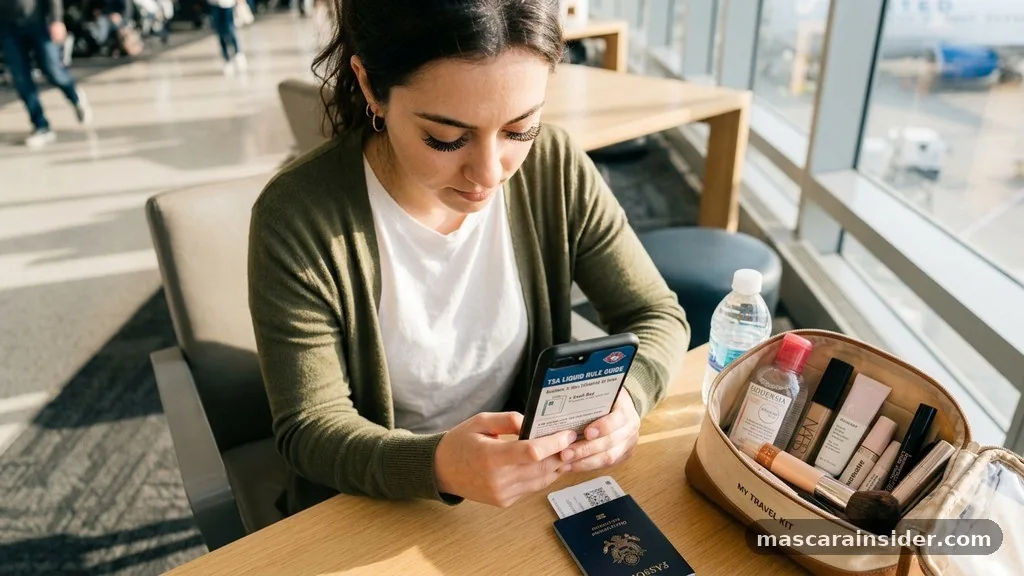
If you are ever unsure about a specific item, you can use the official TSA website or their mobile app to search for guidance on specific products. They provide a comprehensive list of what is allowed and what is not.
This resource is incredibly helpful for unique or unusual beauty tools. When you understand the logic behind the rules—which is to prevent the transport of dangerous substances—it becomes much easier to see why your mascara and liquid foundation are subject to the same scrutiny as a small bottle of shampoo.
Maintaining Compliance Throughout Your Trip
Successfully managing your beauty products while traveling comes down to preparation and consistency. By treating your mascara as a liquid and keeping it within your quart-sized bag, you align yourself with the standard liquid makeup restrictions that apply at every major airport.
This simple habit saves time, prevents frustration, and ensures that your favorite products arrive at your destination with you. Being an informed traveler means knowing exactly what is in your bag and how it interacts with the security systems designed to keep everyone safe.
As you finalize your packing, remember that the goal is to make the security process as seamless as possible. Use clear containers, keep your liquids together, and don’t hesitate to remove your bag from your luggage before you reach the conveyor belt.
When you are organized, you spend less time at the checkpoint and more time enjoying your trip. If you keep these guidelines in mind, you will never have to worry about whether your mascara will make it through security again.
The question of does mascara count as a liquid TSA officers look for is settled: yes, it is classified as a liquid or gel. Because of its consistency, it must be packed within your quart-sized bag according to the 3-1-1 rule. By treating all your cream and gel-based beauty products with this same level of care, you ensure a stress-free experience at the airport.
Always double-check your toiletry bag before you head out, and you will be ready to travel with ease. If you have any remaining doubts, checking the official guidelines ensures you stay fully informed and prepared for your next flight.
Does mascara count as a liquid TSA requirement?
Yes, mascara is considered a liquid or gel and must be placed in your quart-sized liquids bag.
Does lipstick count as a liquid TSA rule?
Traditional solid lipstick is not considered a liquid and does not need to be in your 3-1-1 bag.
Does eyeliner count as a liquid TSA restriction?
Pencil eyeliner is a solid, but liquid or gel eyeliner must be packed in your quart-sized liquids bag.
Does eyeshadow count as a liquid TSA policy?
Pressed or loose powder eyeshadow is a solid; however, cream or liquid eyeshadow counts as a liquid item.
Does lip gloss count as a liquid TSA rule?
Yes, lip gloss has a gel-like consistency and must be stored in your quart-sized bag for security.
Does concealer count as a liquid TSA item?
Yes, liquid or cream concealer is classified as a liquid and must follow the 3-1-1 rule for travel.
Is blush a liquid TSA concern?
Powder blush is a solid, but cream or liquid blush must be packed in your quart-sized liquids bag.


