

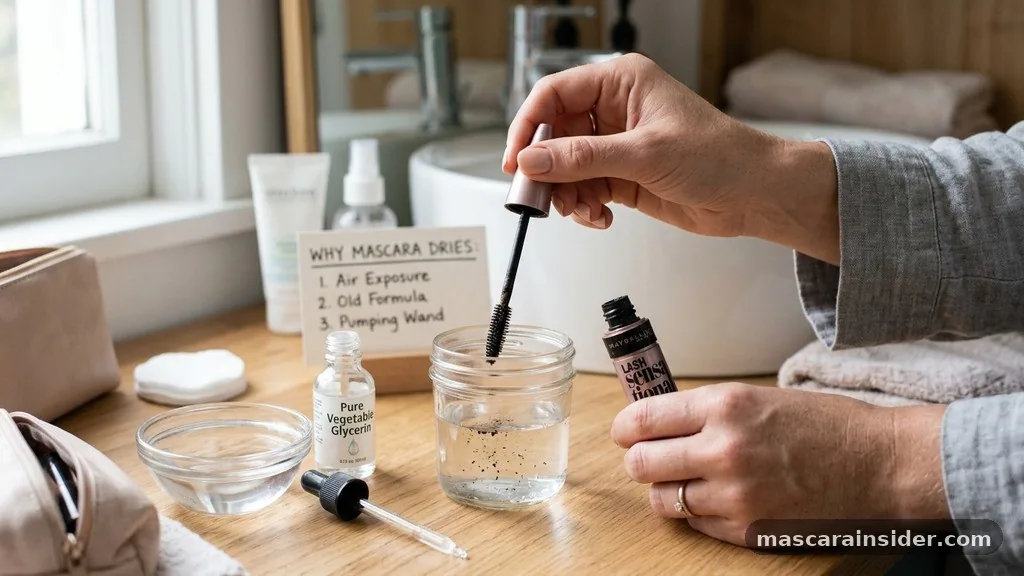
Finding your favorite tube of mascara has turned into a thick, clumpy mess right when you’re ready to head out the door is a universal beauty frustration. You don’t always have a bottle of contact lens solution or eye drops on hand, but that doesn’t mean your makeup is destined for the trash.
Learning how to fix dried mascara without eye drops is a useful skill that saves money and keeps your beauty routine moving forward. By understanding the composition of your product, you can safely restore its texture and get a few more weeks of perfect lash application.
Understanding Why Mascara Dries Out
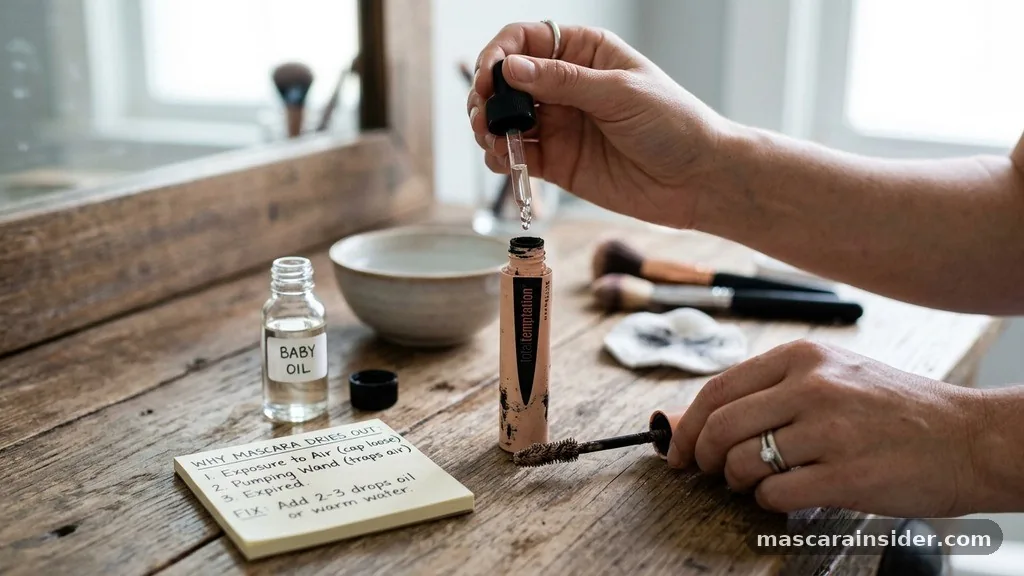
Mascara formulas are complex emulsions designed to coat lashes evenly while resisting smudging. Over time, exposure to air every time you pull out the mascara wand causes the volatile components in the liquid to evaporate. This process thickens the formula consistency and leads to that dreaded clumping that ruins an otherwise clean makeup look.
The preservative system inside the tube is designed to inhibit microbial growth, but it can’t prevent physical evaporation. Once the solvent level drops, the ingredients become too concentrated.
This shift doesn’t just make the product hard to apply; it can also make the formula brittle, leading to flaking throughout the day. Recognizing these signs early allows you to intervene before the product becomes completely unusable.
The Hot Water Bath Method
The most reliable way to revive a dried-out tube without adding foreign substances is the hot water bath. This technique uses gentle heat to loosen the waxes and pigments that have hardened inside the container.
To perform this, pour hot—not boiling—water into a small glass or mug. Place the closed mascara tube into the water, ensuring the cap is tightly sealed so no water seeps inside. Let it sit for about three to five minutes.
The heat softens the internal formula, making it more pliable once you begin to swirl the mascara wand inside the tube. This method is generally the safest approach for cosmetic safety because it doesn’t alter the chemistry of the product.
Using Micellar Water for Texture Restoration
If heat isn’t enough, you might consider adding a tiny amount of micellar water to the tube. Because micellar water is formulated to be gentle on the eyes and often contains mild surfactants, it can integrate well with many water-based mascaras.
Add only one or two drops at most. Using too much will ruin the formula consistency and create a runny, messy product that won’t stick to your lashes.
After adding the liquid, replace the wand and pump it in and out of the tube gently to incorporate the solution. Avoid aggressive pumping, as this forces excess air into the tube, which actually accelerates the drying process over time.
Evaluating Product Safety and Hygiene
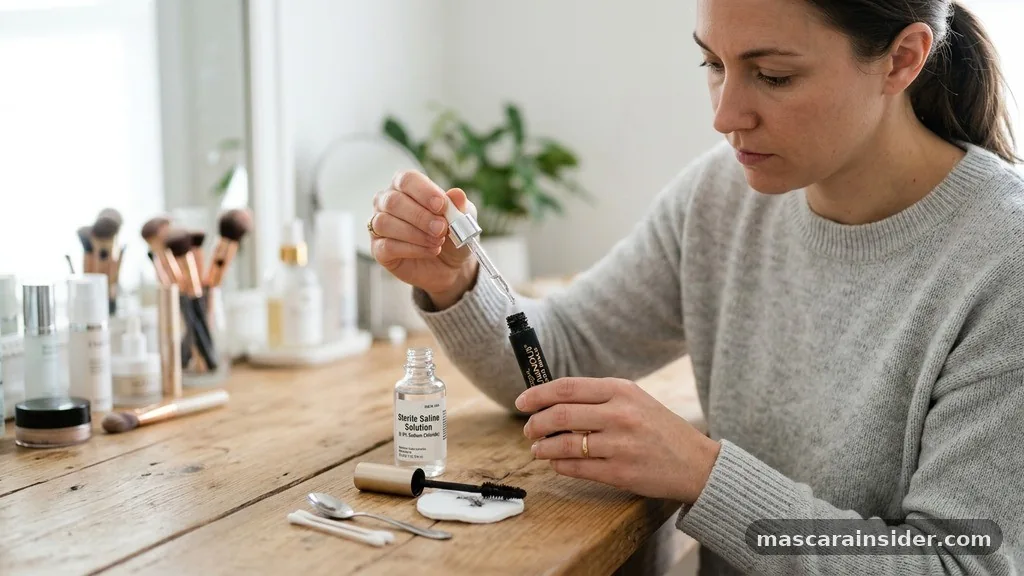
While learning how to fix dried mascara without eye drops is practical, you must prioritize tube hygiene and eye health. Mascara is a breeding ground for bacteria, and every time you use it, you introduce microscopic particles from your lashes into the tube.
If your mascara has developed an off-putting odor, changed color significantly, or causes irritation upon application, it has likely exceeded its shelf life. No amount of rehydration can fix a product that is no longer safe to use. You should always err on the side of caution when dealing with products that come into direct contact with the sensitive ocular region.
| Revival Method | Best For | Safety Level |
|---|---|---|
| Hot Water Bath | Mildly thickened formula | High (Non-additive) |
| Micellar Water | Very dry, water-based formulas | Moderate |
| Isopropyl Alcohol | Disinfecting wand only | Low (Never add to tube) |
Addressing Common Topical Gaps
Many users wonder if they can use oils to thin their makeup. While some people experiment with jojoba or coconut oil, this is generally discouraged for standard formulas.
These oil-based solvents can break down the structure of water-based mascaras, causing them to smudge instantly once applied. Furthermore, introducing food-grade oils into a dark, warm environment like a mascara tube creates an ideal habitat for bacterial colonies to thrive.
Another common question concerns the use of isopropyl alcohol. You should never add alcohol to your mascara tube. While it is excellent for brush sanitation—you can dip your wand in it to clean off dried buildup—it is far too harsh to be mixed into the formula.
It will strip the pigment and potentially cause stinging or irritation if it touches your eye. Stick to the methods that keep the preservative balance intact.
Best Practices for Extending Mascara Longevity
To prevent your mascara from drying out prematurely, your handling habits are just as important as your revival techniques. Simple adjustments can significantly extend the time between needing a fix.
* Always tighten the cap completely after every use to minimize air exposure.
* Store your makeup in a cool, dry place away from direct sunlight.
* Clean the wand regularly with a makeup remover wipe to prevent excess product buildup.
* Avoid sharing your mascara, as this is the fastest way to introduce external bacteria.
* Replace your tube every three months regardless of how much product is left.
Reviving Your Lash Application
When you have successfully thinned the formula, the quality of your lash application should return to normal. If you still notice slight clumping, try scraping the excess product off the wand onto a clean paper towel before applying it. This helps you control the amount of product deposited on each lash, ensuring a smooth, defined look without the weight of a heavy, dried-out formula.
Consistency is key. If you find yourself needing to fix your mascara every other day, it is a sign that the product is reaching the end of its functional life.
In such cases, the best solution is to invest in a fresh tube. Your eyes are delicate, and maintaining high standards for your beauty tools is the best way to avoid complications.
Conclusion
Mastering how to fix dried mascara without eye drops gives you a handy way to get the most out of your beauty products when you are in a pinch. By using a gentle hot water bath or a minimal amount of micellar water, you can effectively restore a smooth texture without compromising the safety of your makeup. Remember to keep your tools clean and pay close attention to the age of your product, as no technique can replace the necessity of replacing an expired tube.
Following these steps ensures your lashes look their best while protecting your overall eye health. Feel free to try these methods next time your favorite mascara starts to feel a bit too thick.


