

Creating your own beauty products is a rewarding way to control exactly what touches your skin. Learning how to make homemade mascara allows you to skip the synthetic polymers, parabens, and harsh chemicals found in many commercial tubes. By selecting high-quality, natural ingredients, you can formulate a product that not only defines your lashes but also nourishes them with plant-based emollients.
Whether you are seeking a minimalist beauty routine or simply want to avoid common irritants, crafting a custom blend at home offers a transparent alternative to mass-produced cosmetics. You’ll find that the process is straightforward, requiring only a few pantry staples and a bit of patience.
Essential Ingredients for Natural Mascara
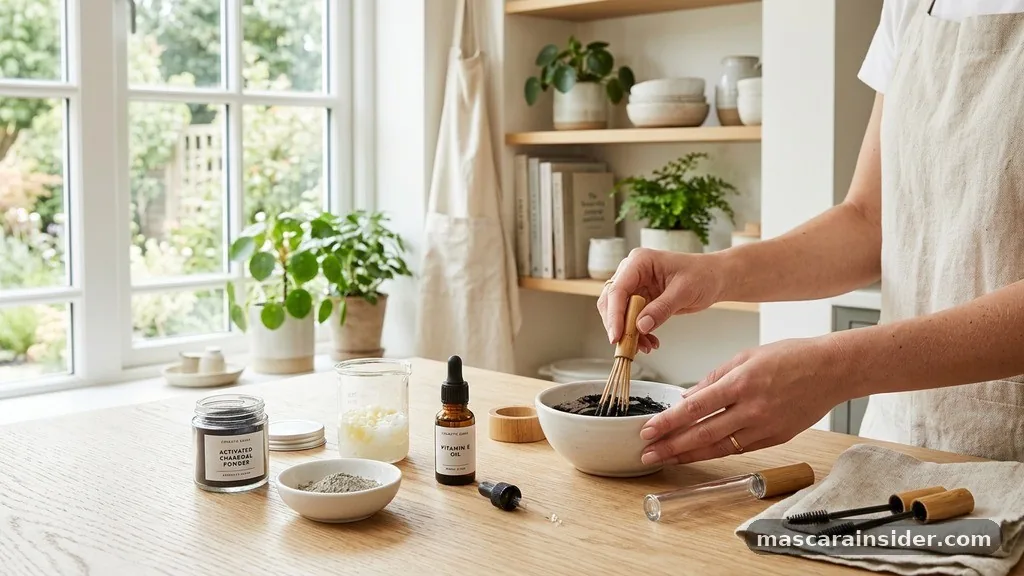
Most effective DIY lash formulas rely on a balance of pigments, binders, and moisturizers. To ensure your product performs well, you need ingredients that provide color, texture, and stability.
- Activated charcoal or iron oxides for deep, rich pigment.
- Beeswax pellets to provide structural hold and water resistance.
- Shea butter or cocoa butter to condition and soften lash fibers.
- Coconut oil for smooth application and a glossy finish.
- Aloe vera gel to serve as a soothing, water-based binder.
- Vitamin E oil to act as a natural stabilizer and lash conditioner.
When sourcing these components, always prioritize cosmetic grade pigments to ensure they are safe for the sensitive skin around the eyes. Avoid food-grade powders that might contain impurities or coarse particles that could scratch the cornea.
The Double Boiler Method for Blending
Using a double boiler method is the most reliable way to melt your waxes and butters without scorching them. Direct heat can destroy the beneficial properties of oils and cause your mixture to smell burnt.
To begin, place your beeswax pellets, shea butter, and coconut oil into a small heat-safe glass bowl. Set this bowl over a pot of simmering water. Stir the mixture gently with a wooden skewer or silicone spatula until the solids have completely liquefied.
Once the mixture is uniform, remove it from the heat. Carefully whisk in your activated charcoal or other mineral pigments until the color is deep and consistent. If you choose to add aloe vera gel, stir it in last, as it does not require high heat and can separate if added too early.
Ensuring Eye Safety and Hygiene
Because you are working with preservative-free cosmetics, hygiene is non-negotiable. Homemade formulas lack the chemical stabilizers found in store-bought products, which means they are more susceptible to bacterial growth.
Always use a sterilized container to store your finished mascara. You can sanitize glass jars or clean mascara tubes by boiling them for a few minutes and letting them air dry completely.
Never double-dip your mascara wand into the tube if you have used it on your eyes; instead, keep a few disposable wands on hand to prevent cross-contamination. If you notice any change in smell, texture, or color, discard the product immediately to protect your vision.
Comparing Homemade vs. Commercial Mascara
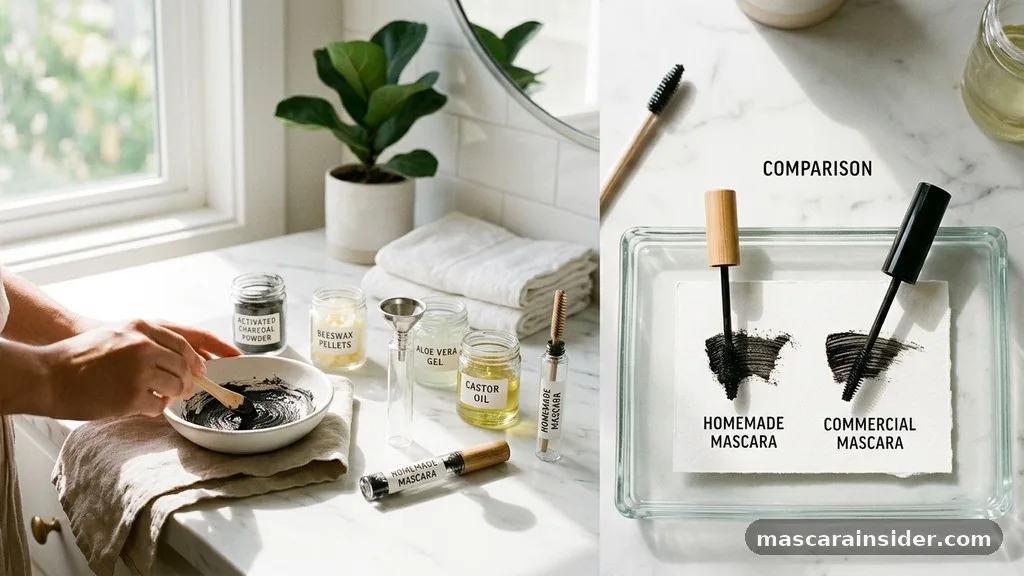
Understanding the functional differences between DIY and store-bought versions helps manage expectations regarding performance and longevity.
| Feature | Homemade Mascara | Commercial Mascara |
|---|---|---|
| Shelf Life | Short (1-2 months) | Long (6 months) |
| Ingredients | Natural, recognizable | Synthetic, complex |
| Water Resistance | Moderate | High |
| Preservatives | None/Natural | Chemical additives |
While commercial options often provide superior lengthening fibers and intense water-proofing, they often come at the cost of eye health. Homemade versions offer a clean beauty experience that respects your skin’s natural barrier.
Addressing Topical Gaps: Common Concerns
Many people wonder if homemade formulas can truly replace their favorite luxury brand. While they may not offer the same dramatic “falsie” effect, they excel at everyday definition and conditioning. One common gap in DIY recipes is the lack of a thickening agent that doesn’t feel heavy.
If you find your mixture is too runny, slightly increase the ratio of beeswax pellets. Conversely, if it is too stiff, add a drop or two of vitamin E oil to improve the glide. Another frequent concern involves sensitivity to charcoal; if you have particularly reactive eyes, consider substituting the pigment with high-quality, cosmetic-grade iron oxides, which are often better tolerated.
Maximizing the Shelf Life of Your Creation
Since you aren’t using industrial-strength parabens, the shelf life of your DIY mascara is naturally limited. Most batches will remain stable for about four to eight weeks when stored in a cool, dark place. Keeping the product away from direct sunlight and heat prevents the oils from going rancid.
If you decide to make a larger batch, consider freezing a portion of the mixture and thawing it in small amounts as needed. Always label your container with the date of manufacture so you know exactly when to toss it.
Troubleshooting Your DIY Formula
If your mascara clumps or flakes, it usually indicates a ratio issue between the wax and the oil. Clumping often happens when there is too much pigment or when the beeswax hasn’t fully emulsified with the liquid oils.
To fix a clumpy batch, gently reheat the mixture and stir in a tiny bit more coconut oil. If it flakes throughout the day, your mascara likely needs more of a binding agent; adding a small amount of vegetable glycerin or extra aloe vera gel can help the pigment adhere better to your lashes.
Frequently Asked Questions
Can I use Vaseline as a base for mascara?
While Vaseline is popular for DIY beauty, it is petroleum-based and can feel very heavy, often causing smudging.
What is the best way to clean my mascara wand?
Wash the wand with warm water and mild soap, then soak it in rubbing alcohol for five minutes.
Does homemade mascara smudge easily?
Yes, because it lacks the synthetic film-formers of commercial brands, it may smudge if your eyelids are oily.
Can I make waterproof mascara at home?
True waterproof performance is difficult to achieve naturally; you can increase water resistance with more beeswax, but not waterproof.
How do I know if my mascara has expired?
Trust your senses: if the product develops an off-putting odor, changes color, or separates significantly, it is time.
Is activated charcoal safe for eyes?
It is generally safe, but ensure it is fine-milled to avoid abrasive particles that could irritate your delicate eyes.
Can I add essential oils to my mascara?
Avoid adding essential oils to eye products, as they can cause significant irritation, stinging, or allergic reactions to eyes.
Conclusion
Mastering the art of making homemade mascara is a practical way to simplify your beauty routine while prioritizing ingredient transparency. By blending simple waxes, nourishing oils, and safe pigments, you create a product that supports lash health rather than compromising it. While these natural formulas require more attention to hygiene and have a shorter lifespan than store-bought varieties, the trade-off is a clean, personalized product that fits your lifestyle.
Start with a small batch to test your preferred consistency, and feel free to adjust the ratios to find your perfect balance of color and hold. As you get more comfortable with these ingredients, you might find yourself exploring other DIY cosmetics that align with your wellness goals. Do you have a favorite natural ingredient you plan to try in your next batch?


