

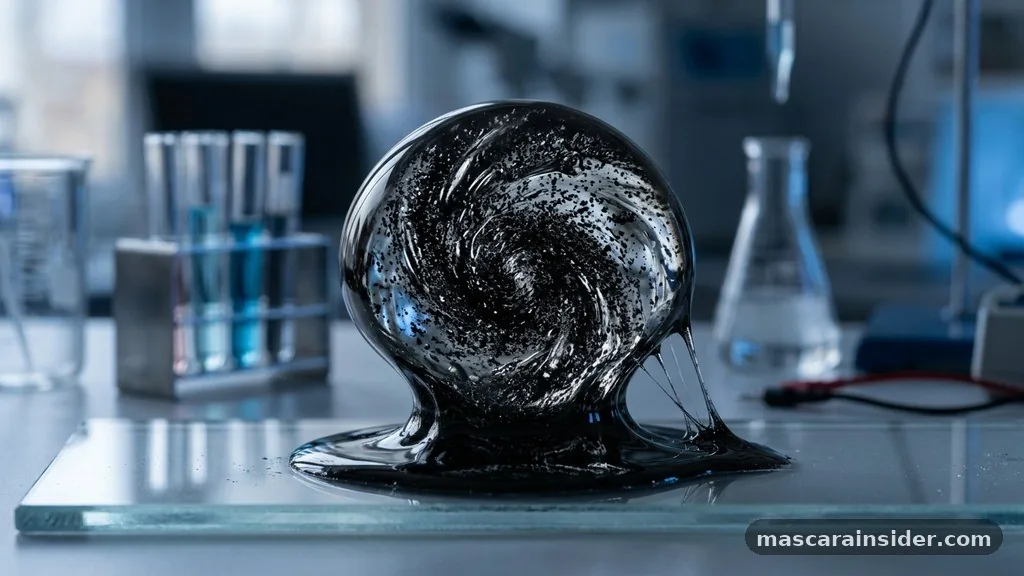
Understanding what mascara is made of involves peeling back the layers of a product that has been a staple in makeup kits for over a century. While it might seem like a simple black liquid, the chemistry behind your favorite lash-enhancing tool is surprisingly complex. Manufacturers balance stability, texture, and safety to ensure that the product glides onto your lashes without clumping or irritating your eyes.
By looking closely at the components, you can better understand why certain formulas feel wetter, drier, or more lengthening than others. This knowledge helps you choose the right product for your specific lash type and skin sensitivity.
The Core Chemistry of Pigments
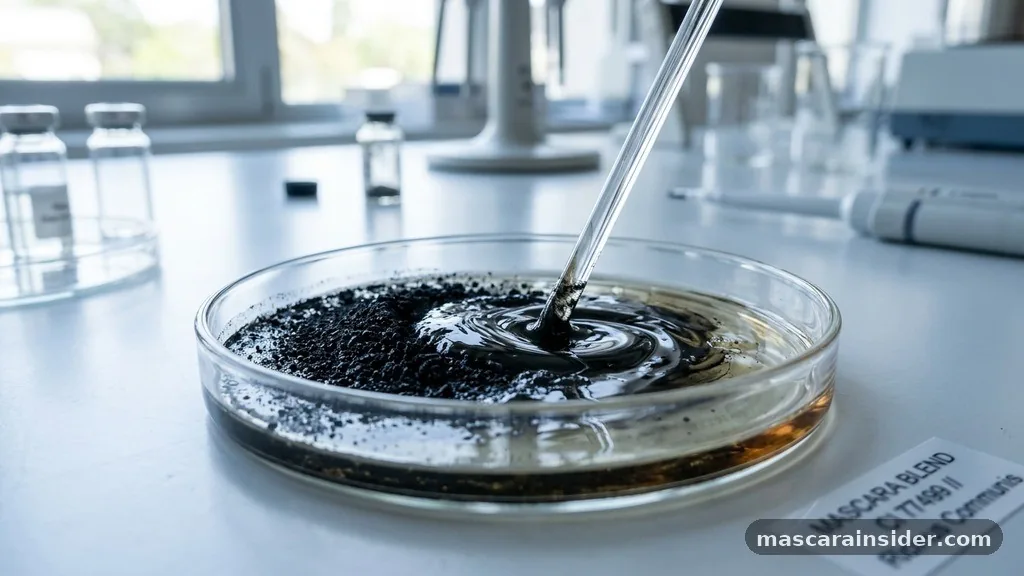
The most striking feature of any mascara is its ability to darken and define your lashes, a task handled primarily by pigments. Most traditional formulas rely on iron oxides to provide that deep, rich black or brown hue.
These minerals are incredibly stable, meaning they don’t break down easily when exposed to light or heat, ensuring your makeup looks just as bold at the end of the day as it did at the start. They are generally considered safe for the delicate skin around the eye, which is why they have remained the industry standard for decades.
Beyond iron oxides, many intense black mascaras incorporate carbon black. This is a highly fine powder that offers a much deeper, more saturated black than iron oxides alone can achieve. Because it is so finely milled, it coats every lash evenly, creating the illusion of thickness and drama.
However, because it is a synthetic material, some consumers prefer to avoid it if they have particularly sensitive eyes. Understanding how these pigments interact with your natural lashes is key to finding a formula that provides the intensity you desire without causing any discomfort.
Waxes and Their Structural Role
If pigments provide the color, waxes provide the structure that holds that color in place. Without these binders, the product would simply run off your lashes.
Most formulations utilize a blend of natural and synthetic waxes to achieve the perfect balance of viscosity and hold. Beeswax is a common natural choice, prized for its ability to coat the lash and provide a flexible, long-lasting hold that doesn’t feel brittle. It also adds a slight natural shine that makes lashes look healthier and more vibrant.
Another essential player in the wax category is carnauba wax. Derived from the leaves of a Brazilian palm tree, this ingredient is known for its high melting point, which keeps your mascara from smearing when your eyelids get a bit warm during the day.
Manufacturers often mix these natural waxes with paraffin or other synthetic derivatives to fine-tune the texture. This blend allows the brush to pick up the right amount of product, ensuring that you can apply it smoothly without dealing with the dreaded clumping that occurs when a formula is too soft or too tacky.
The Function of Polymers and Film Formers
To keep your lashes looking curled and lifted throughout the day, formulators rely on polymers. These molecules act as a scaffolding for your lashes, creating a thin, flexible film that locks the curl in place once the mascara dries.
Unlike the rigid coatings of the past, modern polymers are designed to be elastic. This elasticity is crucial; it ensures that when you blink, your lashes don’t snap or flake, which would ruin your makeup and potentially irritate your eyes.
The specific type of polymer used often dictates the longevity of the product. Some are designed to be water-resistant, wrapping the lash in a protective barrier that resists humidity and sweat. Others are meant to be easily removed with warm water, a hallmark of lash-tubing technology.
In these specialized formulas, the polymers form tiny, tube-like structures around each individual lash rather than just painting them. This makes the mascara incredibly resistant to smudging, as the tubes won’t dissolve with natural oils, but they will slide off cleanly when soaked in warm water.
Preservatives and Safety Standards
Because mascara is a liquid product applied near a sensitive mucous membrane, it is a prime environment for bacteria to grow. This is why preservatives are non-negotiable components of any safe formula. They prevent the growth of mold and microbes that could lead to eye infections.
Historically, parabens were the industry standard for this purpose due to their effectiveness and low cost. However, as consumer interest in “clean” beauty has risen, many brands have pivoted to alternative preservative systems that offer the same level of protection without the controversy.
When you look for a new product, you will often see the term ophthalmologist-tested on the packaging. This designation means that the manufacturer has conducted clinical trials to ensure the ingredients, including the preservatives, are unlikely to cause irritation for the average user. It is a critical safety benchmark.
Even with these protections, it is vital to respect the shelf life of your product. Most mascara should be discarded after three months of use, as the preservative system begins to lose its efficacy once the tube has been opened and exposed to the air repeatedly.
Debunking Myths About Mascara Ingredients
The internet is rife with urban legends regarding what goes into our beauty products, and mascara is a frequent target. One of the most common myths is that mascara contains bat poop, or guano. This rumor likely stems from a confusion regarding the ingredient guanine. Guanine is a crystalline substance that gives a shimmering, pearlescent effect to makeup.
While it was historically derived from fish scales, it is now synthesized in labs or sourced from plant materials to create that beautiful, light-reflecting finish. It has absolutely nothing to do with bats.
Another persistent myth is that mascara is made from spider legs or other bizarre biological materials. These stories are purely sensationalist and have no basis in reality. The cosmetic industry is heavily regulated, and companies must adhere to strict ingredient lists that are publicly available.
If a brand were using something as obscure and impractical as spider parts, it would be impossible to maintain the consistency, safety, and price point that mass-market production requires. When you look at the ingredient list on the back of your tube, you are seeing the actual chemical compounds that make the product function.
Addressing Common Topical Gaps
Many users wonder if they can make their own mascara at home to avoid synthetic ingredients. While DIY recipes using activated charcoal and coconut oil exist, they lack the sophisticated preservative systems and polymers that make commercial mascara safe and effective. A homemade blend is highly prone to bacterial contamination within days, which poses a significant risk to your ocular health.
Furthermore, there is a common misunderstanding about why some people choose not to wear mascara at all. While some avoid it due to allergies or sensitivity, others simply prefer a more low-maintenance beauty routine.
The rise of lash lifts and tints has provided a semi-permanent alternative that achieves the appearance of dark, curled lashes without the daily application of chemical formulas. This shift highlights that “what is mascara made of” is a question driven as much by a desire for health and convenience as it is by curiosity about chemistry.
Petroleum Distillates and Solvent Bases
Beyond the solids like waxes and pigments, mascara requires a solvent to keep everything in a smooth, spreadable state. Petroleum distillates are frequently used as these solvents because they are excellent at dissolving the waxes and keeping the pigments suspended evenly. They also help the mascara dry quickly once applied, which is essential for preventing transfer onto your eyelids. While the word “petroleum” can sound intimidating to those seeking natural products, these are highly refined mineral oils that are purified to be safe for cosmetic use.
These solvents also play a role in the “feel” of the mascara. A higher concentration of solvents usually results in a thinner, more “wet” formula that is great for lengthening but might take a few seconds longer to set.
Conversely, formulas with less solvent and more wax will feel thicker and provide more immediate volume. Understanding this ratio helps you identify which brush types work best with which formulas; a wetter formula usually needs a plastic, comb-like brush to prevent clumping, while a thicker, waxier formula works well with a dense, bristled wand.
Comparison of Mascara Formulation Types
To help visualize how different ingredient ratios change the user experience, we can look at the primary categories of mascara. Each type prioritizes different components to achieve its specific effect.
| Mascara Type | Primary Ingredients | Best For |
|---|---|---|
| Volumizing | High wax content, carbon black | Thick, dramatic lash look |
| Lengthening | High polymer content, fibers | Creating long, extended lashes |
| Tubing | Advanced acrylic polymers | Long-wear, easy removal |
| Waterproof | Isododecane, volatile solvents | High humidity, swimming |
Each of these categories demonstrates how shifting the balance of polymers, waxes, and solvents alters the performance of the final product. For instance, waterproof formulas rely on volatile solvents that evaporate rapidly, leaving behind a water-resistant film that traditional cleansers cannot break down.
This is why you need a dedicated oil-based makeup remover to dissolve the bond between your lashes and the waterproof polymers. Knowing this allows you to adjust your removal routine to prevent damage to your natural lashes.
The Evolution of Modern Formulas
The history of mascara is a journey from soot and crushed berries to the high-tech emulsions we use today. Early versions were essentially just cakes of wax and pigment that required water to activate. Today, we use complex oil-in-water or water-in-oil emulsions.
These allow for the inclusion of conditioning agents like panthenol or vitamin E, which actually help keep your lashes hydrated while you wear the product. This evolution represents a shift from viewing makeup as purely aesthetic to seeing it as part of a comprehensive skin and hair care regimen.
Modern innovation is now focused on “smart” mascaras that adapt to environmental conditions. We are seeing more brands incorporate peptides and amino acids into their formulas to promote lash health over time.
These ingredients work in tandem with the traditional structural components, ensuring that your lashes look good today and stay strong for tomorrow. As research continues to refine these chemical interactions, we can expect future products to be even more effective at balancing intense color with the gentle care required for the sensitive eye area.
Conclusion
Understanding what mascara is made of transforms your daily beauty routine from a simple habit into an informed choice. By recognizing the roles of iron oxides, beeswax, polymers, and preservatives, you can decode ingredient labels and select products that align with your personal needs and sensitivities. Whether you prioritize dramatic volume, effortless removal, or eye health, the chemistry behind these formulas is designed to provide specific results.
Remember that while these products are rigorously tested for safety, maintaining good hygiene—like replacing your tube every three months—is the final step in protecting your eyes. Exploring the science behind your makeup not only makes you a smarter consumer but also helps you appreciate the intricate engineering that goes into every single swipe of your mascara wand.
Frequently Asked Questions
What is the main pigment used in most black mascaras?
The primary pigments used are iron oxides, often supplemented with carbon black for deeper intensity.
Is mascara made from spider legs or animal parts?
No, this is a myth; mascara is composed of synthetic and natural waxes, pigments, and polymers.
Why do some mascaras use lash-tubing technology?
Lash-tubing technology uses special polymers to wrap lashes in tubes that resist smudging and rinse off easily.
Are parabens in mascara dangerous?
Parabens are effective preservatives, though many brands now offer paraben-free alternatives to address consumer sensitivity concerns.
Can I safely make my own mascara at home?
It is not recommended, as homemade formulas lack the necessary preservatives to prevent harmful bacterial growth.
What does ophthalmologist-tested mean on packaging?
It means the formula has been clinically evaluated to ensure it is unlikely to cause eye irritation.
How long should I keep my mascara?
You should discard your mascara after three months to ensure the preservatives remain effective against bacteria.


