

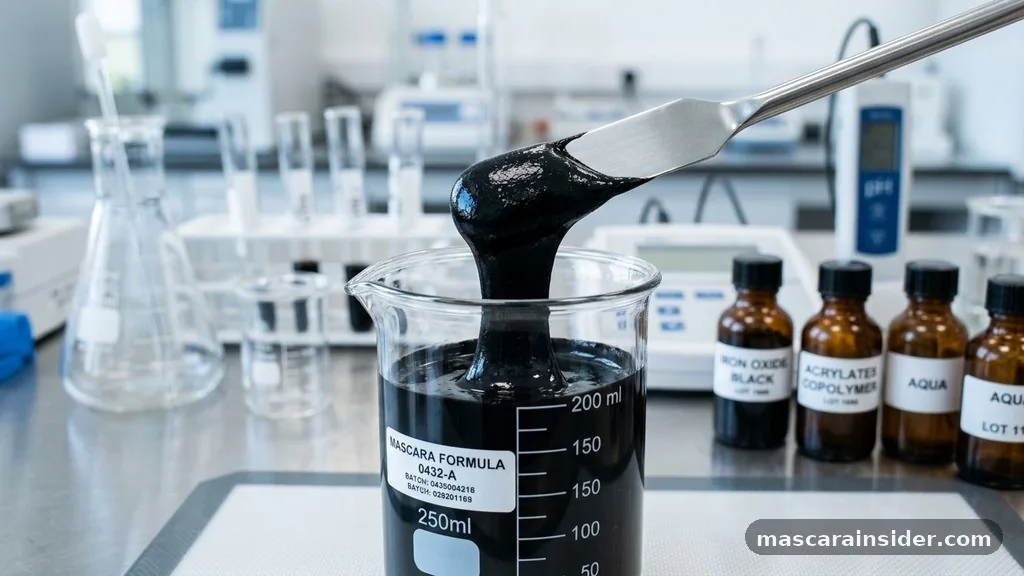
Learning how do you make mascara involves a fascinating blend of chemistry, artistry, and strict safety standards. Whether you are curious about the DIY kitchen-table approach or the high-stakes world of industrial cosmetic manufacturing, the core objective remains the same: creating a stable, pigment-rich emulsion that adheres to delicate lashes without causing irritation.
At its heart, this cosmetic product is a sophisticated mixture of waxes, oils, and colorants designed to thicken and darken hair. While the internet is full of simple recipes using household items, professional formulations are far more complex. They require careful balancing of surfactants and stabilizers to ensure the product remains safe for the sensitive eye area over its entire lifespan.
The Chemistry Behind Modern Mascara Formulations
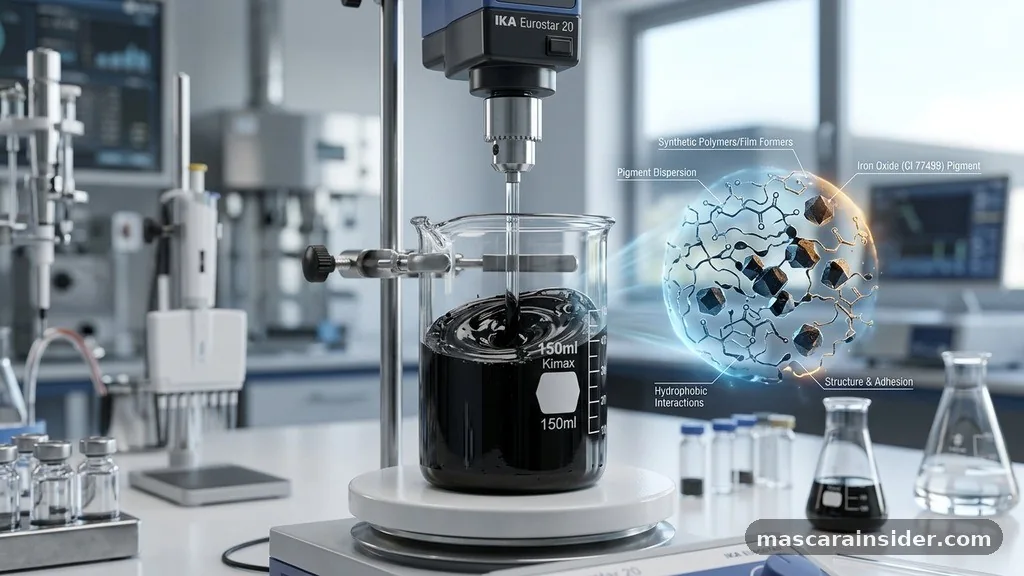
Understanding how do you make mascara requires looking at it as an emulsion. Most formulas are oil-in-water or water-in-oil systems where polar and non-polar ingredients must be forced to coexist. Without an emulsifier, your mascara would simply separate into a puddle of oil and a layer of colored water within days.
Professional chemists focus on the interaction between the wax phase and the water phase. They use an emulsifying wax to bridge the gap between these two incompatible groups.
This ensures that the texture remains creamy and uniform from the first application to the last. If the emulsion is unstable, the product will dry out, clump, or fail to coat the lashes evenly.
The viscosity of the final product is also paramount. Formulators adjust the ratio of solids to liquids to achieve the desired lash volume and length.
If the formula is too thin, it will run; if it is too thick, it will be impossible to apply. Achieving this “goldilocks” consistency is the primary challenge in the lab.
Key Ingredients for Professional Results
When manufacturers determine how do you make mascara that actually performs, they select ingredients based on their specific functional properties. You cannot simply throw random oils into a bottle; each component must serve a purpose. The base usually consists of a blend of waxes that provide structure and hold.
Common professional ingredients include:
- Beeswax pellets: These provide the structural base and help the product cling to the lashes.
- Shea butter: Acts as a conditioning agent to keep lashes supple and prevent breakage.
- Coconut oil: A carrier oil that helps dissolve the pigments and ensures smooth glide.
- Iron oxides: The standard minerals used to provide deep, rich black or brown color.
- Aloe vera gel: Often added to water-based formulas to soothe the eye area.
- Preservative systems: Essential for preventing bacterial growth in a moist, dark environment.
Using cosmetic grade ingredients is non-negotiable. Industrial suppliers provide materials that have been purified to remove heavy metals and impurities that could cause eye infections or allergic reactions. Never substitute these with food-grade ingredients, as they may contain contaminants.
The Role of Pigment Dispersion
A deep, saturated color is the hallmark of a high-quality product. Pigment dispersion is the process of breaking down color particles so they are perfectly suspended in the formula. If the pigments are not properly ground and dispersed, the mascara will appear streaky or grainy when applied to the lashes.
Manufacturers use high-shear mixers to force the iron oxides into the oil phase. This ensures that every drop of the final product contains the exact same concentration of color. If you have ever used a mascara that looked dark on the brush but sheer on the lash, it is likely because the pigment dispersion was poorly executed during production.
In addition to the base color, some brands add pearlizing agents or specialized polymers. These enhance the light-reflecting properties of the lashes. The goal is to maximize the visual impact while maintaining a lightweight feel that doesn’t weigh the lashes down throughout the day.
Safety Standards and Preservative Systems
Because the eye is one of the most sensitive parts of the body, learning how do you make mascara must start with safety. The eye environment is warm and humid, creating the perfect breeding ground for bacteria and mold. Without a robust preservative system, a mascara tube would become a health hazard within a week of opening.
Professional brands perform microbial challenge testing on every batch. They must ensure that the preservative can effectively neutralize common pathogens like Staphylococcus aureus or Pseudomonas aeruginosa. This is why commercial mascaras have a recommended shelf life of three months; after that, the preservative system begins to degrade, and the risk of infection increases significantly.
Home-based attempts to make mascara often skip this step entirely. Using ingredients like charcoal or coffee without a professional-grade stabilizer is essentially creating a petri dish. If you are serious about production, investing in broad-spectrum preservatives is the most important technical hurdle you will face.
The Double Boiler Method for Small Batches
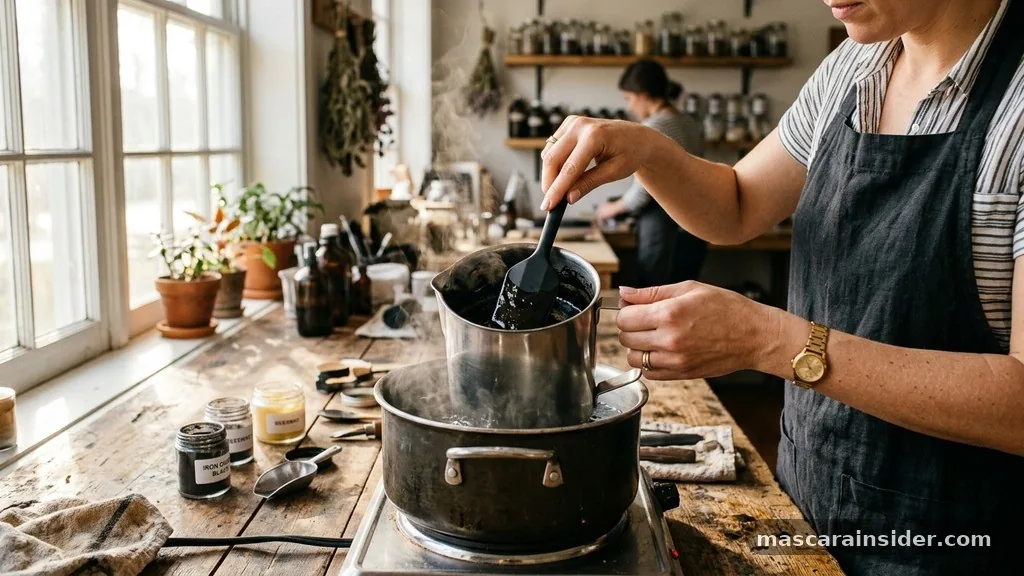
When experimenting with formulas, the double boiler method is the standard technique for melting waxes and oils without scorching them. Direct heat is too aggressive and can change the chemical properties of delicate oils like shea butter. By using a gentle water bath, you maintain a consistent, low temperature that allows for a smooth, homogenous melt.
This process is generally followed in these steps:
1. Combine your waxes (like beeswax) and solid fats in the top of the double boiler.
2. Slowly heat until fully melted, stirring continuously to ensure no air bubbles are trapped.
3.
Gradually incorporate your oils and colorants, ensuring the pigment is fully integrated.
4. Remove from heat and stir until the temperature drops to a workable level before adding any heat-sensitive actives.
5. Transfer to sterilized containers immediately to prevent airborne contamination.
Using this method allows for better control over the final texture. It is a slow, methodical process that mimics the industrial heating vats on a much smaller scale.
Addressing Topical Gaps in Homemade Mascara
Many tutorials claim you can make mascara using just two or three ingredients. However, these often fail to address the realities of how mascara actually functions.
A common gap in DIY advice is the lack of a smudge-proof formulation. Real mascara needs to be water-resistant to survive a day of blinking and environmental humidity.
Most home recipes rely on oils and waxes that melt at body temperature. When these hit your warm eyelids, they smudge instantly.
Professional formulas use specific film-forming polymers that “set” on the lash, creating a flexible, water-resistant barrier. You cannot achieve this with simple kitchen ingredients like coconut oil or cocoa powder.
Another gap is the lack of proper viscosity modifiers. Homemade versions are often either too runny or so thick they clump. By incorporating professional ingredients like bentonite clay or specialized gums, you can create a formula that adheres to the lash without flaking off under your eyes by midday.
Equipment Needed for Professional Production
To transition from hobbyist to producer, you need more than just a stove and a bowl. Professional equipment ensures consistency and safety across every batch produced.
| Equipment Type | Purpose |
|---|---|
| High-Shear Mixer | Ensures uniform pigment dispersion. |
| Digital Thermometer | Maintains precise control during the melting phase. |
| Vacuum Chamber | Removes air bubbles from the mixture to prevent tube settling. |
| Autoclave | Sterilizes the final packaging to ensure zero contamination. |
| Viscometer | Measures the thickness of the formula to ensure batch consistency. |
Investing in these tools signals a move toward professional-grade production. It also allows you to document your processes, which is a requirement for meeting regulatory standards like those set by the FDA or the European Union’s cosmetic regulations.
Packaging and Long-Term Stability
The container is just as important as the formula itself. A good mascara tube features a wiper—the small, circular seal at the top of the tube.
This wiper removes excess product from the wand, ensuring that you apply only the amount necessary for a perfect coat. Without a properly engineered wiper, your mascara will always be clumpy.
Stability testing involves placing your finished product in various environments to see how it performs. You should test for extreme heat, extreme cold, and high humidity. If the mascara leaks, separates, or develops an off-odor, the formula is not stable.
You must also consider the interaction between the formula and the container material. Some high-oil formulas can degrade certain types of plastic over time, leading to chemical leaching. Using high-quality, cosmetic-grade PET or glass is essential for maintaining the integrity of your product.
Troubleshooting Common Formulation Failures
Even experienced formulators run into issues where a batch doesn’t turn out as expected. The most common problem is “syneresis,” where the oil begins to leak out of the solid wax matrix. This is usually caused by an incorrect ratio of wax to oil or a failure in the emulsification process.
If your mascara is flaking, it means the film-forming agents are not flexible enough. You may need to increase the amount of glycerin or another humectant to keep the coating on the lash supple. Conversely, if it is smudging, you need to increase the wax content or add a specialized polymer that provides better water resistance.
Always keep a detailed lab notebook. Record the exact temperature at which you added every ingredient, the time spent mixing, and the cooling rate. If a batch fails, these notes will help you identify the specific variable that caused the issue, allowing you to iterate toward a better version.
Conclusion
Creating mascara is a sophisticated exercise in balancing volatile ingredients to achieve a result that is both beautiful and safe. By moving beyond simple kitchen recipes and into the realm of professional chemistry, you gain a deeper appreciation for the stability and performance of high-end cosmetics. Whether you are aiming to launch a brand or simply refine your own personal routine, prioritizing safety, proper pigment dispersion, and robust preservative systems is the key to success.
If you are ready to experiment, start by sourcing high-quality, cosmetic-grade raw materials and investing in a reliable scale for precise measurements. The journey of how do you make mascara is one of constant learning and refinement, where every batch brings you closer to the perfect lash-enhancing formula.
What are the essential ingredients for making mascara?
The core ingredients include waxes, oils, color pigments, emulsifiers, and a robust, broad-spectrum preservative system.
Can I make mascara without using preservatives?
No, mascara is a water-based product that requires preservatives to prevent the growth of harmful bacteria.
Why does my homemade mascara smudge so easily?
Homemade versions usually lack the film-forming polymers needed to create a water-resistant, smudge-proof barrier on lashes.
What is the best way to melt ingredients for mascara?
The double boiler method is best for melting ingredients slowly and evenly without damaging delicate botanical oils.
How do I ensure my mascara is safe for the eyes?
Use only cosmetic-grade ingredients, sanitize all equipment, and include professional-grade, tested preservatives in your formulation.
How long does homemade mascara typically last?
Without professional-grade stabilization and testing, homemade mascara should be discarded after one or two weeks maximum.
What does a wiper do in a mascara tube?
A wiper removes excess product from the applicator wand to prevent clumping and ensure even application.


