

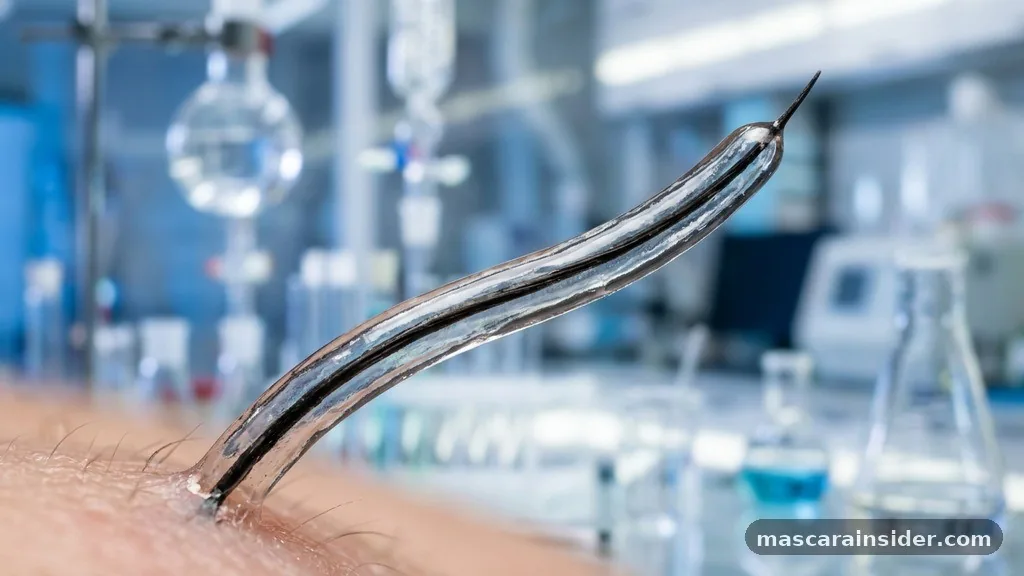
If you have ever dealt with the frustration of end-of-day raccoon eyes, you have likely encountered the promise of a better lash product. Discovering what is tubing mascara is often the turning point for people who struggle with traditional oil-based formulas that migrate south the moment the humidity rises.
Unlike conventional options that rely on waxes and pigments to coat your lashes, these innovative products utilize advanced chemistry to create a long-lasting look. You will find that switching to this technology changes not just how your makeup stays on, but specifically how you take it off at the end of the night.
The Chemistry Behind Tubing Formulas
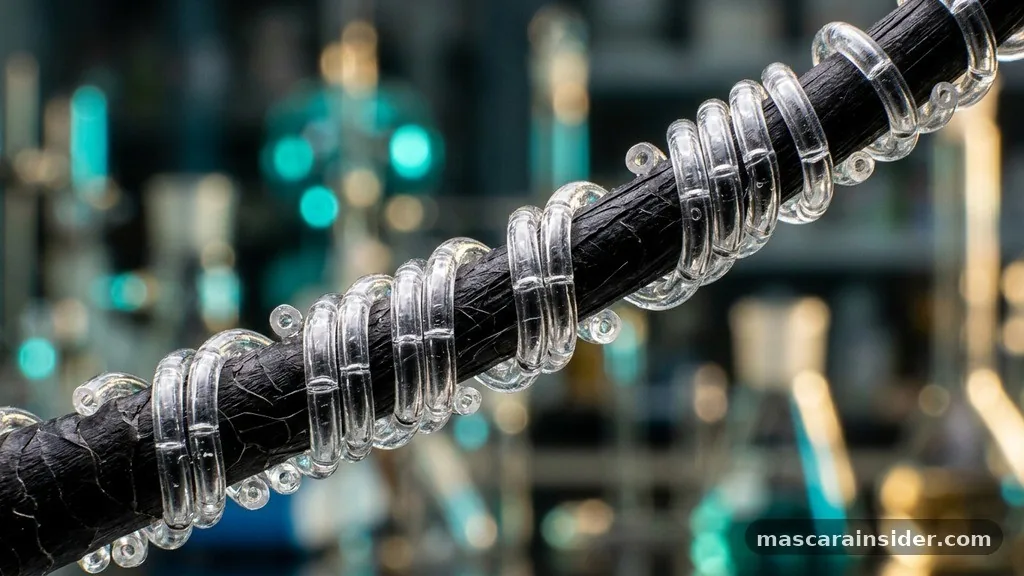
At its core, understanding what is tubing mascara requires a look at the polymer-based formula that defines the category. While standard mascaras are essentially pigmented waxes that cling to your lashes, tubing products contain film-forming polymers—most commonly acrylic copolymers. When you apply the liquid, these polymers wrap around each individual hair like a tiny, flexible sleeve.
As the product dries, it creates a physical tube that locks onto the lash shaft. Because these tubes are resistant to oils and friction, they don’t dissolve or smear when you rub your eyes or experience oily eyelids. This structural difference is why they are widely considered the gold standard for anyone who deals with constant smudging or “panda eyes” by mid-afternoon.
Why Tubing Mascara Resists Smudging
The primary reason these products excel is their lack of traditional heavy waxes. Standard mascaras often lose their grip when they encounter the natural oils produced by your skin, causing the pigment to break down and settle under your eyes. Because a polymer-based formula is entirely synthetic and non-greasy, it remains stable regardless of how much sebum your eyelids produce throughout the day.
This makes them a top choice for people who have hooded eyes or who live in humid climates. Since the “tube” is essentially a physical barrier, it doesn’t just sit on top of the lash; it creates a sealed environment. This technology ensures that even if you sweat or get caught in a light drizzle, the lashes remain intact without flaking or bleeding onto your skin.
The Unique Process of Thermal Removal
One of the most fascinating aspects of knowing what is tubing mascara is learning about the removal process. You do not need harsh makeup removers or heavy oil cleansers to get these off. Instead, they rely on thermal removal, which means the bond between the polymer and your lash is designed to loosen only when exposed to a specific temperature.
To remove the product, you simply soak your lashes with warm water. As the water warms the polymers, the sleeves soften and slide off the lashes in one clean motion.
You might see what looks like little black threads in your sink; don’t panic, as this is simply the product coming off as intended. This method is incredibly gentle on the delicate eye area, significantly reducing the amount of tugging and pulling required during makeup removal.
Comparing Tubing and Traditional Mascara
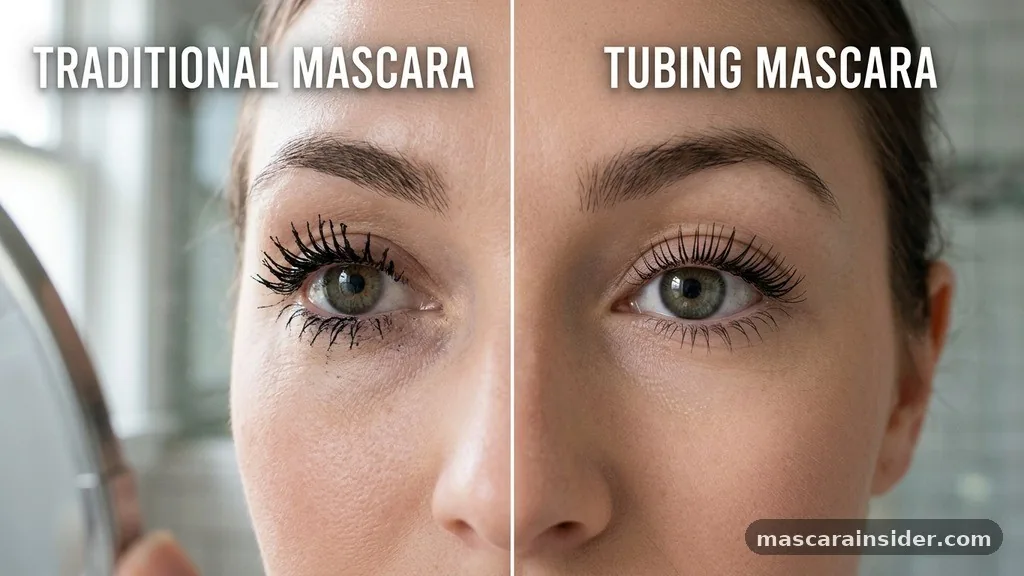
Choosing the right product depends on your daily habits and your specific lash goals. While tubing formulas excel at longevity, traditional mascaras often offer more volume through heavy wax buildup. The following table highlights the key operational differences between the two categories.
| Feature | Tubing Mascara | Traditional Mascara |
|---|---|---|
| Removal Method | Warm water soak | Cleansing oil or balm |
| Smudge Resistance | High (Oil-resistant) | Moderate (Can melt) |
| Finish | Clean, defined | Voluminous, thick |
| Eye Sensitivity | Usually hypoallergenic | Varies by brand |
Benefits for Specific Users
If you fall into certain categories, you will likely find that tubing technology becomes a staple in your vanity. Contact lens wearers often struggle with traditional mascara because the tiny flakes can fall into the eye and cause significant irritation behind the lens. Because tubing formulas stay put and do not flake, they are a safer, more comfortable alternative for those with sensitive eyes.
Furthermore, if you are a fan of lash extensions but want to bridge the gap between fills, these products are excellent. They provide the necessary lash definition to make your natural lashes blend seamlessly with extensions without damaging the adhesive. Because they don’t require heavy scrubbing to remove, you won’t risk pulling out your natural lashes or loosening your extensions prematurely.
Addressing Topical Gaps: Common Misconceptions
Many users wonder if tubing mascara can actually provide the dramatic volume associated with high-end luxury brands. A common misconception is that because the formula is lightweight, it cannot provide length.
In reality, the film-forming polymers can be layered effectively while the formula is still wet to create a “falsie” effect. However, you must move quickly; once the tubes set, trying to apply more coats can lead to clumping or a brittle texture.
Another gap in common knowledge is the difference between “waterproof” and “tubing.” People often assume a water-resistant label means it is a tubing mascara, but this is not always the case.
Waterproof products usually contain ingredients that require oil-based solvents to break down, whereas tubing products are strictly water-soluble at high temperatures. If you see a product labeled “waterproof,” it is likely not a tubing mascara, and it will not slide off with just warm water.
Application Tips for Best Results
To get the most out of your tubing mascara, your application technique is everything. Start at the base of your lashes and wiggle the wand upward to ensure the polymers wrap around the root. Because these formulas dry relatively fast, you want to apply all your desired coats before the first one fully sets.
* Ensure your lashes are completely clean and free of leftover oils before starting.
* Apply one eye at a time to prevent the product from drying before you finish layering.
* If you experience minor clumping, use a clean spoolie brush to separate the lashes immediately.
* Avoid using an oil-based primer underneath, as it can prevent the polymers from adhering correctly to the lash shaft.
FAQ: What Is Tubing Mascara?
Is tubing mascara actually waterproof?
It is water-resistant regarding sweat and humidity, but it will slide off easily with warm water.
Can I use an eyelash curler with tubing mascara?
Yes, but always curl your lashes before application to avoid breaking the tubes once they have set.
Is tubing mascara safe for sensitive eyes?
Most formulas are hypoallergenic and avoid the irritating waxes that cause redness or burning in sensitive eyes.
Does tubing mascara provide volume?
It excels at lash definition and length, though some formulas are specifically designed to build extra volume.
Why is my tubing mascara clumping?
Clumping usually occurs if you try to add a third or fourth coat after the initial layer dries.
How do I know if my mascara is a tubing formula?
Check the label for acrylic copolymers or look for instructions that mention removal with only warm water.
Is it better than regular mascara?
It is superior for preventing panda eyes, but regular mascara may be better for extreme, heavy volume.
Final Thoughts on Tubing Technology
Transitioning to a tubing formula is often the answer for those tired of the daily struggle with smearing and difficult cleanup. By relying on film-forming polymers rather than thick waxes, you gain a product that stays exactly where you put it until you are ready to wash it away. Whether you are a contact lens wearer or simply someone who needs their makeup to hold up through a long workday, the reliability of this technology is hard to beat.
Experimenting with different brands will help you find the right balance of length and volume for your specific lash type. Once you experience the ease of thermal removal and the confidence of a smudge-proof finish, it is difficult to go back to traditional formulas. Give your lashes the upgrade they deserve and enjoy a clean, defined look that lasts from morning until night.


