

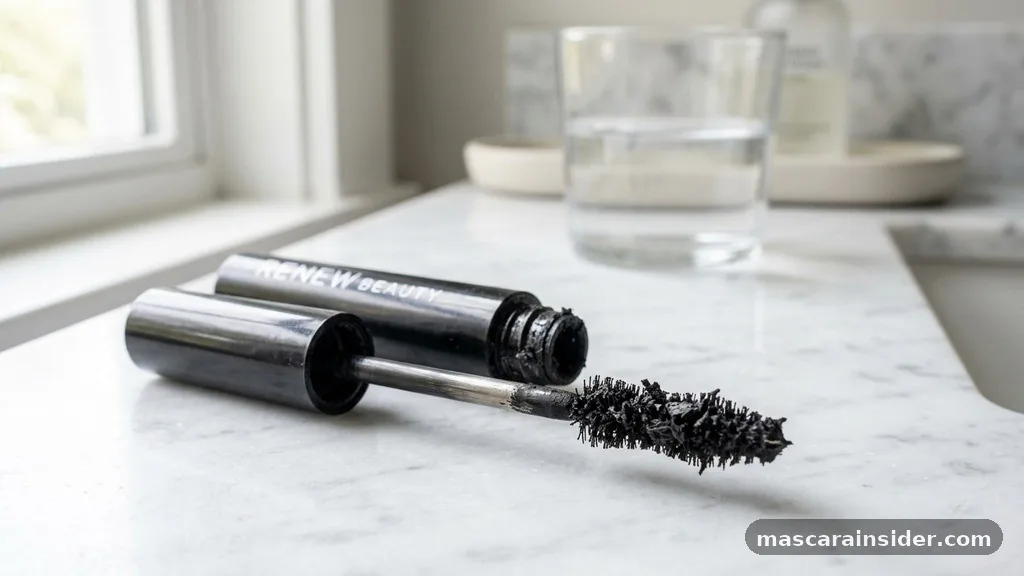
Finding your favorite tube of makeup feeling thick, clumpy, or nearly empty is a common frustration for anyone who wears cosmetics regularly. Learning how to rehydrate mascara can save you a trip to the store and help you get those final few uses out of a product that still has plenty of life left.
While it’s tempting to grab whatever liquid is nearby, the delicate nature of the eye area requires a careful approach to ensure you aren’t introducing harmful irritants. By using the right methods and understanding the limits of your beauty products, you can maintain a clump-free application while prioritizing your long-term eye health.
Understanding the Causes of Dry Mascara
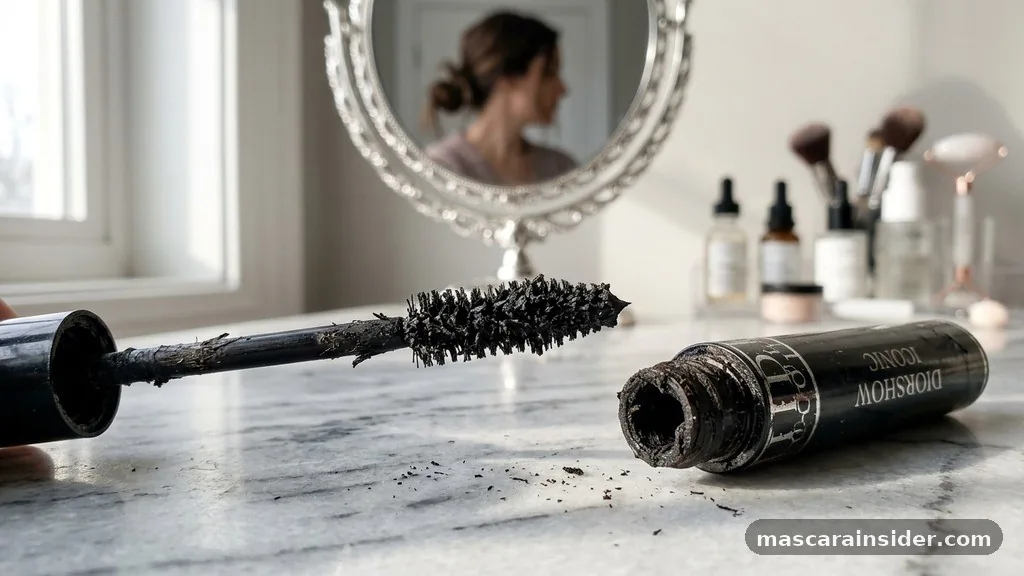
Mascara typically dries out because the airtight seal of the tube has been compromised over time. Every time you pull the mascara wand out and push it back in, you are essentially pumping air into the container.
This repeated exposure to oxygen causes the volatile components in the formula to evaporate, leading to a thicker, drier consistency. Over months of use, the once-smooth liquid becomes gummy, making it difficult to coat your lashes evenly without creating messy clumps or spider-leg effects.
Beyond simple air exposure, the chemical composition of the product plays a major role in its longevity. Most mascaras contain waxes, pigments, and preservatives designed to stay on the lashes for hours.
As the water content slowly dissipates, the remaining waxes harden, changing the formula consistency significantly. If you notice your product starting to flake or feel heavy on your lashes, it is a clear sign that the moisture balance has been disrupted and the shelf life is nearing its end.
The Warm Water Bath Method
One of the safest and most effective ways to revive a dry tube is the warm water bath. This technique works by gently heating the product, which helps the hardened waxes inside the tube soften without introducing any foreign substances into the formula. To do this, simply fill a small cup with hot—but not boiling—water.
Place the tightly closed mascara tube into the cup and let it sit for about five minutes. The ambient heat penetrates the tube, loosening the contents and making the texture more pliable for your next application.
This method is particularly useful because it avoids the risks associated with adding liquid directly into the tube. Since you aren’t opening the container to mix anything in, you maintain the integrity of the preservatives originally formulated by the manufacturer.
It is a quick, mess-free solution that often yields immediate results. If you find the product is still too thick after the first attempt, you can repeat the process, but always ensure the cap is screwed on tightly to prevent any water from leaking inside.
Using Saline Solution for Moisture
If a warm water bath isn’t enough, many people turn to saline solution to restore the necessary moisture. Because saline is designed for use in the eyes, it is generally considered safer than other household liquids like tap water or oils.
To implement this, add only one or two drops of sterile saline or contact lens solution directly into the tube. After adding the drops, insert the wand and swirl it gently—do not pump the wand, as this introduces more air—to incorporate the liquid into the hardened formula.
It is important to exercise caution with this method. While saline is safe for the eyes, adding too much liquid can dilute the preservatives meant to keep your makeup free from bacteria.
Stick to the absolute minimum amount needed to achieve a usable consistency. If you find that you need to add more than two or three drops to get the product to move, the mascara has likely deteriorated too far and should be discarded to prevent potential infections.
Common Topical Gaps in Mascara Care
Many articles focus solely on the “how” of reviving dry products without addressing the critical warnings about bacterial contamination. A major gap in common advice is the failure to distinguish between a product that is merely dry and one that has simply expired.
Mascara is one of the most short-lived beauty products in your collection, typically having a shelf life of only three months once opened. Even if you manage to rehydrate it successfully, you must remember that the original preservative system will eventually fail.
Another overlooked aspect is the difference between standard and waterproof mascara. Waterproof formulas are specifically engineered with different solvents that resist moisture, meaning they don’t respond to water-based rehydration methods as well as traditional formulas.
Attempting to mix water or saline into a waterproof product often results in a separated, unusable mess. If your waterproof mascara is clumping, it is usually a sign that the waxes have broken down permanently, and no amount of thinning will restore its original performance.
Identifying When to Discard Your Product
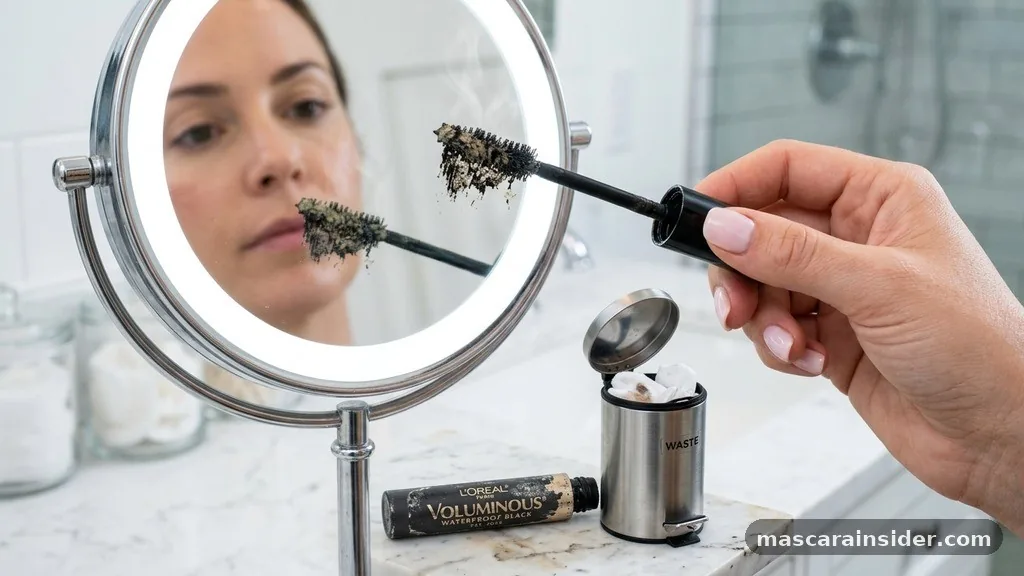
Knowing when to stop trying to fix a tube is just as important as knowing how to repair it. An ophthalmologist would generally advise that if your mascara has a strange odor, a change in color, or causes any irritation when applied, it should be thrown away immediately.
These are classic indicators that bacteria have colonized the tube, which can lead to serious eye infections like conjunctivitis or styes. Never compromise your health for the sake of getting a few extra days of wear out of a tube.
Check the expiration date printed on the packaging, usually denoted by a small jar symbol with a number like “6M” or “3M,” representing how many months the product is safe to use after opening. If you can’t remember when you opened it, look for signs of degradation.
If the product has become chunky, separates into oily and solid phases, or feels gritty on the lashes, it has passed its prime. Trying to force a product that has naturally expired is never worth the risk to your vision or comfort.
The Role of Ingredients and Formula Stability
The chemistry behind your makeup is complex, and understanding it helps you manage your expectations. Mascaras rely on a precise balance of polymers, waxes, and pigments to function.
When you introduce oil-based solvents or even basic water, you are altering that chemical balance. While glycerin is sometimes suggested as an additive because it is a humectant that retains moisture, it can be too heavy and cause the product to smudge or run throughout the day.
Commercial formulas are tested for stability, meaning they are designed to resist the growth of microorganisms for a specific window of time. When you add outside ingredients, you bypass these safety checks.
This is why it is vital to avoid adding oils, eye drops that contain medicated ingredients, or saliva, which is teeming with bacteria. Stick to sterile, simple solutions if you must add anything at all, and recognize that any change you make is essentially a “hack” that shortens the life of the product.
Comparison of Rehydration Techniques
When deciding which method to use, consider the trade-offs between speed, safety, and effectiveness. The following table outlines the most common approaches and their potential impact on your makeup routine.
| Method | Effectiveness | Safety Level | Best For |
|---|---|---|---|
| Warm Water Bath | High | Very High | Mildly dry, thick formulas |
| Saline Solution | Medium | High (if sterile) | Very dry, non-waterproof formulas |
| Glycerin/Oils | Low | Low | Not recommended |
As shown in the table, the warm water bath is the safest option because it involves zero physical contamination of the interior formula. If you must use a liquid, saline is the industry standard for a reason. Avoid oils and thickeners, as these often lead to poor aesthetic results and can clog the follicles along your lash line, leading to further irritation.
Best Practices for Maintaining Mascara Longevity
To avoid needing to rehydrate your products in the first place, focus on how you handle your tools. One of the most common mistakes is “pumping” the wand, which forces air into the tube and accelerates drying.
Instead, use a gentle swirling motion inside the tube to pick up the product. Always ensure the cap is twisted until you hear it click or feel a firm stop; leaving it even slightly loose will cause the contents to dry out within days.
Store your makeup in a cool, dry place. The bathroom is often a poor choice due to the humidity fluctuations from hot showers, which can degrade the formula faster than you might expect.
A drawer or a vanity in a temperature-controlled room is much better for maintaining the stability of your cosmetics. Additionally, wiping the wand clean with a disposable tissue every few applications can prevent the buildup of dried crusts that prevent the tube from closing fully.
Avoiding Common Mistakes
* Never add tap water to your tube; it contains impurities and minerals that can introduce bacteria.
* Avoid using saliva to fix dry mascara, as it introduces mouth bacteria directly to the eye area.
* Do not share your mascara with friends, as this is the fastest way to transmit infections.
* Stop trying to fix the product if it starts to smell “off” or sour.
* Don’t keep a tube for more than three to four months, regardless of how much product is left.
* Avoid using eye drops that are medicated (like redness-relievers) to thin your makeup.
By following these simple guidelines, you can keep your makeup in the best condition possible for as long as it is safe to use. If you notice your eyes becoming red or itchy after an application, stop using the product immediately and consider replacing it. Your eye health is far more important than any tube of makeup, and knowing when to let go of an old product is the mark of a savvy beauty enthusiast.
Frequently Asked Questions
How can I tell if my mascara is truly expired?
If the mascara has a sour or “off” smell, is clumpy, or causes eye irritation, it is expired.
Is it safe to use contact lens solution to rehydrate mascara?
Yes, as long as it is sterile saline solution and you only add one or two drops total.
Does the warm water bath method damage the mascara formula?
No, it gently softens the waxes without adding any foreign substances, making it the safest rehydration method available.
Why should I avoid pumping the mascara wand?
Pumping the wand forces air into the tube, which causes the formula to dry out much faster than normal.
Can I use oil to thin out my dry mascara?
No, oils will break down the formula, cause smudging, and may lead to clogged pores or eye infections.
How long should I keep a tube of mascara?
You should discard your mascara after three months of use to ensure it remains free from bacterial contamination.
What if my mascara is waterproof?
Waterproof mascara is harder to revive; usually, it is best to replace it if it becomes clumpy or dry.
By staying mindful of how you handle your cosmetics, you can ensure a smooth, professional look every time you reach for your makeup bag. While knowing how to rehydrate mascara provides a helpful temporary fix for a thickening tube, it is never a substitute for replacing old products. Prioritizing your eye health by respecting the expiration dates and storage requirements will always yield the best results for your lashes.
If you find your products are constantly drying out, consider switching to smaller travel-sized tubes that you can finish within the recommended three-month window. Take care of your tools, maintain a clean application process, and enjoy the confidence that comes with a fresh, clump-free look. If you have any specific concerns about irritation or product safety, consulting with a professional remains the best course of action for your long-term beauty routine.


