

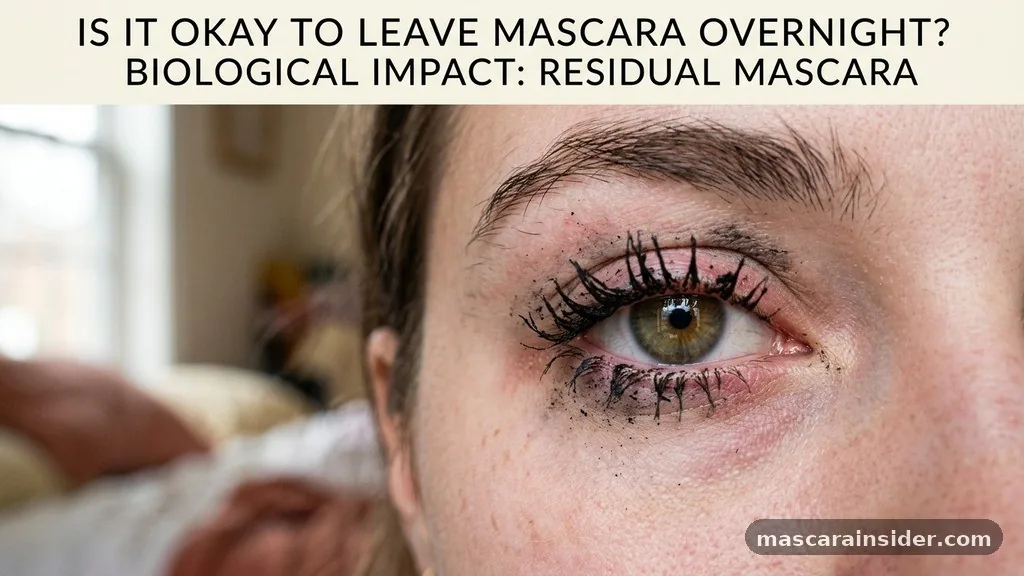
Wondering if it is ok to leave mascara on overnight is a common dilemma after a long, exhausting day. While skipping your nighttime skincare routine feels tempting when you are tired, the health of your eyes and the integrity of your lashes depend on thorough cleansing. Failing to remove eye makeup consistently can lead to significant irritation, long-term damage, and potentially serious infections.
By understanding the physiological impact that residual product has on your eyelids and follicles, you can better appreciate why proper hygiene remains non-negotiable for beauty and health. Let’s break down exactly why you should always reach for your cleanser before hitting the pillow.
The Biological Impact of Residual Mascara
When you decide it is ok to leave mascara on overnight, you are essentially creating a trap for debris, bacteria, and environmental pollutants. Throughout the day, mascara gathers microscopic particles from the air, including dust, pollen, and smoke.
Once you lie down, these particles don’t simply vanish; they settle into the delicate skin around your eyes and the conjunctiva. This constant exposure to foreign matter can trigger chronic ocular irritation, leading to redness, stinging, and a gritty sensation that persists long after you wake up.
Beyond surface-level discomfort, the physical weight and texture of dried mascara cause mechanical stress on your lashes. Mascara formulas are designed to adhere tightly to hair fibers, providing length and volume. When this formula hardens overnight, it loses its flexibility.
As you toss and turn, your pillowcase exerts friction against these stiffened lashes. This often results in lash breakage, as the brittle hair snaps under pressure rather than bending naturally. Over time, this cycle of damage thins out your lash line, making it difficult for your lashes to recover their natural density or length.
Ophthalmic Complications and Infections
The most severe consequence of neglecting eye makeup removal involves the risk of developing ophthalmic complications. Your eyelids contain a complex network of glands known as meibomian glands, which secrete the oils necessary to keep your eyes lubricated and comfortable.
When you leave thick, waxy product on your lashes, you risk clogging the openings of these glands. This blockage contributes to meibomian gland dysfunction, a condition where the quality of your tears degrades, leading to chronic dry eye symptoms that are notoriously difficult to treat.
Furthermore, the environment of the eyelid is perfectly suited for bacterial growth when trapped by makeup. Sleeping in your mascara provides a breeding ground for pathogens that can easily migrate into the eye. This commonly manifests as conjunctivitis, or pink eye, characterized by inflammation, discharge, and intense itching.
In more extreme cases, particles of hardened mascara can flake off and find their way into the eye socket, causing a corneal abrasion. This is not merely a minor annoyance; a scratch on the cornea is painful, requires medical intervention, and can potentially lead to long-term vision impairment if it becomes infected.
Understanding the Lash Growth Cycle
To appreciate why nighttime care matters, you must consider the lash growth cycle. Much like the hair on your head, your eyelashes go through phases of growth, transition, and rest. During the resting phase, the hair follicle is dormant, and the lash is firmly anchored.
However, if you consistently impede this cycle with heavy, pore-clogging products, you interfere with the natural shedding and renewal process. Your follicles need to remain clear to function correctly and support the growth of new, healthy lashes.
| Condition | Impact on Lashes | Risk Level |
|---|---|---|
| Dried Mascara | High breakage due to stiffness | Moderate |
| Clogged Glands | Dry eye and follicle inflammation | High |
| Bacterial Buildup | Increased risk of conjunctivitis | High |
| Friction Damage | Premature lash loss | Moderate |
When you leave mascara on, you are effectively “suffocating” the base of the lash. The buildup creates a barrier that prevents the skin from breathing and shedding dead cells effectively. This can lead to a condition called blepharitis, which is an inflammation of the eyelid margins.
Blepharitis causes the skin to become scaly, crusty, and inflamed, often resulting in crusty deposits at the base of the lashes upon waking. This inflammation disrupts the natural cycle, potentially leading to thinner, weaker lashes that are more prone to falling out prematurely.
The Specific Risks of Waterproof Formulas
If you often find yourself asking is it ok to leave mascara on overnight, you should consider the type of product you use. Waterproof mascara is notoriously difficult to remove because it contains film-forming polymers designed to resist moisture, sweat, and tears. These formulas are significantly more drying than water-soluble alternatives.
When left on overnight, they do not soften; they remain rigid, acting like tiny, sharp splints attached to your eyelashes. The extra effort required to remove these at night is inconvenient, but leaving them on is a recipe for disaster.
Because waterproof formulas are designed to stay put, they often require a dedicated oil-based cleanser to break down the chemical bonds. If you try to scrub them off with water or a harsh wipe, you end up tugging at your lashes, causing mechanical damage. However, the trade-off of leaving them on is far worse.
The drying effect of the polymers draws moisture out of the hair shaft, increasing eyelash brittleness. When your lashes lose their natural suppleness, they become far more susceptible to snapping during your morning routine when you apply a curler or add another layer of product.
Effective Removal Techniques for Busy Nights
The best way to avoid the temptation of skipping your routine is to make the process as efficient as possible. You don’t need a ten-step regimen to keep your eyes healthy. A high-quality micellar water is often enough to dissolve most standard mascaras without excessive rubbing.
Simply soak a cotton pad, hold it against your closed eyelid for thirty seconds, and gently swipe downward. This “press and hold” method allows the surfactants in the solution to break down the makeup without the need for abrasive scrubbing.
If you prefer using an oil-based cleanser, you can massage it directly into your lashes and lids with clean fingertips. This is particularly effective for stubborn, waterproof formulas, as the oil dissolves the waxy ingredients that water simply cannot touch. After massaging, use a warm, damp cloth to wipe away the emulsified makeup gently.
This method is not only effective but also soothing, as it helps clear away the debris that accumulates throughout the day. Establishing this simple, two-minute habit ensures you never have to wonder if it is ok to leave mascara on overnight again.
Addressing Common Myths and Misconceptions
Many people believe that because they have “tough” skin or have never had an infection, they are immune to the consequences of sleeping in makeup. This is a dangerous misconception. Ocular health is not just about how you feel today; it is about the cumulative effects of neglect over months and years.
Even if you don’t wake up with a glaring infection, you might be experiencing sub-clinical inflammation that is slowly damaging your follicles. The “one-night-won’t-hurt” mentality is exactly how bad habits start, and it is rarely just one night in practice.
Another common myth is that certain high-end or “natural” mascaras are safe to sleep in. While some formulas may be less irritating than others, no mascara is designed to be worn for 24 hours straight. Your eyes need a period of rest, and your lashes need to be free of any coating to maintain their health.
Regardless of the brand, the price point, or the “clean” ingredients list, the presence of any cosmetic product on the eye overnight remains a violation of basic hygiene. Your priority should always be creating a clean slate for your skin to recover while you sleep.
Topical Gaps: Managing Sensitive Eyes
For those with highly sensitive eyes, the question of is it ok to leave mascara on overnight is even more critical. If you suffer from pre-existing conditions like seasonal allergies or contact lens-induced dryness, your eyes are already under stress. Leaving mascara on adds a layer of chemical and physical irritation that can exacerbate these conditions significantly.
You might notice that your eyes feel “heavier” in the morning or that you have increased light sensitivity. These are signs that your eyes are struggling to maintain their equilibrium.
* Always perform a patch test with new eye makeup products to check for allergic reactions.
* Discard any mascara that is older than three months to prevent bacterial contamination.
* Avoid applying mascara to the waterline, as this directly interferes with the meibomian glands.
* Use a lash serum to nourish the hair follicles if you have experienced previous breakage.
* Prioritize fragrance-free or hypoallergenic formulas to minimize the risk of contact dermatitis.
If you find that your eyes are frequently red or itchy, look closely at your makeup application. Are you using too much product? Are you properly removing it every single evening?
Often, the solution isn’t a new eye drop or a medical treatment, but a stricter adherence to a simple, effective cleaning routine. By eliminating the source of irritation, you allow your eyes to regain their natural comfort and clarity.
The Connection Between Makeup and Eye Aging
The skin around your eyes is the thinnest and most delicate on your entire body. When you leave mascara on, you are not just affecting the lashes; you are affecting the skin of the eyelid. The constant presence of makeup causes oxidative stress, which contributes to the breakdown of collagen and elastin.
This accelerates the appearance of fine lines and crepey skin. If you are concerned about maintaining a youthful appearance, removing your eye makeup is one of the most effective, low-cost anti-aging strategies you can implement.
Furthermore, the weight of the mascara, combined with the lack of proper cleansing, can lead to sagging over time. When you rub your eyes to remove dried, hardened mascara in the morning, you are further stretching that delicate skin. By choosing to remove your makeup properly at night, you avoid the need for aggressive rubbing the next morning.
It is a preventative measure that pays dividends in the long run. Protecting your eyes from unnecessary mechanical and chemical stress is essential for long-term dermatological health as well as ocular comfort.
Professional Recommendations for Lash Health
Eye care professionals and dermatologists are unanimous in their advice: never sleep in your eye makeup. The risks far outweigh any temporary convenience. If you are truly too tired to perform a full cleanse, keep a pack of gentle, oil-based makeup remover wipes on your nightstand.
While not as effective as a proper wash, they are vastly superior to leaving the product on your lashes. The goal is to remove the vast majority of the debris before your head hits the pillow.
Ultimately, your eyelashes are a functional part of your body, designed to protect your eyes from debris. When you coat them in chemicals and leave them that way, you disable their natural defense mechanisms. Prioritize your eye health by making removal a non-negotiable part of your evening.
Whether you use a high-end cleansing balm or a simple micellar water, the action of cleaning your face is a gesture of self-care. Your lashes will grow stronger, your eyes will feel more comfortable, and you will avoid the unnecessary risks associated with poor hygiene.
Frequently Asked Questions
Is it bad to sleep with mascara on for just one night?
While one night may not cause permanent damage, it significantly increases the risk of immediate eye irritation.
What happens if you keep mascara on for too long?
Prolonged wear leads to lash breakage, clogged glands, eyelid inflammation, and a higher likelihood of bacterial eye infections.
Why has Gen Z stopped wearing mascara?
Many are prioritizing “skinimalism” and natural lash health over heavy, damaging makeup routines that require complex nightly removal.
Can you keep mascara on for 2 days?
No, wearing mascara for 48 hours is extremely detrimental to your ocular health and will severely weaken lashes.
Is it bad to sleep with makeup on for one night?
Yes, it clogs pores and irritates skin, though eye makeup specifically poses the highest risk for infection and inflammation.
Is it bad to wear mascara everyday?
It is safe if you ensure thorough, gentle removal every single night to allow the lashes and glands recovery.
Is mascara bad for your eyelashes?
Mascara itself isn’t inherently bad, but improper removal and low-quality formulas can lead to significant breakage and damage.
The choice to properly remove your mascara is a small but vital habit that defines the long-term health of your eyes and the beauty of your lashes. By avoiding the temptation to leave your makeup on, you prevent a cascade of issues ranging from simple discomfort to serious infections. Consistency remains the most important factor in maintaining healthy lashes and clear vision.
If you find the process difficult, choose products that are easy to remove and keep your cleansing tools within arm’s reach of your bed. Your eyes work hard for you all day; the least you can do is give them a clean, fresh start every single night. Commit to this simple change, and you will quickly see the benefits in both your appearance and your overall eye health.


