

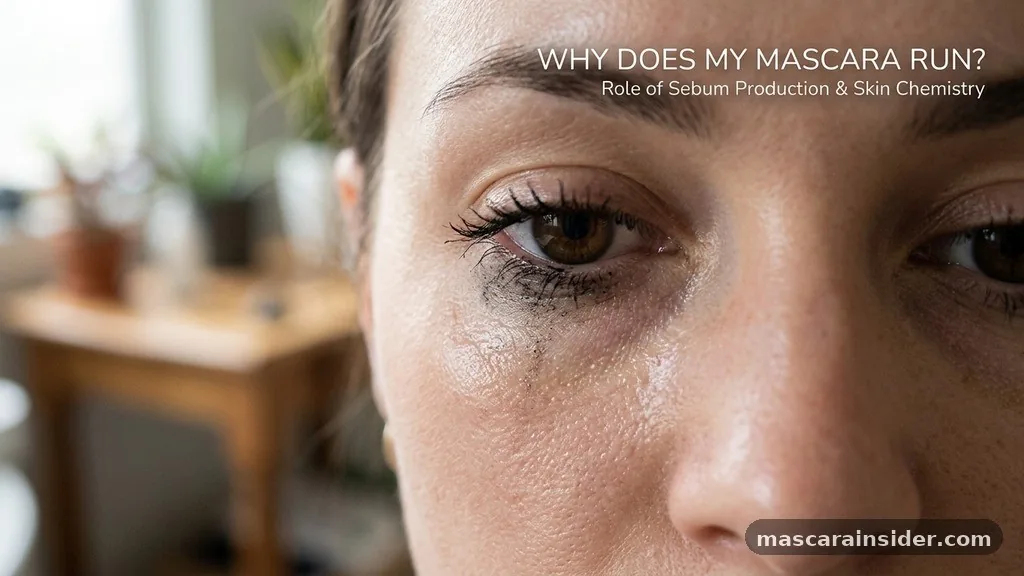
Dealing with the frustration of seeing streaks of black pigment migrating down your cheeks mid-day is a common beauty struggle. Understanding why my mascara run happens usually boils down to a clash between your eye makeup formula and the unique chemistry of your skin.
Whether it is an unexpected bout of humidity, your natural oil production, or an incompatible skincare routine, identifying the root cause is the first step toward a flawless look. You will find that keeping your lashes defined all day is entirely possible once you identify the specific factors causing those dreaded panda eyes.
The Role of Sebum Production and Skin Chemistry
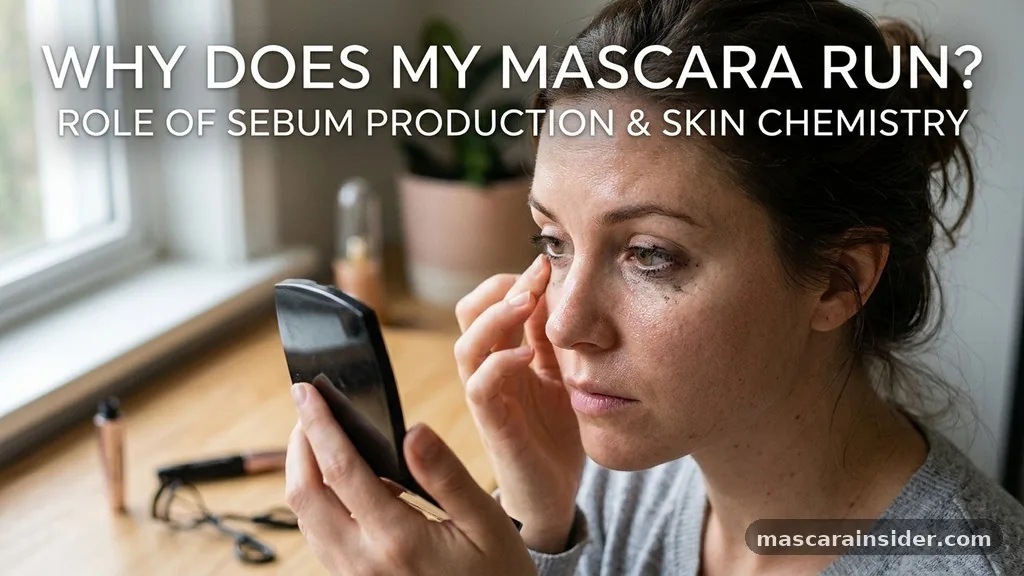
The primary reason for smudging often lies in your body’s natural biology. Your eyelids are home to numerous oil glands, which constantly secrete sebum production to keep the skin hydrated and protected. When this natural oil interacts with the ingredients in your mascara, it can begin to break down the product’s binders.
If you have naturally oily skin, your under-eye area acts like a magnet for any pigment that hasn’t fully set. Even if you don’t consider your skin oily, the heat generated by your body throughout the day can liquefy your makeup. When you blink, your lashes frequently brush against the skin below your eyes, transferring particles that quickly turn into a messy smudge.
Ingredient Compatibility in Your Skincare Routine
Many people unknowingly sabotage their makeup by layering it over the wrong products. Using a heavy oil-based moisturizer or a rich facial oil near the lash line is a recipe for disaster. These products are designed to penetrate the skin, but they also act as a solvent for many standard makeup formulas.
If you must use these products, allow them to absorb completely for at least ten minutes before applying any eye makeup. Better yet, try to keep heavy creams strictly to the cheek and forehead areas, leaving the immediate eye contour clean. Using a targeted eyelid primer can also create a necessary barrier between your skin’s natural oils and your mascara, preventing the breakdown that leads to smudging.
Humidity and Environmental Factors
External conditions play a massive role in how your makeup performs. High humidity levels in the air can make your skin feel clammy and cause makeup to lose its structural integrity. If you are in a warm, moist climate, standard formulas might not hold up against the moisture in the air.
Furthermore, if you find yourself tearing up due to wind, allergies, or even just yawning, that moisture will inevitably interact with your mascara. If your product is water-soluble, it will dissolve on contact. This is where choosing the right formula becomes the most critical decision in your beauty routine.
Decoding Mascara Formulas
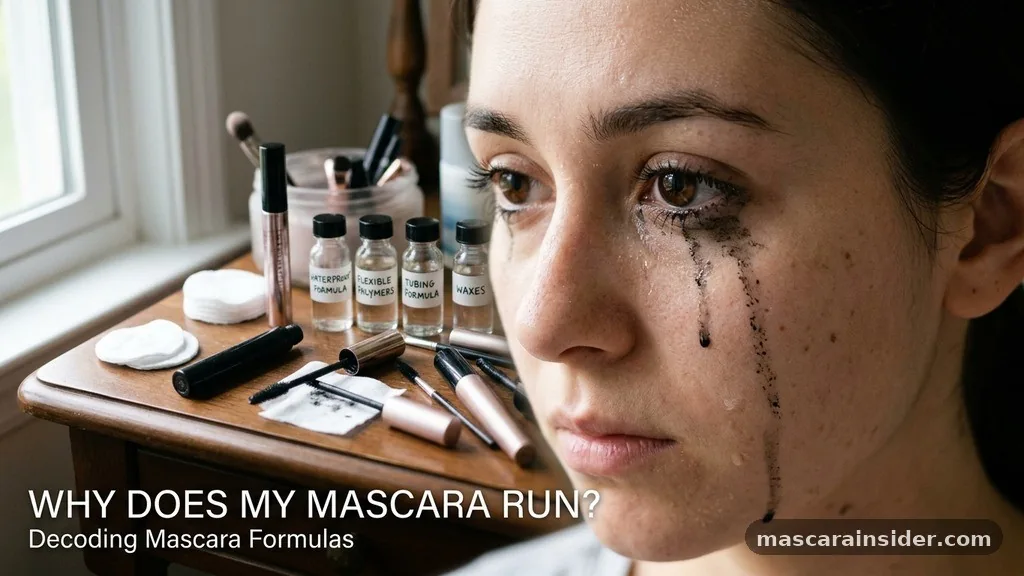
Not all mascaras are created equal, and understanding the technology behind them can save you from constant touch-ups. Most traditional mascaras are water-based, meaning they are designed to come off easily with a basic cleanser. If you struggle with smudging, you might need to switch your approach.
Understanding Tubing Mascara vs. Waterproof Options
Tubing mascara is a game-changer for many people because it uses polymer technology to wrap each lash in a water-resistant sleeve. Unlike traditional wax-based formulas, these tubes do not dissolve with oil or sweat. They only release when exposed to warm water and gentle pressure, which makes them incredibly resistant to the typical smudging that happens throughout a long day.
On the other hand, waterproof mascara is designed to repel water, but it is often still susceptible to oils. If your main issue is the oil from your skin, a waterproof formula might still end up smudging because the oils break down the wax components of the waterproof wax base.
| Formula Type | Best For | Resistance Level |
|---|---|---|
| Water-based | Sensitive eyes | Low |
| Waterproof | Swimming/Heavy tears | High (Water), Low (Oil) |
| Tubing | Smudge-prone skin | Very High (Oil & Water) |
Techniques to Prevent Smudging
If you love your current mascara but hate the fallout, you can employ a few professional techniques to lock it in place. The goal is to create a physical barrier and reduce the amount of moisture and oil that touches your lashes.
- Apply a small amount of setting powder to the skin directly under your lower lashes to absorb excess oil.
- Use a lash primer before your mascara to add a layer of protection and structure to your lashes.
- Set your under-eye concealer with a translucent powder to prevent cream products from migrating into your lash line.
- Finish your entire face with a makeup setting spray to lock everything in place, keeping it away from your eyes.
- Avoid applying mascara to your lower lashes if you notice they are the primary source of your smudging issues.
Addressing Common Topical Gaps
A frequent point of confusion is why waterproof mascara sometimes fails even when the wearer hasn’t been near water. The answer lies in the solvent properties of skin oils.
Many people believe that because a product is labeled “waterproof,” it is invincible. However, most waterproof formulas are lipid-soluble, meaning they effectively dissolve when they encounter the natural oils your skin produces throughout the day.
Another gap in common advice is the role of lash curling. If your lashes are too straight, they are more likely to touch the skin of your upper eyelid or lower orbital area. By curling your lashes, you create a physical lift that keeps them away from the skin, significantly reducing the chance of pigment transfer.
Additionally, if you have hooded eyes, your lashes are constantly rubbing against the skin of your brow bone. Using a smudge-proof tubing formula is often the only way to combat this mechanical transfer.
Conclusion
Finding the right solution for why my mascara run is a process of trial and error involving your skin type, your skincare routine, and the specific formula you choose. By identifying if your issue is oil-related or moisture-related, you can pivot to better products like tubing mascaras or improve your application technique with setting powders. Don’t be afraid to experiment with different combinations until you find the perfect match for your lifestyle.
Once you have the right tools in your kit, you will notice your eye makeup stays pristine from morning until night. If you continue to struggle, try simplifying your under-eye routine to see if a specific product is causing the breakdown.
Frequently Asked Questions
Why does my mascara smudge even if it is waterproof?
Waterproof mascara is designed to repel water, but it can still dissolve when exposed to skin oils.
What is the best way to stop mascara from leaving panda eyes?
Try using a tubing mascara, which uses polymers that don’t dissolve with your skin’s natural oils.
Can my eye cream be the reason my mascara runs?
Yes, using an oil-based moisturizer near your lashes can break down the mascara’s binders throughout the day.
Does setting powder help prevent mascara smudging?
Yes, applying a light dusting of translucent powder under your eyes absorbs oils that cause pigment transfer.
Should I use a lash primer to stop smudging?
A lash primer adds a protective layer that helps hold the mascara in place, reducing potential smudging.
Is it better to skip lower lash mascara?
If you are prone to smudging, avoiding mascara on your lower lashes is the simplest way to prevent it.
Does humidity affect mascara performance?
High humidity can increase moisture around the eyes, which causes water-based formulas to soften and start smudging.


