

Most beauty enthusiasts have a tube of mascara sitting in their vanity drawer long after its prime, but knowing how often to change mascara is essential for maintaining ocular health. Because this product is applied directly to the delicate tissues surrounding your eyes, it acts as a magnet for bacteria every time the applicator touches your lashes and returns to the tube.
While many people hold onto their favorite formulas for months, sticking to a strict replacement schedule is the best way to avoid unwanted irritation. This article explores the science of product degradation, hygiene best practices, and the risks associated with expired cosmetics so you can keep your eyes safe and your lashes looking their best.
The Science Behind Mascara Shelf Life
Understanding how often to change mascara requires a look at the chemistry of the product itself. Most liquid eye makeup is formulated with water, which creates a prime environment for microorganisms to thrive once the seal is broken. Every time you pull the mascara wand out of the tube and pump it back in, you introduce air and skin-borne bacteria into the container.
This constant exposure accelerates the breakdown of the preservatives designed to keep the formula stable. Over time, these preservatives lose their efficacy, leaving the product vulnerable to contamination that isn’t always visible to the naked eye.
The shelf life after opening is significantly shorter than the unopened shelf life listed on the packaging. While an unopened tube might last for two years if stored in a cool, dry place, a tube that has been exposed to oxygen and moisture should be treated differently. Experts generally recommend replacing your mascara every three months.
This timeframe balances the practical use of the product with the increasing risk of bacterial growth. Using a product past this window increases the likelihood of introducing pathogens directly to the lash line, which can lead to discomfort or more serious health complications.
Identifying the Signs of Expired Eye Makeup
You don’t always need a calendar to tell you when a product has turned. There are several physical indicators that your mascara has reached the end of its lifespan. If you notice a change in the texture of the formula, such as clumping or an overly thick consistency, it is time to discard it.
Mascara that has begun to dry out will often flake off onto your cheeks throughout the day, which is a clear sign that the binding agents are no longer working correctly. A shift in odor is another major red flag; if your product smells sharp, metallic, or simply “off,” the chemical composition has likely degraded.
The PAO symbol—the little open jar icon on the back of your packaging—provides a specific number, usually followed by an “M” for months. This is a manufacturer-provided guideline based on stability testing.
If your tube says “6M,” you might think you have six months to use it, but professional ophthalmologist recommendations often lean toward a more conservative three-month window for liquid eye products. Ignoring these signs or trying to revive dried-up mascara with water or oil is a common mistake that compromises cosmetic safety and invites unwanted irritants into your eye area.
The Dangers of Neglecting Makeup Hygiene
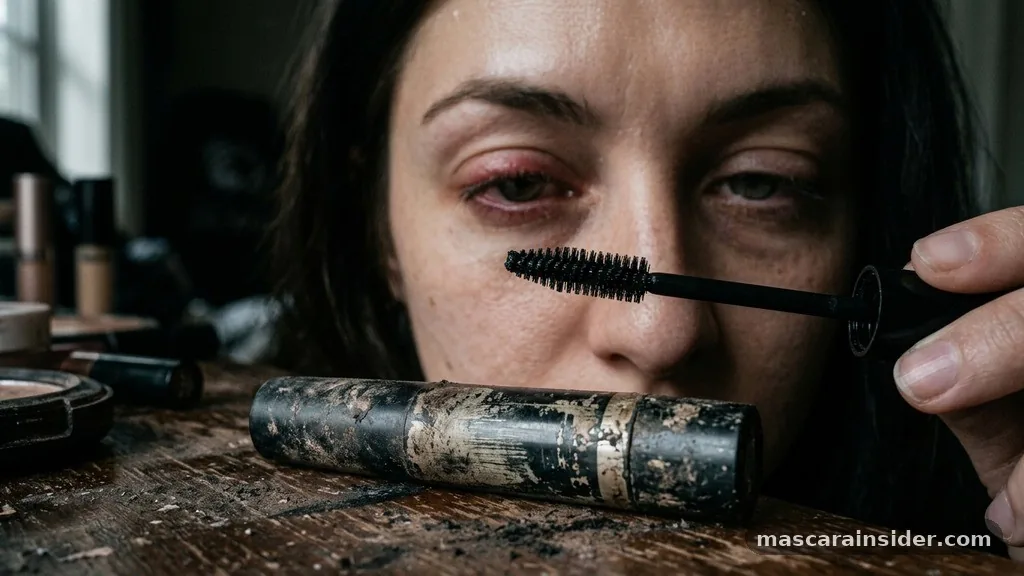
Failing to replace your eye makeup regularly puts you at risk for several preventable conditions. The primary concern is the transmission of bacteria like Staphylococcus aureus, which can flourish in the warm, dark, and damp interior of a mascara tube.
When this bacteria is transferred to the eye, it can cause conjunctivitis, commonly known as pink eye, which results in redness, itching, discharge, and significant pain. Even if you don’t develop a full-blown infection, you may experience persistent eye irritation or an increase in dry eyes because the degraded chemicals in the formula are no longer compatible with the sensitive surface of the eye.
Maintaining proper makeup hygiene is not just about the product; it is also about your habits. Sharing mascara with friends is a major vector for cross-contamination, as everyone carries different bacterial flora on their skin.
Even if you aren’t sharing, using old wands can lead to a buildup of debris that scratches the cornea or causes inflammation. By keeping your routine clean and replacing your tools on a set schedule, you significantly lower the chances of needing medical intervention for an easily avoidable cosmetic-related injury.
Topical Gaps: Managing Mascara Risks
Many people wonder if there are ways to extend the life of their mascara safely. The short answer is no; once the formula is contaminated, there is no way to sterilize the inside of the tube. Another common question involves the use of waterproof versus non-waterproof formulas.
While waterproof mascaras are slightly more resistant to moisture, they are not immune to bacterial colonization. If you suffer from frequent eye sensitivities, you should consider opting for “clean” beauty brands that use fewer synthetic preservatives, though these products often have an even shorter lifespan and require diligent monitoring.
| Product Type | Typical Shelf Life (Opened) | Risk Factor |
|---|---|---|
| Mascara | 3 Months | High (Bacterial growth) |
| Liquid Eyeliner | 3 Months | High (Direct eye contact) |
| Powder Eyeshadow | 1-2 Years | Low (Dry environment) |
| Cream Eyeshadow | 6 Months | Moderate (Moisture content) |
Best Practices for Daily Eye Makeup Use
To make your mascara last the full three months without incident, you must adopt a few strict habits. Avoid “pumping” the mascara wand into the tube, as this forces air inside and dries the formula out prematurely. Instead, gently swirl the wand against the sides of the tube to pick up the product.
Always ensure the cap is tightened completely after every use to prevent the entry of airborne contaminants. If you notice your eyes becoming red or watery, stop using all eye makeup immediately until the symptoms subside, and if the symptoms persist, consult a healthcare provider.
- Never share your mascara with others to prevent the spread of bacteria.
- Always remove your eye makeup completely before going to sleep.
- Store your makeup in a cool, dry area away from direct sunlight.
- Write the date of opening on the bottom of the tube with a permanent marker.
- Replace your mascara immediately if you have had an eye infection.
- Clean your lashes gently to avoid pulling or damaging them during removal.
- Choose high-quality formulas that have been ophthalmologist-tested.
Conclusion
Knowing how often to change mascara is a cornerstone of maintaining good eye health and ensuring your makeup performs exactly as intended. By adhering to a three-month replacement cycle, you protect yourself from the risks of eye infections and discomfort caused by degraded formulas. Remember that even if the product looks fine, the hidden presence of bacteria makes it a liability after a certain point.
Investing in your eye health by discarding old tubes on time is a small price to pay for clear, comfortable vision. Keep your vanity clean, track your usage dates, and don’t hesitate to toss a tube if it shows signs of trouble. Taking these simple steps will ensure your beauty routine remains both effective and safe for years to come.
Is it okay to use mascara for 6 months?
While some products allow it, three months is the professional standard to prevent bacterial growth and irritation.
What is the best way to store mascara?
Store it in a cool, dry place away from direct sunlight, and always keep the lid tightly closed.
Can old mascara cause pink eye?
Yes, old mascara can harbor bacteria like Staphylococcus aureus, which is a common cause of infectious conjunctivitis.
Why does my mascara dry out so fast?
Pumping the wand into the tube forces air inside, which accelerates the evaporation of the formula’s liquid components.
Should I replace my mascara after an eye infection?
Absolutely; you should discard all eye makeup used during an infection to prevent re-infecting yourself with the bacteria.
Are there preservatives in all mascaras?
Yes, manufacturers include preservatives to inhibit microbial growth, but these chemicals lose their effectiveness over time after opening.
Does waterproof mascara last longer?
Not necessarily; while it resists water, it still collects bacteria and should be replaced every three months for safety.


