

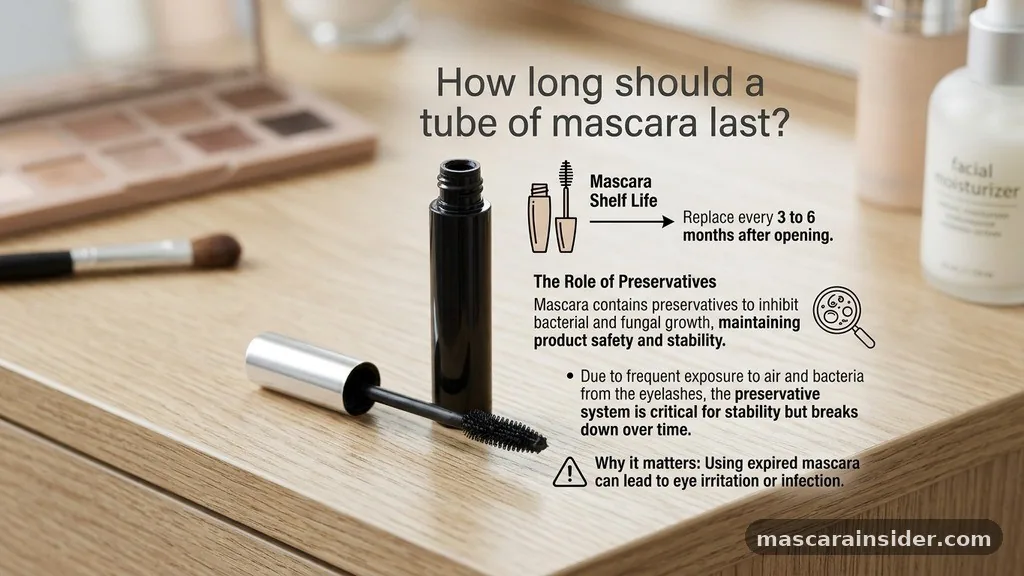
Knowing how long should a tube of mascara last is essential for maintaining your eye health and ensuring the best possible application. Many beauty enthusiasts hold onto their favorite wands far longer than they should, often unaware that the dark, moist environment inside the tube becomes a perfect breeding ground for bacteria.
Understanding the recommended lifespan of your makeup products helps you avoid unnecessary irritation or more serious complications. By paying attention to the signs of product degradation and following professional guidelines, you can protect your eyes while keeping your lashes looking their best every single day.
Understanding the Shelf Life of Mascara
The standard recommendation from most experts is that you should replace your mascara every three months. While some high-end brands might claim their formulas are stable for slightly longer, the nature of the application process limits the product’s lifespan.
Every time you pull the brush out and push it back in, you introduce air and potential contaminants into the tube. This repeated exposure speeds up the oxidation process, which eventually causes your once-smooth formula to become clumpy, dry, or even foul-smelling.
You should always look for the PAO symbol (Period After Opening) on your product packaging. This small icon, which resembles an open cosmetic jar with a number and the letter “M,” provides a manufacturer-specific guideline for the product’s safe usage period.
If the jar says “6M,” it suggests the formula is designed to remain stable for six months after the seal is broken. However, because mascara is applied directly to the sensitive eye area, many dermatologists suggest being more conservative with this timeline to avoid bacterial growth.
The Role of Preservatives and Stability
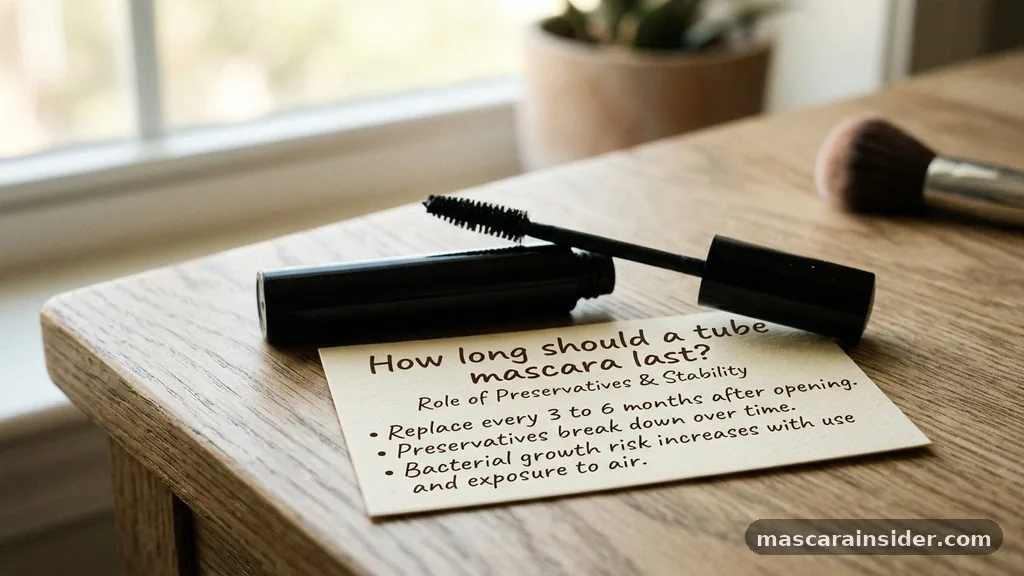
Modern cosmetic formulas rely heavily on preservatives to keep microbial counts low. These chemical agents work to inhibit the growth of mold, yeast, and bacteria that thrive in the liquid environment of a mascara tube.
Over time, these preservatives break down, especially if the product is exposed to high temperatures or direct sunlight. Once the preservative system fails, the risk of transferring harmful pathogens to your eyelids increases significantly.
It is important to note that the shelf life unopened is much longer than the period after the seal is broken. If you have a backup tube stored in a cool, dark drawer, it may remain viable for up to two or three years.
Once the air-tight seal is compromised, however, the clock starts ticking immediately. Storing your makeup in a humid bathroom cabinet can also shorten its lifespan, as moisture can penetrate the packaging or encourage bacterial proliferation inside the container.
Identifying When Your Mascara Has Expired
You don’t always have to rely on a calendar to know when it’s time to toss your makeup. Your senses are often the most reliable tools for identifying dried out mascara or contaminated products. If you notice a change in the texture, smell, or performance of your mascara, it is best to stop using it immediately, regardless of how long you have had it.
Common Signs of Product Degradation
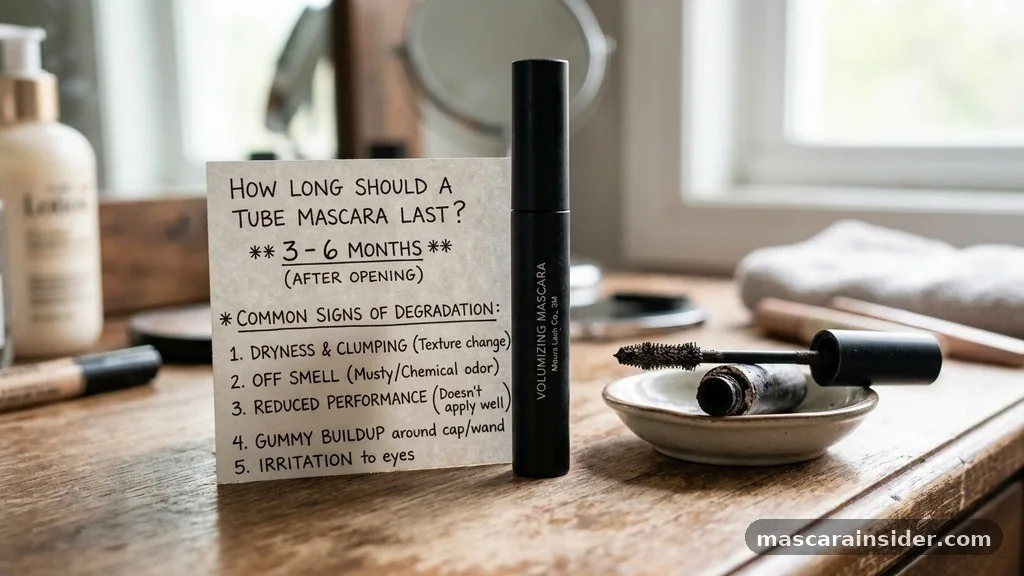
* Texture Changes: The formula becomes thick, clumpy, or starts to flake off your lashes within minutes of application.
* Off-Putting Odor: A sharp, chemical, or sour smell emanating from the tube is a major red flag that the preservatives have failed.
* Irritation: If you experience redness, itching, or a burning sensation after applying the product, stop using it and sanitize your eye area.
* Separation: The liquid and pigment components start to separate, resulting in an uneven, watery application that never dries properly.
If you find yourself having to pump the wand repeatedly to get enough product onto the brush, your mascara is likely nearing the end of its life. Pumping the applicator forces air into the tube, which accelerates drying and introduces airborne pollutants. Instead, try a gentle swirling motion inside the tube to collect the formula on the bristles without trapping extra air.
The Risks of Prolonged Use
Ignoring the expiration date of your eye makeup can have real consequences for your ocular health. The eyes are incredibly sensitive, and the introduction of foreign bacteria can lead to uncomfortable and sometimes painful conditions. Makeup hygiene is the first line of defense against these issues, and simply replacing your products on time is a foundational practice.
Bacterial Growth and Eye Health
When an applicator becomes a contaminated applicator, it acts as a vector for germs to travel from your eyelashes back into the tube. One of the most common risks involves Staphylococcus aureus, a type of bacteria that naturally lives on the skin but can cause serious issues if it migrates into the eye.
Using expired products significantly increases the likelihood of developing conjunctivitis, commonly known as pink eye. This condition causes swelling, discharge, and intense discomfort, often requiring medical intervention or professional ophthalmologist recommendations to resolve.
The following table summarizes the typical timeline and warning signs for mascara replacement:
| Indicator | What to Look For |
|---|---|
| Replacement Frequency | Every 3 months is the gold standard for daily users. |
| Texture Warning | Clumping, flaking, or a “stringy” consistency. |
| Scent Warning | Any chemical or “off” smell that wasn’t there before. |
| Physical Reaction | Redness, itching, or persistent eye irritation. |
Addressing Common Misconceptions and Gaps
There is a common belief that adding water or eye drops can “revive” a dry tube of mascara. While this might make the product easier to apply in the short term, it is highly discouraged.
By introducing liquids into the tube, you are diluting the preservative system, creating a perfect environment for rapid microbial growth. This practice turns a potentially safe product into a dangerous one, drastically increasing your risk of an eye infection.
Another frequently asked question involves whether a different type of mascara, such as tubing mascara, lasts longer. While tubing formulas are often more resistant to smudging, they are not immune to bacterial contamination.
Regardless of the marketing claims, the physical act of using the brush remains the same. The risk factor is determined by the hygiene of the wand and the integrity of the formula, not just the chemical makeup of the lash coating itself.
Strategic Tips for Better Makeup Hygiene
* Never share your mascara with friends, as this is the fastest way to transmit bacteria.
* Always remove your eye makeup completely before bed to prevent residue from clogging your lash follicles.
* Keep your mascara tube away from heat sources like radiators or direct sunlight.
* If you have recently had an eye infection, discard all eye makeup used during that time to prevent re-infection.
* Consider writing the date of first use on the bottom of the tube with a permanent marker to keep track of your timeline.
FAQ
You should replace your mascara every three months to ensure optimal hygiene and prevent bacterial build-up.
How many uses do you get out of a tube of mascara?
There is no set number of uses, but a standard tube typically lasts 60 to 90 daily applications.
How do you know when a mascara is finished?
If the formula becomes clumpy, smells odd, or requires constant pumping to get product, it is finished.
Can I use 1-year-old mascara?
No, using year-old mascara is dangerous and significantly increases your risk of developing a severe eye infection.
Does mascara dry out if opened?
Yes, exposure to air causes the formula to oxidize and dry out, regardless of how much remains inside.
How long does mascara last unopened?
An unopened, sealed tube can typically last for two to three years if stored in a cool place.
What is the best way to prevent eye infections from mascara?
Replace your mascara every three months, never share your products, and practice consistent nightly makeup removal routines.
Final Thoughts on Mascara Longevity
Keeping track of how long should a tube of mascara last is a small but vital part of your personal care routine. By viewing your makeup as a perishable product rather than a permanent fixture in your vanity, you prioritize your long-term eye health. Remember that the three-month rule isn’t just a suggestion from manufacturers to sell more product; it’s a safety guideline designed to protect your vision.
If you notice your mascara behaving strangely, don’t hesitate to replace it early. Maintaining clean, fresh tools is the easiest way to ensure your lashes look their best while keeping your eyes happy and irritation-free. If you have questions about specific sensitivities, consulting with your local optometrist is always a smart move.


