

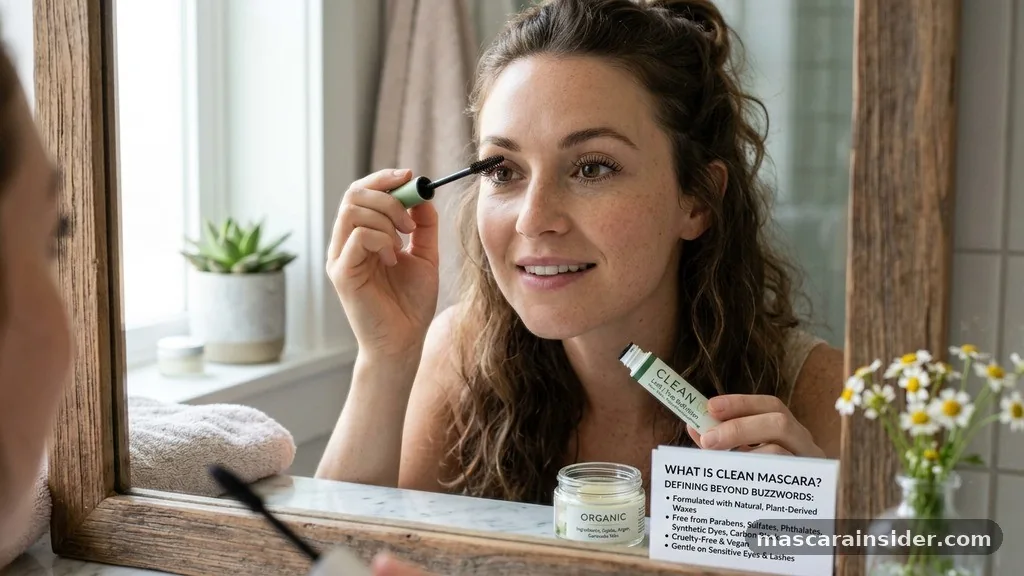
Deciding what to put on your lashes involves more than just picking a shade of black. When you start digging into what is clean mascara, you quickly realize it is about balancing high-performance wear with a commitment to avoiding ingredients that might irritate your eyes.
Many people transition to these products to support better lash health or because they have developed sensitivities to the preservatives found in conventional tubes. Understanding this category helps you identify which formulas align with your personal values and physical needs without sacrificing that dramatic, wide-eyed look you expect from your makeup routine.
Defining Clean Mascara Beyond Marketing Buzzwords
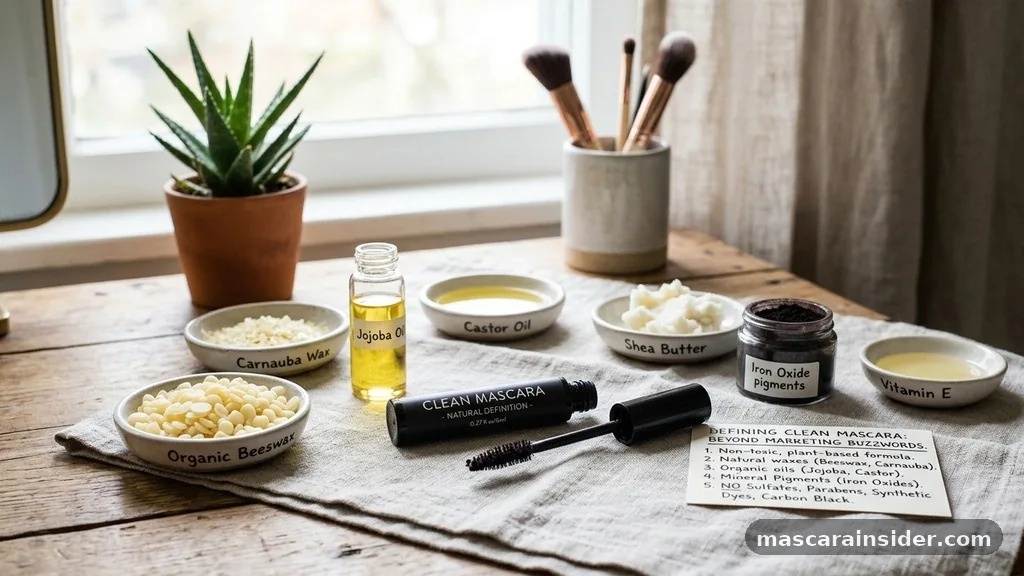
Clean mascara refers to cosmetic formulas that prioritize human and environmental safety by excluding chemicals often flagged for potential health risks. Because the term “clean” is not currently regulated by government bodies like the FDA, it functions more as a marketing standard defined by individual brands and retailers.
Generally, these products steer clear of parabens, phthalates, and certain synthetic fragrances that can cause allergic reactions or hormonal disruption. Instead, they lean into plant-based ingredients and mineral-derived colorants to achieve the desired effect.
The primary goal of these formulations is to provide a safe experience for your ocular area while maintaining the integrity of the product. Manufacturers of clean beauty products often conduct rigorous testing to ensure their formulas are ophthalmologist-tested, which provides a layer of security for contact lens wearers or those with chronically dry eyes. When you choose these options, you are essentially voting for a supply chain that avoids known toxic irritants, favoring botanical waxes and natural oils that protect your delicate lash follicles during daily wear.
The Role of Ingredients in Modern Lash Formulas
Conventional mascaras rely heavily on synthetic polymers and complex chemical binders to ensure the product sticks to lashes for twelve hours or more. In contrast, clean alternatives swap these for natural thickeners like beeswax or carnauba wax.
These waxes provide the structural support needed to lift and coat each hair without causing the brittleness often associated with older, chemical-heavy formulas. By using these natural waxes, brands can achieve a consistent texture that is easier to remove at the end of the day.
Another key component in these formulations is the use of mineral pigments, typically derived from iron oxides. These minerals offer deep, rich color saturation without the need for coal tar dyes, which have historically been a point of contention in the cosmetics industry.
When you examine the ingredient list, you should look for shorter, more recognizable names. If you see a laundry list of unpronounceable chemical compounds, it likely falls outside the modern definition of a clean beauty product, regardless of how it is marketed on the front of the packaging.
Addressing Sensitivity and Eye Health
For those with sensitive skin or eyes, finding a product that doesn’t cause stinging or redness is a constant struggle. Many conventional mascaras contain volatile organic compounds and harsh preservatives that can irritate the sensitive mucous membranes surrounding your eyes.
A hypoallergenic formula is often the gold standard here, as it is specifically designed to minimize the risk of an immune response. By removing common allergens, these mascaras allow users who usually avoid eye makeup to participate in the trend of enhancing their natural features.
It is also important to consider the preservation system used in these products. Because clean formulas lack traditional, high-potency preservatives like parabens, they are inherently more susceptible to bacterial growth.
This means you must be diligent about replacing your tube every three months. Keeping the wand clean and avoiding “pumping” the brush—which introduces air and bacteria into the tube—is essential for maintaining the health of your eyes when you commit to using clean products.
Comparing Conventional and Clean Beauty Standards
Understanding the differences between standard and clean products can help you make an informed decision at the store. The following table breaks down common ingredients found in traditional mascaras compared to their cleaner counterparts.
| Feature | Conventional Mascara | Clean Mascara |
|---|---|---|
| Binding Agents | Synthetic Polymers | Beeswax, Carnauba Wax |
| Preservatives | Parabens, Formaldehyde-releasers | Natural extracts, milder systems |
| Colorants | Coal Tar Dyes | Mineral Pigments |
| Formula Focus | Extreme Longevity | Lash Health & Ingredient Transparency |
This comparison highlights that you aren’t just paying for a brand name; you are paying for the exclusion of specific chemical entities. While conventional options might offer a “waterproof” guarantee that lasts through a marathon, they often do so by utilizing heavy silicones that can be difficult to remove, potentially leading to lash breakage. Clean alternatives focus on being water-resistant rather than fully waterproof, which protects the natural hair from the mechanical stress of aggressive scrubbing during makeup removal.
Navigating Clean Beauty Certification
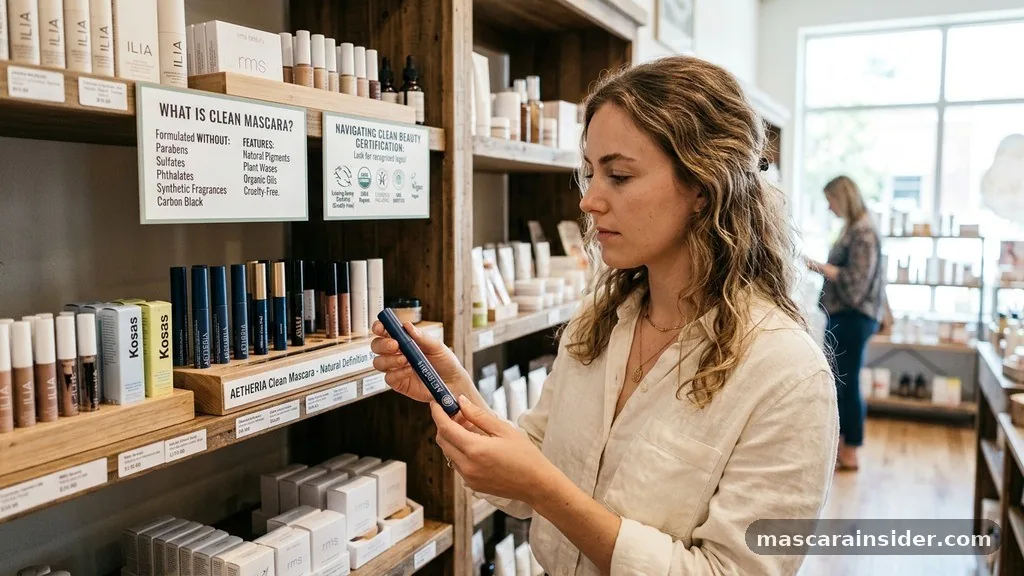
Because the term “clean” is loosely defined, many consumers feel overwhelmed by the lack of a single, universal seal of approval. While no single clean beauty certification exists globally, several third-party organizations and retailer-specific standards have emerged to provide clarity.
For instance, major beauty retailers often publish their own “banned ingredient lists,” which act as a de facto certification for products sold on their shelves. These lists effectively ban hundreds of substances, forcing brands to reformulate if they want to reach that specific consumer base.
When shopping, look for certifications from organizations like Leaping Bunny or ECOCERT, which, while not always focusing on “cleanliness” in the same way, ensure higher standards for ingredient sourcing and ethical production. It is also beneficial to look for brands that offer full ingredient transparency on their websites.
A truly clean brand will rarely hide behind “proprietary blends” or vague terms like “fragrance” without disclosing exactly what those components are. When you see this level of openness, you can be more confident that the product is as clean as claimed.
The Science of Lengthening Fibers and Volume
A common question is whether a formula without harsh chemicals can actually deliver on volume and length. The answer lies in the innovation of lengthening fibers.
Many clean brands now utilize plant-based fibers—such as cellulose or rayon—that adhere to the lashes, creating the illusion of extra length and density. These fibers act as a scaffold, building upon your natural lash length in a way that feels lightweight and comfortable throughout the day.
When combined with specialized brushes, these fibers can mimic the effect of a professional lash extension. The key is in the application technique.
Because clean mascaras often have a slightly different viscosity than traditional formulas, taking the time to wiggle the wand at the base of the lash helps build the necessary volume. You aren’t just painting the lashes; you are layering botanical waxes and fibers to create a custom look that doesn’t weigh down the eye or cause the dreaded “raccoon eye” effect later in the afternoon.
Debunking Myths About Smudge-Proof Performance
Many consumers worry that if a product is clean, it must be prone to smudging or flaking. This is largely a holdover from early iterations of natural makeup that struggled to compete with high-tech chemical binders.
Today, the technology has advanced significantly. A smudge-proof formula in the clean space is now entirely achievable through the clever use of film-forming agents derived from natural sources, such as sugar-based polymers or specific tree resins.
These ingredients create a flexible, durable coating around the lash that moves with your eyelid rather than cracking or flaking off. The best way to test the performance of a clean mascara is to look for reviews that specifically mention “tubing” technology.
Tubing mascaras are a popular subset of the clean beauty world because they encapsulate the lash in a tiny tube of polymer that slides off with warm water, eliminating the need for harsh makeup removers. This reduces the friction applied to the eye area, which is a major win for overall lash health.
Addressing Topical Gaps in Beauty Knowledge
A frequent gap in existing discourse is the distinction between “natural,” “organic,” and “clean” labels. These terms are often used interchangeably, but they hold different meanings. “Natural” suggests the ingredients come from plants or minerals, but it doesn’t mean those ingredients are safe or effective.
“Organic” refers specifically to how the plants were grown, free from pesticides. “Clean” is the most comprehensive term, encompassing the idea of avoiding anything that could be considered potentially toxic or irritating to the skin, regardless of whether it is man-made or plant-derived.
Another gap is the issue of preservative-free claims. True preservative-free mascara is dangerous because it would become a breeding ground for bacteria within days of opening. When a brand claims to be preservative-free, they are often using natural antimicrobial agents like fermented radish root or essential oils to extend shelf life.
It is crucial to understand that these natural preservatives are still chemicals—they are just derived from natural sources. Being an informed consumer means acknowledging that “preservative-free” is usually a marketing misnomer and that some preservation is necessary for a safe, usable product.
Environmental Impact and Sustainable Sourcing
Beyond personal health, the clean mascara movement is deeply connected to the environmental impact of the cosmetics industry. Many conventional formulas contain microplastics, which are tiny plastic beads that eventually wash down the drain and into our water systems.
By choosing clean mascaras that avoid these synthetic polymers, you are directly reducing the amount of plastic waste entering the ecosystem. This aligns your beauty routine with a broader commitment to planetary health.
Furthermore, many brands in this space prioritize sustainable packaging, such as using recyclable aluminum or PCR (post-consumer recycled) plastic for their tubes. The sourcing of ingredients like beeswax or carnauba wax also matters; ethical brands ensure that their harvesting methods do not harm bee populations or contribute to deforestation.
When you support these companies, you are encouraging a shift in the entire industry toward more responsible manufacturing practices. The impact of your purchase extends well beyond your vanity, influencing how brands think about their global footprint.
Conclusion
Choosing the right mascara is a personal journey that balances your aesthetic desires with your need for safe, high-quality ingredients. By understanding what is clean mascara, you are better equipped to navigate the overwhelming number of options on the market today. You now have the knowledge to look past the marketing jargon, analyze ingredient lists for potential irritants, and prioritize formulas that support long-term lash health.
Whether you are dealing with sensitive eyes or simply want to reduce your exposure to synthetic chemicals, making the switch to cleaner beauty products can be a rewarding change for both your confidence and your well-being. Start by checking the ingredient labels of your current products and gradually replacing them with cleaner options that align with your standards. Your eyes will certainly thank you for the extra care.
What is the cleanest mascara?
The cleanest mascara is one that uses non-toxic mineral pigments, botanical waxes, and clearly disclosed, safe preservative systems.
Why has Gen Z stopped wearing mascara?
Many Gen Z consumers prefer natural-looking “clean girl” aesthetics or lash lifts over the heavy, clumpy look of traditional mascara.
What mascara is healthiest for your eyes?
The healthiest mascaras are ophthalmologist-tested, hypoallergenic, and free from harsh synthetic fragrances, parabens, and irritating volatile organic compounds.
Which mascara has the least chemicals?
Mascaras with the shortest, plant-based ingredient lists—usually featuring beeswax, iron oxides, and natural oils—contain the fewest synthetic chemicals.
Is clean mascara waterproof?
Most clean mascaras are water-resistant rather than fully waterproof, as they avoid the harsh synthetic resins required for waterproof wear.
Does clean mascara smudge easily?
Not necessarily; modern clean formulas use natural polymers to create smudge-proof layers that hold up well throughout the day.
How often should you replace clean mascara?
You should replace clean mascara every three months to prevent bacterial buildup due to their milder, natural preservative systems.


