

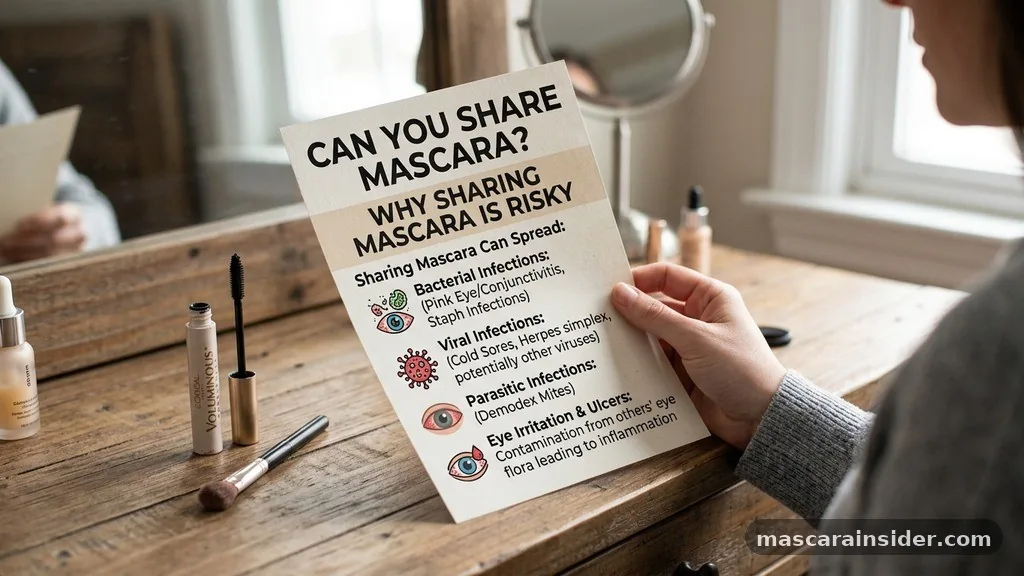
Deciding whether you can share mascara with a friend or family member might seem harmless during a quick makeup touch-up, but it carries significant health risks. While it is tempting to lend your favorite tube to a sister or close friend, doing so introduces foreign bacteria into a highly sensitive environment. Understanding why this practice is discouraged requires looking at how microbial growth thrives in damp, dark cosmetic applicators.
Maintaining proper makeup hygiene is essential for protecting your vision and avoiding painful complications that can disrupt your daily life. Knowing the facts about product safety helps you prioritize your long-term ocular health over the convenience of a shared beauty routine.
Why Sharing Mascara Is Risky
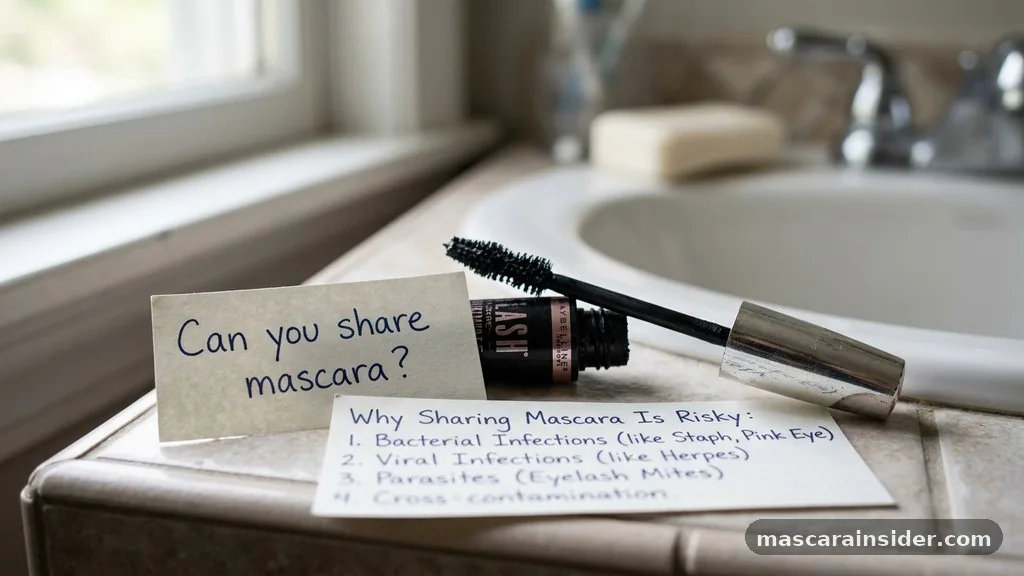
The primary reason you should never share mascara is the high risk of cross-contamination. When you apply product to your eyelashes, the wand picks up natural oils, skin cells, and bacteria present on your eyelids and lashes. Once the wand is reinserted into the tube, these contaminants are introduced into a liquid environment specifically designed to support the product’s formula.
While manufacturers include preservative systems to inhibit the growth of microorganisms, these systems are not foolproof. They are designed to handle the normal, everyday bacteria of a single user, not the diverse and potentially harmful microbial load of multiple people.
Introducing another person’s flora into your product significantly increases the likelihood of pathogen exposure. Every individual carries a unique set of bacteria on their skin, and what is harmless for one person may cause an infection in another. If someone is an asymptomatic carrier of a strain like Staphylococcus aureus, they could unknowingly transfer it into your makeup tube.
Once inside, these bacteria can multiply, turning a simple beauty tool into a breeding ground for infections. This is why ophthalmologists consistently warn against sharing eye makeup of any kind.
The Threat of Bacterial Conjunctivitis
One of the most common consequences of sharing eye products is the transmission of bacterial conjunctivitis, commonly known as pink eye. This condition is highly contagious and spreads easily through contact with contaminated items. When you use a mascara wand that has been exposed to someone else’s eye area, you are creating a direct pathway for bacteria to enter your own eyes. Pink eye transmission often occurs in social settings where makeup is shared, such as during sleepovers or shared vanity setups in a bathroom.
The eye infection symptoms associated with contaminated mascara are often intense and disruptive. You might notice:
- Persistent redness in the white part of the eye
- Itchiness or a gritty, sand-like sensation
- Increased tearing or watery discharge
- Crusting along the eyelid margin, particularly in the morning
- Swelling of the conjunctiva or eyelids
- Blurred vision caused by discharge
If you experience these symptoms, it is critical to stop using your current eye makeup immediately and consult a healthcare professional. Ignoring these signs can lead to more serious complications, including corneal ulcers, which can permanently damage your vision. Practicing makeup hygiene is the most effective way to prevent these painful and potentially costly medical issues.
Microbial Growth and Cosmetic Shelf Life
Understanding the makeup shelf life of mascara is vital for maintaining a clean beauty kit. Unlike powders that can last for years, liquid products like mascara are prone to microbial growth because they provide the moisture and nutrients that bacteria need to thrive.
Most experts recommend replacing your mascara every three months, regardless of whether you have finished the tube. Even if you don’t share your products, the natural aging process of the formula weakens its ability to resist contamination.
| Product Type | Typical Shelf Life | Sharing Risk |
|---|---|---|
| Mascara | 3 Months | Very High |
| Liquid Eyeliner | 3 Months | High |
| Powder Eyeshadow | 12-24 Months | Low |
| Eyelash Curlers | Indefinite (if cleaned) | Low (if sanitized) |
When you share mascara, you effectively bypass all cosmetic safety standards. You are essentially taking a product that has been formulated for a specific environmental limit and pushing it past its breaking point.
Once the internal preservative balance is disrupted by the introduction of foreign microbes, there is no way to “clean” the tube or sanitize the brush properly. You cannot boil the wand or use alcohol inside the tube, as this would destroy the product’s chemical composition and potentially irritate your eyes further.
Alternatives to Sharing Makeup
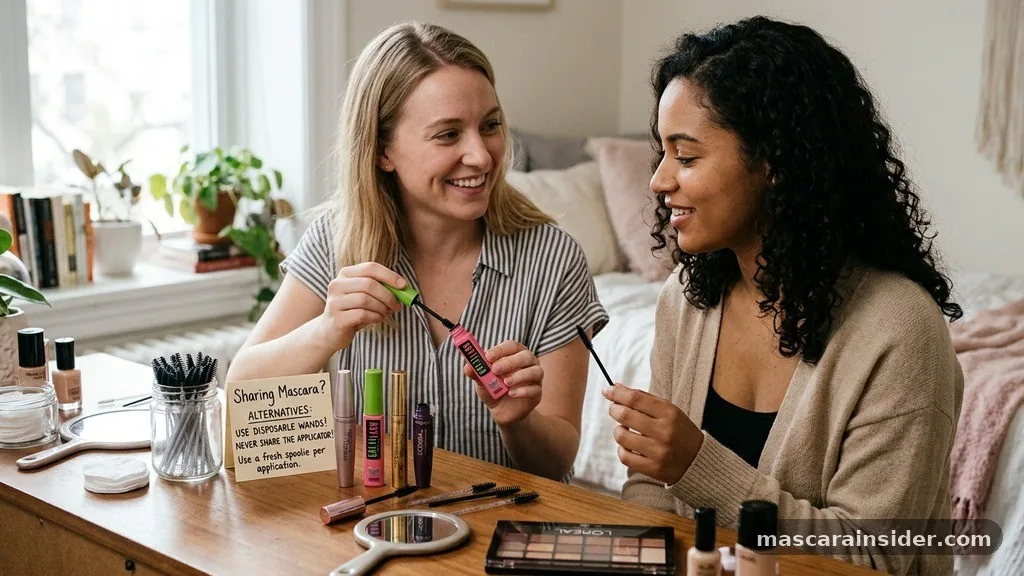
If you find yourself in a situation where a friend needs mascara, the safest approach is to use disposable wands. These small, single-use applicators are a staple in professional makeup artistry because they allow artists to work on multiple clients without the risk of cross-contamination.
By keeping a pack of these in your kit, you can offer a friend a way to touch up their look without ever putting their wand back into your tube. This is the only hygienic way to share.
Another alternative is to keep a dedicated “guest” makeup bag or a travel-sized tube that you don’t mind others using. However, even with a guest tube, it is best to practice strict beauty product sanitation by only allowing others to use it with disposable brushes. Never let someone else use your personal wand, as the damage is done the moment the brush touches their skin and returns to the bottle.
Addressing Common Concerns and Misconceptions
Many people wonder if it is okay to share mascara with family members because they believe family members share the same household bacteria. While it is true that you share a home, you do not necessarily share the same eye health vulnerabilities.
A family member might have a minor, undiagnosed eye irritation that they assume is just “tired eyes,” but it could be the start of a bacterial infection. Sharing products puts your own ocular health at unnecessary risk.
Some users also ask about the safety of sharing eyelash curlers or eyeliner. While these are different products, the same principles of makeup hygiene practices apply. Eyeliner pencils can be sharpened to remove the top layer of contaminated product, which is a significant advantage over mascara tubes.
Eyelash curlers, meanwhile, can be wiped down with high-percentage isopropyl alcohol. Mascara, however, is a closed system that cannot be cleaned, making it the most dangerous item in your cosmetic bag to share.
How to Maintain Ocular Health
Protecting your eyes starts with how you store and use your cosmetics. Always keep your makeup in a cool, dry place, as heat and humidity can break down preservatives faster.
Avoid pumping your mascara wand in and out of the tube, as this pushes excess air—and the bacteria trapped within it—into the product. Instead, gently swirl the wand to pick up the desired amount of formula.
If you have recently had an eye infection, you must discard every eye makeup product you were using at the time. Trying to save money by keeping a tube of mascara after a bout of pink eye is a false economy.
The bacteria will likely still be present in the tube, and re-using it will almost certainly lead to a recurrence of the infection. Investing in a new product is a small price to pay for your long-term eye health.
Frequently Asked Questions
Is it ever safe to share mascara with a close friend?
No, it is never safe because cross-contamination occurs instantly, regardless of how close you are to the person.
What should I do if I accidentally shared my mascara?
Monitor your eyes for any redness or discharge; if symptoms appear, stop using the product and see an ophthalmologist.
Can I sanitize my mascara wand to make it safe for sharing?
You cannot effectively sanitize a mascara wand once it has been inside the tube, as the formula is already compromised.
Why do makeup artists use disposable wands for clients?
Artists use disposable wands to prevent spreading bacteria between clients, ensuring compliance with strict cosmetic safety standards.
Does the price of the mascara affect its ability to be shared?
No, luxury and budget brands alike are equally susceptible to microbial growth and contamination when shared between multiple users.
Are there any natural preservatives that make mascara safer to share?
Even products with natural preservatives lack the strength to fight off the diverse bacteria introduced by a second person.
How do I know if my mascara is contaminated?
Contamination is often invisible, though an unusual odor or a change in the product’s texture can indicate bacterial overgrowth.
Keeping Your Beauty Routine Safe
Understanding that you should not share mascara is a vital step in maintaining good hygiene and protecting your vision. While the temptation to share beauty products is common, the risks of bacterial infection far outweigh the momentary benefit of a quick touch-up. By following strict makeup hygiene practices, such as using disposable wands and replacing your products every three months, you can enjoy your favorite cosmetics without compromising your health.
Always prioritize your safety by keeping your mascara for your eyes only. If you ever find yourself questioning the cleanliness of your products, err on the side of caution and replace them.
Your eyes are irreplaceable, and keeping them healthy should always be your top priority in any beauty routine. Reach out to a professional if you have concerns about your ocular health or if you suspect you have developed an infection.


