

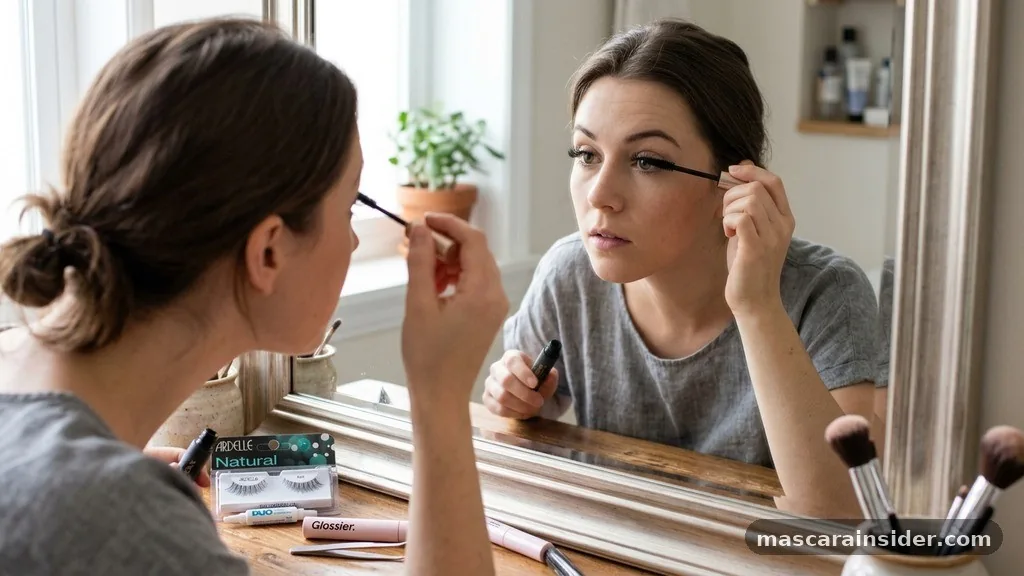
Figuring out the ideal makeup application order often feels like a puzzle, and wondering whether you should put fake eyelashes on before mascara is a common point of confusion for many beauty enthusiasts. While some people swear by coating their natural lashes first, others find that a bare base provides a much better grip for their strips.
Getting this sequence right is essential for achieving a seamless, professional look that lasts all day without damaging your falsies or causing your natural hair to clump. This article dives into the technicalities of lash placement, helping you refine your routine for flawless results every single time.
The Logic Behind Mascara Placement
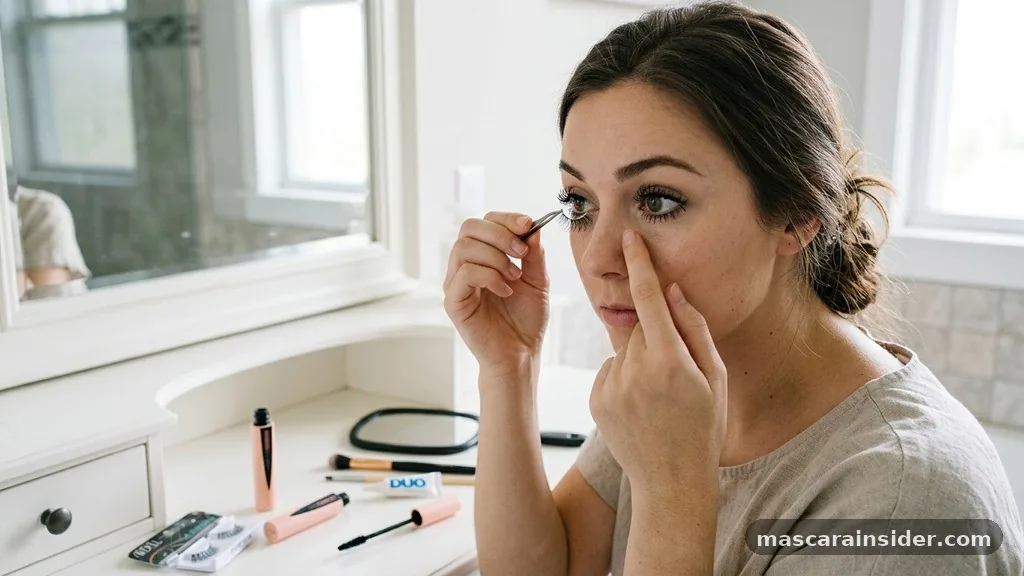
Deciding on the correct sequence for your beauty routine depends heavily on the type of look you want to achieve. When you ask whether you need to apply mascara before or after your false lashes, the answer usually leans toward applying it as a foundation.
By coating your natural lashes with a light layer of mascara, you create a sturdy, darkened shelf for the strip lashes to rest upon. This prevents your own light-colored lashes from peeking out from underneath the falsies, which would otherwise create a distracting gap in your eye makeup.
However, moderation is the absolute key here. If you apply a heavy, clumpy layer of mascara before putting on your falsies, your natural lashes become too thick and slippery. This makes it difficult for the lash band to adhere correctly to your lash line, potentially leading to lifting at the inner or outer corners.
A single, thin coat of mascara provides the perfect amount of structure without compromising the grip of the adhesive. Think of this first layer as a scaffold that supports the weight of the false lashes while ensuring your eye makeup remains cohesive and dark.
Blending Techniques for Natural Lashes
One of the primary goals of wearing false lashes is to make them look like they are growing directly from your eyelid. If you neglect the blending stage, you might end up with a visible layer of space between your real lashes and the falsies.
After you have secured the band with your chosen lash glue, you should gently press your natural lashes and the false ones together using an eyelash curler or your fingertips. This simple action forces the two sets of hairs to interlock, effectively erasing the line of demarcation.
Once the glue has fully set, you can apply a tiny bit of mascara to the tips of your lashes to lock them into place. Be very careful with the mascara wand during this stage, as you don’t want to get product onto the base of the band.
If you get too much pigment on the strip, it becomes difficult to clean, which drastically reduces the lifespan of the falsies. Using a clean, spoolie-style brush can also help you marry the two lash types together without adding excess weight or clumping the hair fibers.
Managing Different Types of False Lashes
The debate over the sequence of application changes slightly depending on whether you are using strip lashes or individual lash clusters. For strip lashes, a light base coat of mascara is generally recommended because it provides a structured base for the entire band.
On the other hand, lash clusters require a more precise approach. Since clusters are applied in smaller sections, you might find that applying mascara to your natural lashes first helps you map out exactly where the gaps are, allowing you to fill them in strategically with the clusters.
When working with clusters, many professionals prefer to apply the clusters first and then use mascara to blend the roots. This technique allows for more control and minimizes the risk of the glue catching on mascara-coated hairs that are already positioned near the lash line.
Regardless of the type of lash you choose, the goal remains the same: create a unified, voluminous appearance. Always prioritize the health of your natural hair by ensuring that your removal process is gentle and thorough, especially if you have used waterproof formulas that are difficult to break down.
How Adhesive Type Influences Application
The quality and type of lash glue you select will directly impact your application order. If you are using a clear, latex-based adhesive, you have a bit more flexibility in your routine because the glue disappears as it dries.
However, if you are using a dark, pigmented glue, you need to be much more careful with your initial mascara application. Dark glue acts as a natural eyeliner, which is a great bonus, but applying it over thick mascara can sometimes create a messy, blurred line that is hard to fix without starting your entire eye makeup routine over.
Wait for the lash glue drying time to be almost complete before you attempt to apply any final touches or mascara. The glue should be tacky—not wet—when you place the band against your lid. If the glue is still liquid, it will slide around and pick up the mascara you just applied, creating a clumpy mess.
Patience during the drying phase is the secret weapon of professional makeup artists. It ensures that the bond remains strong and that the falsies stay perfectly in place for the entire duration of your event or workday.
The Role of Eyeliner in Your Routine
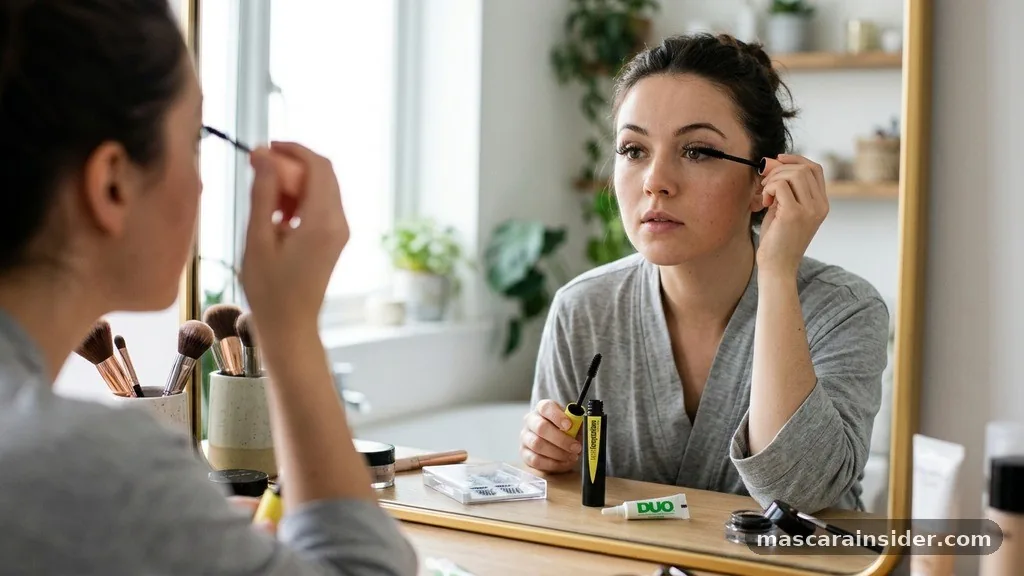
Many people mistakenly believe they need to apply heavy eyeliner to hide the band of their false lashes. While a thin line of liquid or gel eyeliner can certainly help bridge the gap, it shouldn’t be used as a crutch to fix a poor application.
If you have applied your lashes correctly, the band should sit right at the base of your natural hairs. If you find yourself needing a massive amount of eyeliner to cover the lash band, it is likely that your lashes are sitting too high on your eyelid or the band itself is too thick.
Try applying a thin, precise line of eyeliner before you put on the falsies. This acts as a guide for your placement and gives the glue a stable surface to bond to, especially if you have oily eyelids.
If you use a waterproof liner, ensure it is completely dry before applying the lashes, as the oils in some liners can interfere with the adhesive’s performance. By layering your makeup in this order—liner, then lash, then a final blend of mascara—you create a professional, polished finish that looks sophisticated rather than heavy.
Common Mistakes During Lash Application
Avoiding common errors is essential for those who want their false lashes to look high-end. One of the most frequent mistakes is applying too much mascara, which results in “spidery” lashes that look unnatural. Another common issue is failing to curl the natural lashes before applying the falsies.
If your natural lashes are pin-straight and your fake lashes have a dramatic curl, the two will never blend properly. Always reach for your eyelash curler first, as it sets the foundation for the entire look.
| Mistake | Consequence | Prevention |
|---|---|---|
| Too much mascara | Clumping and slippage | Use a light coat only |
| Skipping the curl | Mismatched angles | Curl lashes before application |
| Applying glue too soon | Sliding and mess | Wait for glue to become tacky |
| Ignoring cleaning | Shortened lash life | Remove glue after each use |
Follow this table to ensure you are avoiding the most common pitfalls that ruin a perfectly good makeup look. By addressing these factors in your daily routine, you will find that your lash game becomes much more consistent and reliable over time.
Maintaining Your Lashes for Reusability
If you are investing in high-quality lashes, false lash maintenance is a critical skill to learn. Many people find that their lashes lose their shape or become crusty after only one or two uses, often because they have applied too much mascara directly onto the synthetic fibers.
While it is perfectly fine to apply a light coat to help with blending, you should avoid saturating the lashes. Synthetic fibers do not absorb product the same way natural hair does, so the mascara just sits on top, eventually weighing down the lash and making it look artificial.
At the end of the day, use a gentle, oil-free makeup remover to carefully peel away any leftover adhesive from the band. Never pull directly on the lash fibers, as this will cause them to shed and lose their shape.
If you have used mascara on the falsies, use a clean spoolie dipped in a bit of remover to gently comb through the fibers until the product is gone. Keeping the band clean ensures that the adhesive performs optimally the next time you use them, saving you money and frustration in the long run.
Addressing Topical Gaps in Lash Knowledge
Many beginners often ask if it is safe to apply mascara on top of lash clusters that are meant to be worn for several days. This is a common point of confusion because the advice often contradicts itself. While you can apply mascara to clusters, it is generally discouraged if you want to keep them on for more than 24 hours.
The mascara builds up around the base, creating a trap for dirt, oils, and bacteria. This can lead to eye irritation or even infections if not cleaned properly. If you are wearing long-term clusters, prioritize keeping them clean rather than trying to add extra volume with mascara.
Another gap in common knowledge involves the use of waterproof mascara on falsies. Because waterproof formulas are designed to be extremely long-wearing and resilient, they are notoriously difficult to remove from synthetic lash fibers.
Using waterproof mascara on your false lashes will almost certainly ruin them after a single use because you will have to scrub so hard to get it off that you will destroy the delicate structure of the lash. Stick to standard, washable formulas for your blending step to ensure that your investment lasts as long as possible.
Refining Your Eye Makeup Routine
To truly master your eye makeup, think of your routine as a building process where each step supports the next. Start with your eyeshadow, then move to your eyeliner, and finally, the application of your lashes. By following this sequence, you ensure that you aren’t getting shadow fallout on your fresh lashes and that your glue is the final, cleanest step.
Once the lashes are securely in place, use your mascara wand only for that final touch of blending. This process keeps your products clean, your lashes voluminous, and your overall look sophisticated.
If you find that your lashes still feel uncomfortable, it might be due to the weight of the band or the type of glue you are using. Some people have sensitivities to certain ingredients in adhesives, so always perform a patch test if you are trying a new brand. Remember that practice is the most important factor in your success.
Even professionals struggle with lash placement from time to time. Keep experimenting with different lash styles and application techniques until you find the method that works best for your specific eye shape and lifestyle needs.
Conclusion
Mastering the order of your eye makeup is a journey that pays off in both time saved and improved results. When you learn to properly incorporate mascara into your routine—using it as a subtle bridge rather than a heavy coating—you elevate your look from amateur to professional. By focusing on the health of your natural lashes and the longevity of your synthetic strips through careful maintenance, you ensure that every application is as effective as the first.
Don’t be afraid to experiment with the order of operations until you find the technique that makes you feel the most confident. If you have any specific concerns about your lash routine, feel free to reach out and share your experiences as you continue to refine your signature style.
Do I apply mascara before or after putting on fake lashes?
You should apply a light coat of mascara before the lashes to provide a base for blending.
Will mascara damage my false eyelashes?
Yes, excessive mascara can clump the fibers and make the lashes difficult to clean, reducing their lifespan.
Can I use waterproof mascara on strip lashes?
It is not recommended, as waterproof formulas are very difficult to remove without damaging the synthetic lash band.
Should I curl my lashes before applying falsies?
Yes, curling your natural lashes helps them blend seamlessly with the curve of the false lash band.
How do I hide the lash band effectively?
Apply a thin line of eyeliner to the base of your lid before placing the lash band down.
Can I reuse lashes if I have applied mascara to them?
Yes, but you must gently clean the mascara off the fibers using oil-free remover after each wear.
Does the type of glue affect the mascara application?
Yes, dark glue acts as liner, so use mascara sparingly to avoid a messy, blurred appearance at the roots.


