

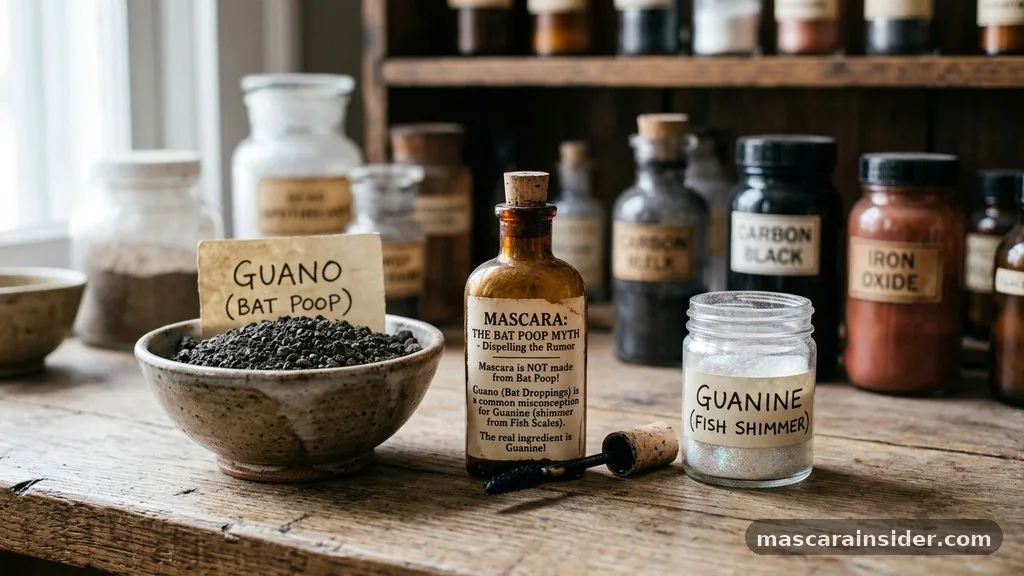
The persistent rumor that mascara is crafted from bat poop is one of the most enduring urban legends in the beauty industry. Many consumers have heard the shocking claim that their favorite lash-darkening products contain guano, leaving them wondering if their daily makeup routine involves something quite so unsanitary.
While the idea of bat feces being an intentional cosmetic additive sounds like a tabloid headline, the reality is rooted in a misunderstanding of scientific terminology. By exploring the actual components of modern beauty products, you can easily separate bizarre industry myths from the scientific facts governing today’s cosmetic chemistry.
The Origin of the Bat Poop Myth
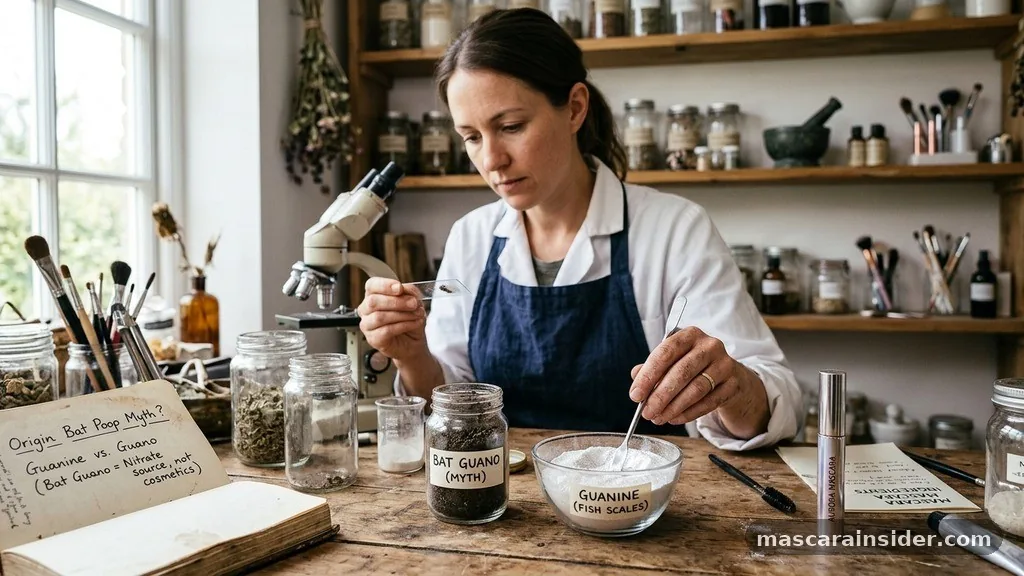
The confusion surrounding whether mascara is made from bat poop almost certainly stems from a linguistic mix-up involving the word guanine. In the world of biology, guano refers to the excrement of bats and seabirds, which is rich in nitrogen and phosphorus.
On the other hand, guanine is a naturally occurring crystalline substance found in various organic tissues. Because these two terms sound remarkably similar to the average person, the internet rumor mill quickly conflated them.
When consumers see “guanine” listed on a product label, they often assume it is a fancy, scientific name for bat waste. In reality, these two substances have nothing to do with each other.
Guanine is a nitrogenous base that acts as a fundamental building block of DNA and RNA in all living organisms. Its role in cosmetics is purely physical rather than chemical, relying on its unique molecular structure to create specific visual effects.
Understanding Guanine and Pearl Essence
Guanine is a vital component in creating the shimmering, iridescent finish that many people desire in their eye makeup. When processed, this substance forms thin, transparent crystals that reflect light to create a pearlescent effect. Historically, this ingredient was known as “pearl essence” and was harvested from the silver-colored scales of certain fish.
The crystalline structure of guanine is what makes it so useful for cosmetic formulators. Because the crystals are flat and thin, they align easily to reflect light in a way that mimics the luster of pearls or the sheen on a fish’s belly. This effect is highly sought after for creating depth and dimension in colored cosmetics, particularly in high-end mascaras, eyeshadows, and nail polishes that require a metallic or glowing appearance.
The Science of Cosmetic Ingredients
Modern cosmetic chemistry relies on highly regulated, stable, and safe ingredients to ensure consumer health. If any product were actually made from bat feces, it would be a major health hazard due to the high concentration of bacteria, fungi, and parasites often found in such material. Regulatory bodies, such as the FDA, have strict oversight regarding what can and cannot be included in products applied to the delicate area around the human eye.
Manufacturers prioritize stability and purity in their ingredient sourcing. Utilizing actual waste products would not only pose a massive liability for a brand but would also be chemically ineffective compared to the refined, lab-synthesized versions of ingredients available today. The industry has moved toward synthetic alternatives to avoid the ethical and safety concerns associated with animal-derived ingredients.
| Ingredient Term | Common Origin | Primary Cosmetic Purpose |
|---|---|---|
| Guanine | Fish scales or synthetic synthesis | Provides pearl-like, iridescent finish |
| Guano | Bat or seabird waste | Used as fertilizer in agriculture |
| Iron Oxides | Mineral ores or synthetic lab production | Provides deep black or brown pigment |
Addressing Common Topical Gaps
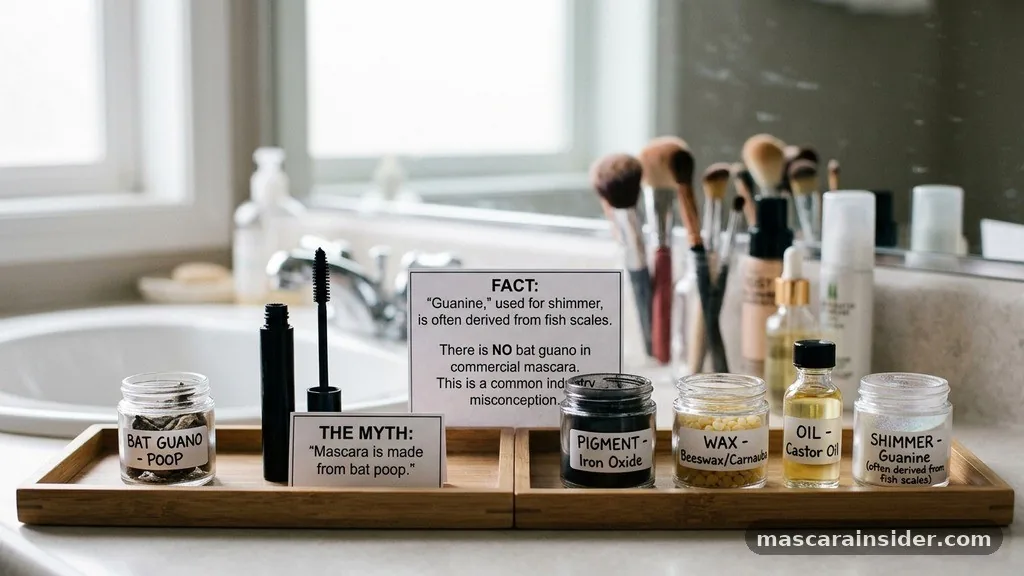
There is often a gap in consumer knowledge regarding how ingredients are labeled and verified for safety. Many people believe that mysterious-sounding chemical names on a bottle are hiding unpleasant secrets.
In truth, the International Nomenclature of Cosmetic Ingredients (INCI) requires companies to use specific, standardized names for all substances. This system is designed for transparency, though it can be intimidating for the average shopper.
Another gap involves the transition from natural to synthetic pigments. While pearl essence was once derived directly from fish, the mass-market demand for mascara forced the industry to innovate.
Today, most shimmering effects are achieved through synthetic additives, such as mica, which provide a similar iridescent finish without the need for animal harvesting. This shift has made products more consistent, affordable, and accessible to a global audience.
- Guanine is a safe, crystalline compound found in nature and labs.
- Guano is waste material and has no place in the cosmetic manufacturing process.
- Ingredient labels are standardized to help consumers identify what is inside their products.
- Most “pearl” effects in modern mascara come from mica or synthetic minerals.
- FDA cosmetic regulations strictly prohibit the use of hazardous or unsanitary additives.
Safety and Regulation in the Beauty Industry
The process of bringing a mascara to market involves rigorous pigment dispersion testing. Formulators must ensure that the colorants and shimmer particles are evenly distributed throughout the emulsion so the user gets a smooth application. If ingredients like bat waste were used, the instability of such material would make it impossible to achieve the required consistency and safety standards.
Furthermore, the delicate nature of the eye means that any substance introduced near it must be free from pathogens. Cosmetic chemistry involves the use of preservatives to prevent microbial growth, as the environment inside a mascara tube is damp and warm. Adding biological waste to this mix would immediately compromise the product’s shelf life and safety, leading to potential infections that would quickly bankrupt any company involved.
Dispelling Other Beauty Myths
It is common for beauty consumers to be wary of ingredient lists, but it is important to distinguish between real concerns and urban legends. For instance, rumors about mascara being made from spider legs or other bizarre animal parts are equally unfounded. These myths usually gain traction because of the exotic-sounding names of chemical compounds or the creative marketing used by some brands to describe their “natural” origins.
When you see an unusual ingredient on a label, the best approach is to check the official ingredient database. Most reputable beauty brands provide a breakdown of their formulations online, explaining why each additive is included. Understanding the purpose of pigment dispersion agents or synthetic waxes can help you feel more confident in the products you use every day without worrying about the source of your makeup.
The Reality of Modern Mascara Production
Today, mascara is primarily a mixture of water, pigments, waxes, and film-formers. The goal is to create a product that adheres to the lashes, adds volume, and resists flaking or smudging throughout the day. Pigments like iron oxides provide the deep color, while synthetic polymers or natural waxes like carnauba ensure the product stays put.
Because these ingredients are mass-produced in controlled environments, the risk of contamination is virtually zero. Companies invest heavily in research and development to ensure their formulas are gentle on the eyes. The idea that someone would introduce an unhygienic, unrefined substance like animal excrement into such a highly technical product is fundamentally at odds with the economics and safety protocols of the global beauty industry.
Frequently Asked Questions
Is bat poop still used in mascara?
No, bat poop has never been used in mascara; it is a persistent urban legend based on linguistic confusion.
Are bat droppings toxic to humans?
Yes, bat droppings can carry dangerous fungi and bacteria, making them a significant health hazard to handle or ingest.
Does mascara contain guano?
No, mascara does not contain guano; it often contains guanine, a completely different substance derived from fish or synthesis.
What is the difference between guanine and guano?
Guanine is a crystalline biological compound, while guano is animal waste used primarily as agricultural fertilizer.
What was mascara originally made of?
Early mascara was often made from coal dust, lampblack, or even lead, which were far more dangerous than modern formulas.
Are there animal-derived ingredients in mascara?
Some mascaras use beeswax or shellac, but they are highly refined and processed for safety before being added.
How can I verify what my mascara is made of?
Check the ingredient list on the packaging or the brand’s official website for a full, standardized breakdown of components.
The next time you hear a claim about mascara being made from bat poop, you can rest assured that it is nothing more than a myth. The confusion between guanine and guano is a classic example of how scientific terminology can be misinterpreted and blown out of proportion. Modern cosmetic chemistry is a sophisticated and highly regulated field, ensuring that the products you use on your lashes are safe, stable, and free from the unsanitary additives that rumors suggest.
You can continue to enjoy your beauty routine with complete confidence, knowing that your favorite mascara relies on advanced science rather than bizarre animal byproducts. If you ever find yourself questioning an ingredient on a label, a quick search on a reputable database is the best way to separate fact from fiction.


