

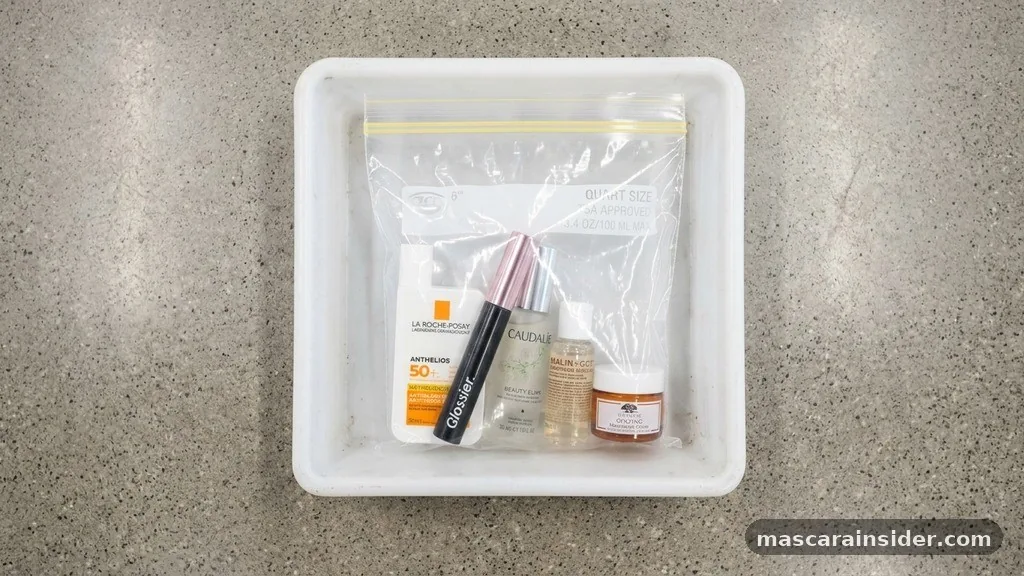
When you are preparing for a trip, the last thing you want is to have your favorite beauty products tossed in the trash at the security checkpoint. Many travelers find themselves wondering about the classification of specific cosmetic items, and one of the most frequent questions is whether mascara is considered a liquid for TSA screening purposes.
Because security agents enforce strict rules regarding the volume of gels and liquids allowed in carry-on luggage, knowing exactly how to categorize your makeup bag can save you significant time and frustration. Getting through security smoothly depends on understanding how these agents view substances with a gel-like texture.
The Transportation Security Administration classifies almost any substance that can be poured, pumped, squeezed, spread, or smeared as a liquid, gel, or aerosol. Since mascara is fundamentally a viscous substance that can be smeared or pumped from its container, officials view it as a liquid under the current 3-1-1 rule.
This means it must be placed inside your clear, quart-sized bag if you intend to carry it through the checkpoint. While it might seem like a minor item, failing to declare it or packing it outside your designated liquids bag can lead to secondary screenings or the unfortunate disposal of your makeup.
Understanding the TSA Liquid Rule for Cosmetics
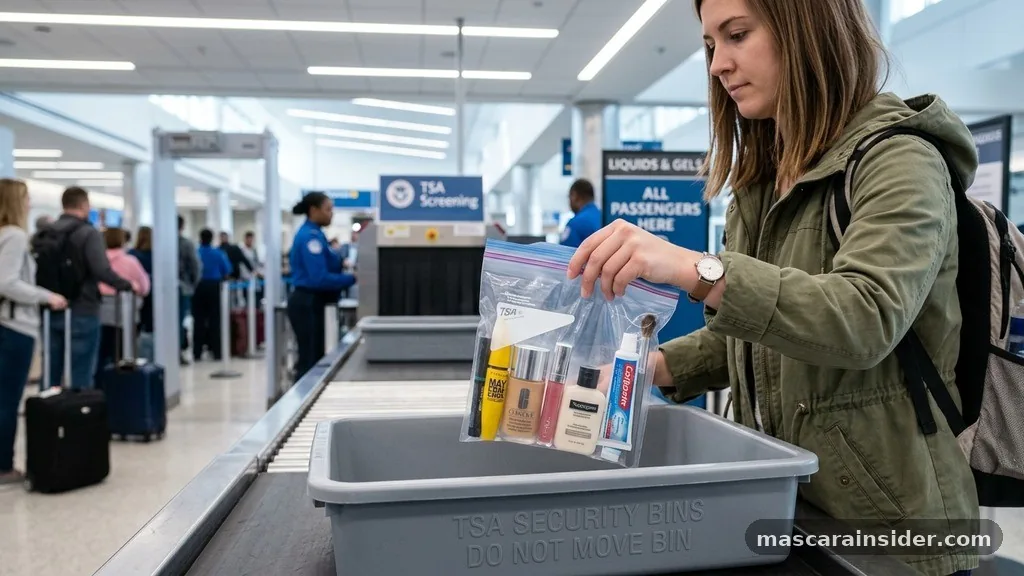
The TSA liquid rule is designed to maintain aviation safety by limiting the volume of potentially hazardous substances that passengers can bring into the cabin. Specifically, any liquid, gel, or aerosol must be contained in a container that holds no more than 3.4 ounces (100 milliliters) or less.
Crucially, all these individual containers must fit comfortably into a single, transparent, quart-sized plastic bag. Because mascara comes in a tube and possesses a gel-like texture, it falls squarely into the category of items that must comply with these volume and packing restrictions.
If you are wondering why a small tube of makeup is treated the same as a bottle of shampoo, it comes down to the consistency of the product. Security personnel are trained to identify items that could potentially be manipulated or combined with other substances. Even if your mascara is not a traditional liquid like water or lotion, its physical properties—being easily squeezed or applied as a wet substance—make it subject to the same scrutiny as other prohibited or restricted items.
Why Mascara Is Classified as a Liquid
The classification process is based on the physical state of the product at room temperature. Because mascara is a suspension of pigments in a waxy or polymer-based medium, it maintains a semi-liquid state.
When a security officer examines your carry-on, they look for substances that could be spread or smeared. Since your beauty products are subjected to the same X-ray technology as larger bottles, any item with a high moisture content or a fluid-like consistency is flagged as a liquid.
It is important to remember that the TSA does not make exceptions for specific brands or types of cosmetics. Whether you have a high-end designer tube or a budget-friendly drugstore brand, the chemical composition remains the same.
The rule is binary: if it fits the physical description of a liquid or gel, it must be part of your quart-sized bag protocol. This consistency ensures that security lines move efficiently without agents having to guess the chemical makeup of every single tube in a passenger’s bag.
Packing Makeup for Air Travel Effectively
Successfully Packing Makeup for Air Travel requires a bit of strategy to ensure you don’t hold up the line. The goal is to keep your items organized so that you can easily pull your liquids bag out of your carry-on for inspection if requested. Many travelers prefer to use a specialized, TSA-compliant toiletry bag that is transparent, allowing agents to see the contents without needing to open every single container.
When you are organizing your bag, consider separating your dry products from your wet ones. Pressed powders, such as eyeshadow palettes or compact foundations, are not considered liquids and do not need to be in your quart-sized bag. By keeping these dry items in a separate pouch, you free up space in your liquids bag for the items that actually require it, such as your mascara, liquid eyeliner, and foundation.
Items That Must Be Included in Your Liquids Bag
To help you distinguish between what needs to be in your bag and what can stay out, consider the following list of common beauty items. Anything that can be smeared or has a liquid-like viscosity belongs in the quart-sized bag:
- Mascara in tubes or wands
- Lip gloss and liquid lipstick
- Concealer in tubes or pots
- Cream-based eyeshadows and blush
- Eyeliner (liquid or gel formulas)
- Setting sprays and primers
- Liquid foundations or tinted moisturizers
Strategic Tips for Smooth Security Screening
Following Tips for Smooth Security Screening will make your travel day significantly less stressful. First, always keep your liquids bag accessible near the top of your carry-on.
If you are required to place it in a separate bin, you won’t have to rummage through your clothes or electronics to find it. Second, ensure that every container in the bag is clearly labeled with its volume if possible, though most standard mascara tubes are well under the 3.4-ounce limit.
Another helpful strategy is to avoid bringing extra liquids that you don’t absolutely need for the flight or your immediate destination. If you are traveling for a long period, consider purchasing full-sized products once you arrive at your destination rather than trying to fit them all into a tiny bag. This not only reduces the risk of having items confiscated but also makes your carry-on lighter and easier to manage while navigating the airport.
Comparing Cosmetic Classifications
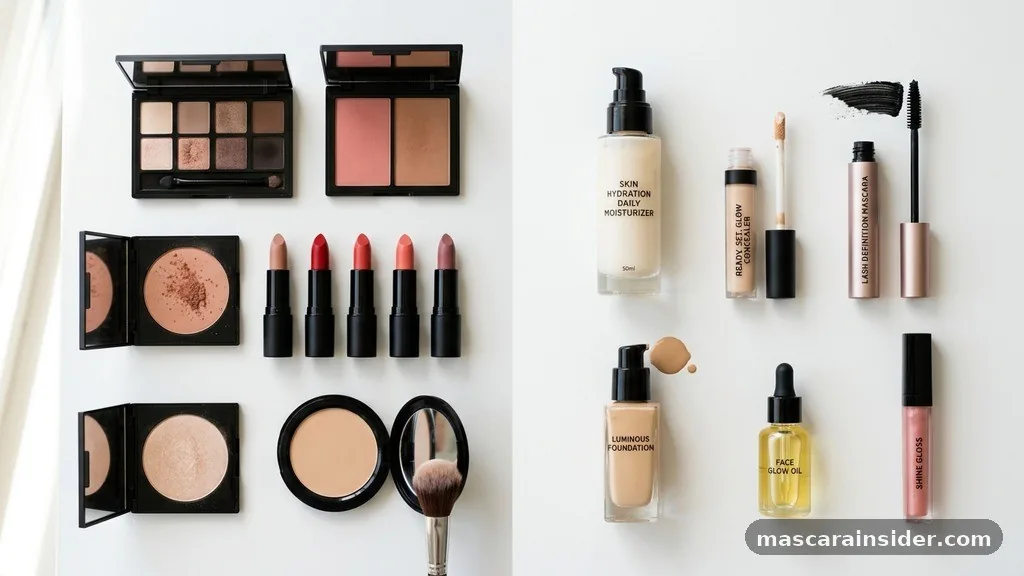
It is helpful to see how different types of makeup are classified to avoid confusion at the checkpoint. The table below outlines how various common beauty products are viewed by security officials.
| Product Category | TSA Classification | Packing Requirement |
|---|---|---|
| Mascara | Liquid/Gel | Must be in quart-sized bag |
| Pressed Powder | Solid | Can remain in luggage |
| Lip Gloss | Liquid/Gel | Must be in quart-sized bag |
| Cream Blush | Gel/Paste | Must be in quart-sized bag |
| Eyeliner Pencil | Solid | Can remain in luggage |
As shown in the table, the distinction usually comes down to whether the product is a solid or a fluid. If you can spread it on your skin or pump it out of a tube, it is a liquid. If it is a solid block of pigment, like a traditional pencil or a pressed compact, it is generally exempt from the liquid bag requirement.
Addressing Common Misconceptions
A common point of confusion involves the size of the container versus the amount of product inside. Some travelers believe that if a 5-ounce container is half-empty, it is acceptable to bring. This is incorrect.
The TSA policy is based on the capacity of the container, not the volume of the contents. If you have a large tube of foundation or a massive bottle of setting spray, you must transfer the product into a smaller, travel-sized container that is clearly marked as 3.4 ounces or less.
Another misconception is that expensive makeup is exempt from inspection. Security protocols are applied universally, regardless of the brand, price point, or packaging design. A luxury brand’s liquid foundation is treated exactly the same as a generic one.
Trying to argue that a product is a “cream” rather than a “liquid” is rarely effective, as the agents categorize both as restricted substances. It is always safer to assume that anything with a gel-like texture is a liquid and pack it accordingly.
Conclusion
Navigating airport security is much simpler when you know exactly how to handle your beauty products. By recognizing that mascara is indeed considered a liquid for TSA purposes, you can ensure your makeup bag is compliant and ready for inspection. Always remember to group your mascara, liquid lipstick, concealer, and setting sprays into your transparent, quart-sized bag to avoid any issues at the checkpoint.
Keeping your dry products like pressed powders separate will streamline your packing process and save precious time. If you follow these straightforward guidelines, you will breeze through security and arrive at your destination with your favorite beauty essentials intact. Safe travels on your next journey, and may your time in the terminal be as smooth as possible.
Is it okay if my mascara tube is larger than 3.4 ounces?
No, the container itself must be 3.4 ounces or less, regardless of how much product is inside.
Do I need to take my mascara out of my carry-on bag?
Yes, the quart-sized bag containing your liquids must be removed from your carry-on for separate X-ray screening.
Are solid eyeliner pencils considered liquids?
No, solid eyeliner pencils are classified as solids and do not need to be in your liquids bag.
What happens if I forget to put my mascara in the liquids bag?
Security agents may ask you to remove it, or they might discard the item if it violates rules.
Can I bring multiple tubes of mascara?
Yes, as long as all tubes fit comfortably within your one quart-sized, clear, plastic, sealable bag.
Does cream eyeshadow count as a liquid?
Yes, cream-based eyeshadows have a gel-like texture and are treated as liquids under current security regulations.
Are there exceptions for medical-grade cosmetics?
Exceptions exist for medically necessary liquids, but you must declare them to the officer before the screening begins.


