


Struggling with stubborn eye makeup is a common frustration for anyone who relies on a long-wearing, waterproof formula to keep their lashes looking perfect throughout the day. When it comes time to clean your face, you may find that standard facial cleansers simply don’t have the strength to dissolve these resilient polymers.
Learning the proper techniques for getting rid of waterproof mascara is essential, as scrubbing too hard can damage your delicate lash hairs and irritate the sensitive skin around your eyes. By utilizing the right solvents and gentle removal methods, you can effectively lift away every trace of pigment without compromising your eyelash health.
Why Waterproof Mascara Requires Specialized Removal
Waterproof mascara is engineered to resist moisture, sweat, and tears, which means it contains specific chemical binders designed to stay put. Unlike standard formulas that wash away with soap and water, these products are built to lock onto your lashes, creating a barrier that is essentially hydrophobic.
Because these formulas are not water-soluble, you need substances that can effectively break down the waxy and resinous components. Using the wrong products can lead to ocular irritation or leave behind makeup residue that clogs follicles and causes lashes to become brittle over time.
Effective Solvents for Stubborn Pigment
The most efficient way to dissolve heavy-duty mascara is by using oil-soluble ingredients. Oils break down the waxy structure of the mascara, allowing it to slide off the lash without requiring aggressive rubbing. While commercial products exist, several household staples work just as well for this purpose.
Common Natural Oils for Makeup Removal

* Coconut oil: A solid at room temperature that melts upon contact with skin, making it an excellent solvent for thick mascaras.
* Almond oil: Rich in vitamin E, this oil is gentle on the skin and helps condition the lashes while lifting stubborn pigments.
* Jojoba oil: This oil closely mimics the natural sebum produced by human skin, making it a safe and effective choice for the eye area.
* Baby oil: A mineral oil-based product that acts as a powerful solvent, though it should be used sparingly if you have acne-prone skin.
Using a Biphasic Makeup Remover
A biphasic makeup remover is specifically formulated with two distinct layers: an oil phase to dissolve waterproof pigments and a water phase to refresh the skin and remove the oily residue. Before using this type of product, you must shake the bottle vigorously to temporarily mix the two components.
Once combined, apply the liquid to a cotton pad and hold it against your closed eyelid for several seconds. This “soaking” period is the secret to success; it allows the oils to penetrate the mascara layers so you can wipe the product away in one smooth motion rather than scrubbing.
The Role of Micellar Water and Oil Cleansers
While standard micellar water may struggle with heavy waterproof formulas, many brands now offer versions specifically designed for long-wear makeup. These solutions contain tiny micelles that act like magnets to lift dirt and oil from the skin’s surface. If you prefer a more thorough cleanse, an oil-based cleanser is a fantastic alternative.
You apply these products to dry skin, massage them gently over your lashes, and then emulsify them with warm water. This method is highly effective for removing makeup residue while keeping the skin barrier intact.
Comparing Removal Methods
Choosing the right method depends on your skin type and the specific ingredients you have on hand. The following table compares common approaches to help you decide which is best for your routine.
| Method | Efficiency | Best For |
|---|---|---|
| Oil-based Cleanser | High | Daily use, all skin types |
| Biphasic Remover | Very High | Heavy, long-wear mascara |
| Natural Oils | Moderate/High | Dry skin, sensitive eyes |
| Petroleum Jelly | High | Occasional use, very dry areas |
Addressing Common Removal Challenges
Many people encounter issues when trying to remove their eye makeup, often due to improper technique or the use of harsh materials. Below are the solutions to common hurdles that prevent a clean finish.
Preventing Eyelash Breakage
If your lashes feel sparse or brittle, you are likely pulling or rubbing them too hard during your nightly routine. Always use a soft, lint-free cloth or a high-quality cotton pad to minimize friction.
If you notice mascara clinging to the base of your lashes, use a clean spoolie brush dipped in a tiny amount of oil to gently comb through the hairs. This helps loosen the stubborn bits without forcing them off.
Managing Ocular Irritation
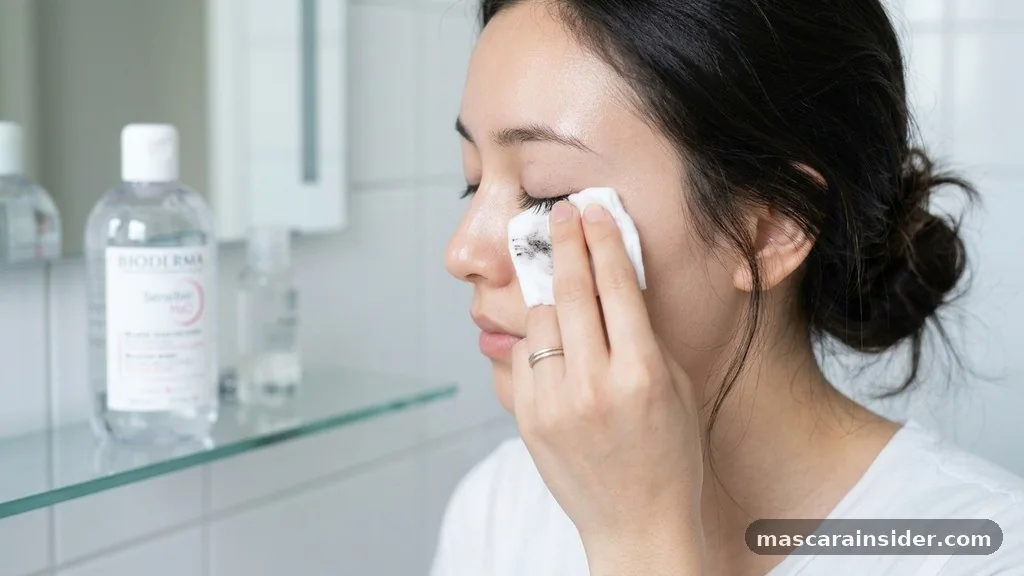
If your eyes feel itchy or red after cleaning, you might be using a product that is too harsh or simply rubbing the makeup into your eye rather than away from it. To avoid this, always keep your eyes tightly closed and work in a downward motion. If you use petroleum jelly or heavy oils, ensure you follow up with a gentle, water-based cleanser to remove the oily film, as leaving excess residue can occasionally cause temporary blurring or mild irritation.
Removing Residue from the Lash Line
Sometimes, the pigment hides right at the root of the lashes, leading to morning “raccoon eyes.” To combat this, take a cotton swab dipped in your chosen oil or remover and carefully trace the lash line. This targeted approach ensures that you catch every bit of product that standard wipes might miss.
The Importance of Gentle Cleansing
The skin around your eyes is the thinnest on your body, making it incredibly susceptible to aging and damage. Gentle cleansing is not just a suggestion; it is a necessity for maintaining skin elasticity. When you are getting rid of waterproof mascara, prioritize products that are fragrance-free and ophthalmologist-tested. Avoid using harsh soaps or abrasive wipes that require physical force, as this can lead to micro-tears in the skin and premature fine lines.
Practical Tips for Nightly Maintenance
Establishing a consistent routine ensures that you never go to bed with makeup still on your face. Leaving mascara on overnight can lead to significant lash fall-out and potential eye infections.
Keep your favorite remover and a stack of reusable pads on your nightstand if you often find yourself too tired to visit the bathroom sink. By making the process as effortless as possible, you increase the likelihood that you’ll stick to a healthy habit.
Final Thoughts on Proper Removal
Mastering the art of removing resilient eye cosmetics is a simple way to protect the health of your eyes and the longevity of your lashes. By opting for oil-based solutions and allowing them enough time to break down the product, you eliminate the need for harsh scrubbing. Whether you prefer a specialized biphasic liquid or a simple natural oil, the key is patience and a gentle touch.
Taking these small, deliberate steps every night will ensure your eyes remain bright and your lashes stay full and healthy. If you have any specific concerns about your skin sensitivity, consider patch-testing your remover on your inner wrist before applying it to your eye area. We hope these techniques help you feel confident in how you manage your daily beauty routine.


