

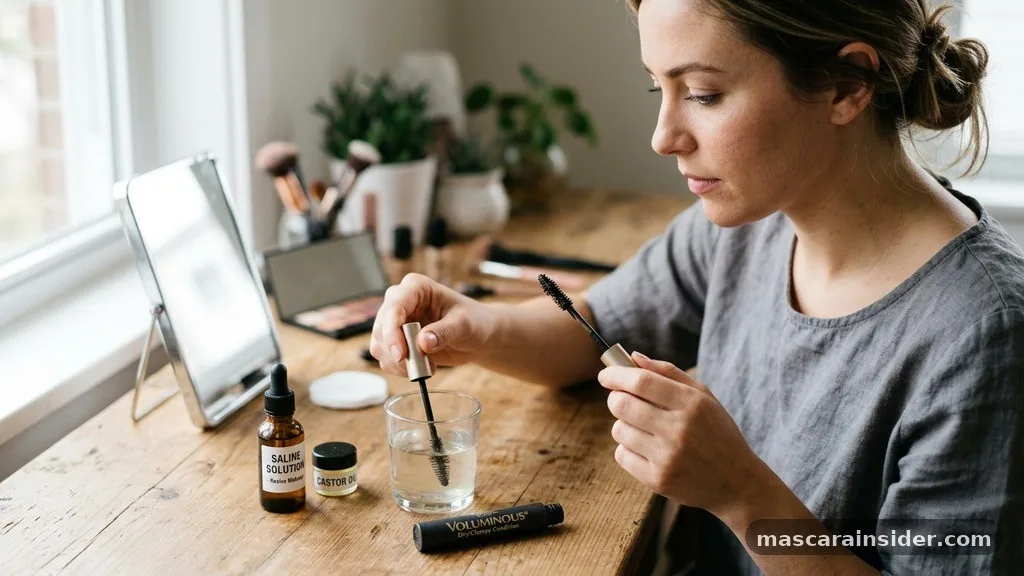
Discovering your favorite tube has gone thick and clumpy right before an important event is a common frustration for makeup lovers. Knowing how to revive your mascara can save you a trip to the store and ensure your lash look remains flawless. While many people think a dry formula signals the end of its life, simple techniques can often restore the texture to a smooth, application-ready consistency.
By understanding the ingredients in your product and following safe handling practices, you can maximize your investment without compromising your eye health. This article explores the most effective ways to refresh your makeup, helping you maintain perfect lashes every single day.
Assessing the Condition of Your Makeup
Before you attempt to fix a dry tube, you need to determine if it is actually salvageable or if it has reached the end of its cosmetic expiration. Mascara is one of the most sensitive products in your beauty bag because it is used directly on the eye area, which is highly prone to irritation.
If your tube is more than three months old, it is likely time to replace it regardless of the consistency. Old products often harbor hidden bacteria, which can lead to a painful eye infection or persistent redness.
To check the state of your product, pull out the mascara wand and examine the formula. If it has turned into a hard, rubbery paste or smells unusual, do not try to rehydrate it. A sour or “off” scent is a clear indicator that the preservatives are no longer active.
Additionally, if you have been dealing with frequent clumped lashes or flaking during the day even when the product feels wet, the formula itself has likely degraded. In these cases, no amount of thinning will restore the quality or safety of the application.
The Warm Water Technique for Gentle Restoration
One of the safest and most common ways to breathe life back into a thick formula is the hot water bath method. This process uses indirect heat to soften the waxes and oils trapped inside the tube, making the product glide onto your lashes much more easily. To do this, simply fill a small mug with hot—not boiling—water.
Place the closed mascara tube into the water for about three to five minutes. The heat helps melt the hardened components without introducing any foreign substances into the container.
This technique is particularly useful for water-based formula products that have thickened due to slight air exposure. Once the tube has warmed up, remove it and roll it between your palms for a few seconds to distribute the heat evenly.
When you pull out the wand, you will often find that the product is significantly smoother. Be careful not to let the water touch the cap or the seal, as you want to avoid getting moisture inside the tube, which could create a breeding ground for microorganisms.
Using Saline Solution to Thin the Formula
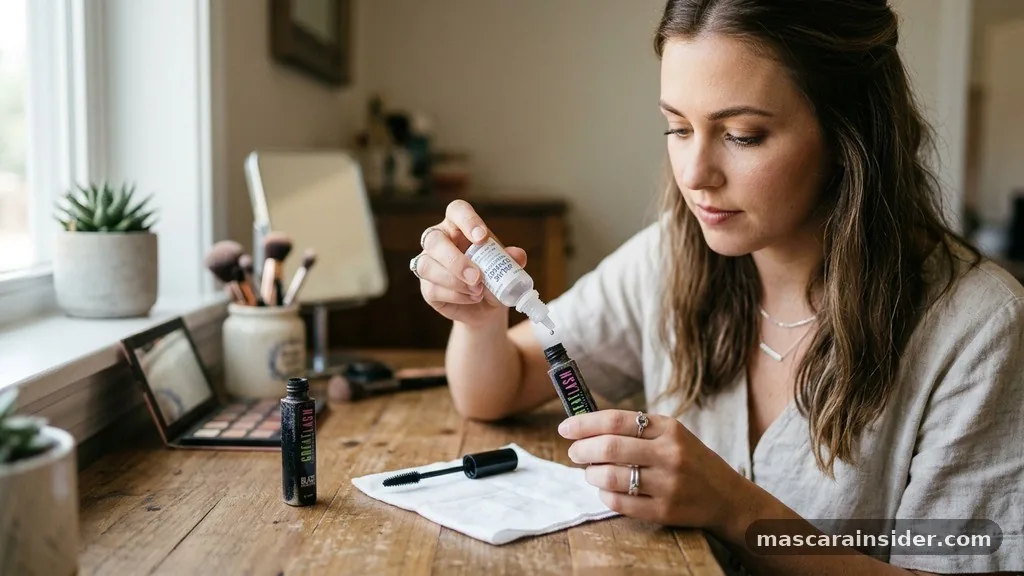
If heat alone does not do the trick, adding a few drops of saline solution is a widely accepted remedy. Because saline is designed for use in the eyes, it is generally considered a safer additive than tap water or other household liquids.
Simply add two or three drops directly into the tube, insert the wand, and gently pump it up and down to mix the solution into the formula. Avoid vigorous pumping, as this pushes air into the tube and can cause the product to dry out even faster in the long run.
It is essential to use a plain, sterile saline solution rather than a multi-purpose contact lens cleaner that contains harsh disinfectants or hydrogen peroxide. Those ingredients can irritate your delicate eye tissue if they are not fully neutralized.
If you only have contact lens solution, check the label to ensure it is intended for sensitive eyes. Start with just a small amount of liquid; you can always add another drop if necessary, but you cannot remove liquid once it has been added to the mixture.
Why Micellar Water Is a Reliable Alternative
Many makeup artists suggest using micellar water when you need to troubleshoot a stubborn, dried-out tube. Since micellar water contains tiny oil molecules called micelles, it can effectively integrate with many modern mascara formulas to restore their creamy texture.
This is especially helpful for reviving a tube that has become flaky or difficult to apply evenly. Like the saline method, you should only add one or two drops at a time to avoid turning your mascara into a watery, runny mess that will smudge under your eyes.
Ensure that the micellar water you are using is free of heavy fragrances or alcohol, as these can sting the eyes if the mascara migrates during the day. When using this hack, you might find that the drying time on your lashes increases slightly.
Give your lashes a few extra seconds to set after application before you blink rapidly or touch your eye area. This keeps the application crisp and prevents the dreaded “raccoon eye” effect that can happen with overly hydrated formulas.
Limitations of Fixing Different Types of Mascara
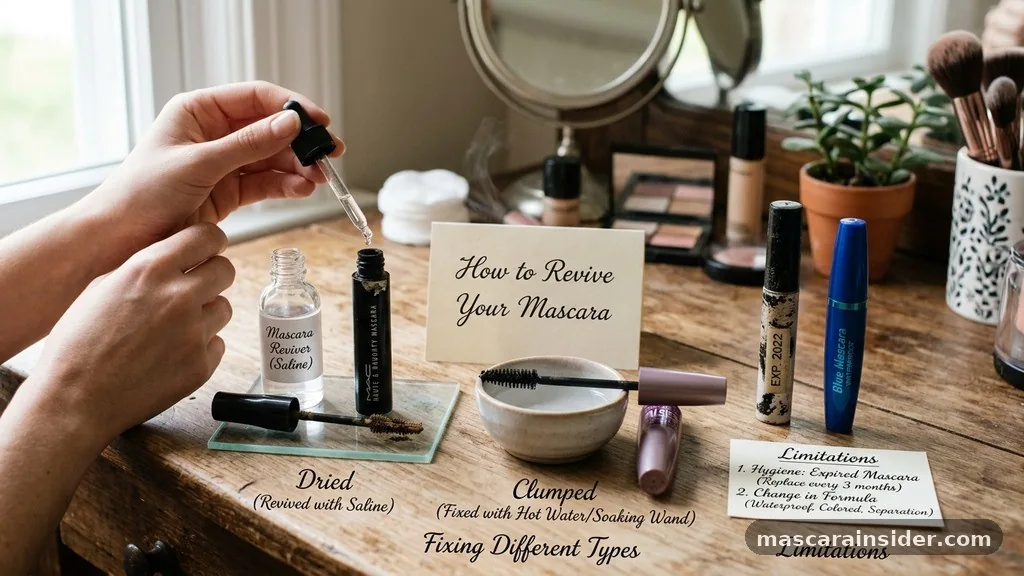
It is vital to understand that not all products react well to thinning attempts. The effectiveness of these methods depends heavily on the chemical composition of the makeup. You should categorize your products before attempting any of these hacks to ensure you are using the right approach for your specific tube.
| Mascara Type | Best Reviving Method | Risk Level |
|---|---|---|
| Standard Water-Based | Warm Water Bath | Low |
| Long-Wear/Volumizing | Saline Solution | Moderate |
| Waterproof/Oil-Based | Avoid Thinning | High |
Oil-based mascara or truly waterproof varieties are engineered to repel moisture. If you add water or saline to these, the substances will likely not mix properly, leaving you with a strange, separated texture that won’t coat your lashes correctly. Similarly, tubing mascara uses special polymers that form tiny tubes around the lash.
Adding liquid to these can destroy the structural integrity of the polymers, rendering the product completely useless. If your high-end waterproof or tubing product has dried out, it is almost always better to replace it rather than trying to force a fix that will likely ruin the formula’s performance.
Identifying and Addressing Topical Gaps
A common point of confusion for consumers is why mascara dries out even when they are careful to close the cap tightly. One of the primary reasons is the accumulation of product on the neck of the tube. Over time, this buildup prevents the cap from sealing perfectly, allowing oxygen to enter and slowly degrade the formula.
To address this, wipe the neck of the tube with a cotton pad soaked in a little makeup remover once a week. This ensures a tight seal every time you put the wand away.
Another common gap in knowledge involves the mascara wand itself. Sometimes, the formula is fine, but the brush has become clogged with old, hardened product, making the application look clumpy. If your lashes look spidery, try cleaning the brush with warm water and gentle soap, then let it dry completely before reinserting it.
You can also use a spoolie brush from a different product to apply the mascara if the original wand has become damaged or warped. Finally, avoid “pumping” the wand into the tube, as this is the fastest way to introduce bacteria and air, which drastically shortens the product’s lifespan.
The Importance of Eye Safety and Hygiene
Prioritizing eye safety is non-negotiable when you are working with beauty products. Your eyes are among the most sensitive organs in your body, and they are highly susceptible to infections caused by contaminated applicators. If you notice any signs of an infection, such as itching, swelling, or discharge, discard the mascara immediately.
Do not attempt to salvage it, even if it is a brand-new tube. The health of your vision is far more important than the cost of a replacement product.
Avoid sharing your mascara with friends, even if you are just testing a color or formula. Sharing applicators is the easiest way to spread bacteria from one person to another. Furthermore, keep your makeup collection in a cool, dry place away from direct sunlight.
High temperatures can cause the preservatives in your makeup to break down prematurely. By following these simple hygiene rules, you reduce the need to perform “revival” hacks in the first place, as your products will naturally last their intended duration without drying out or becoming contaminated.
Recognizing When It Is Time to Replace
Even with the best maintenance tips, every beauty product has a natural life cycle. The industry standard for mascara is roughly three months of daily use. If you are a light user, you might stretch this to four months, but you should never keep a tube beyond six months.
Over time, the ingredients degrade, the preservatives become less effective, and the texture changes permanently. Keeping a permanent marker in your vanity to write the “opened date” on the bottom of the tube is an excellent habit.
If you find that you are constantly needing to add saline or warm water to your mascara to make it usable, that is a sign that the product has expired or the packaging is compromised. A high-quality mascara should be easy to apply straight from the tube for the duration of its life.
If it consistently requires effort to achieve a smooth application, it is time to move on to a fresh tube. Remember that your eyes deserve fresh, effective products that apply beautifully without requiring extra steps or modifications.
Conclusion and Maintaining Your Lash Routine
Learning how to revive your mascara is a useful skill that can help you finish a product you love, but it should be viewed as a temporary solution rather than a permanent fix. By using gentle methods like a warm water bath or a few drops of saline, you can extend the usability of your makeup while maintaining a high standard of quality. However, always prioritize your eye health by monitoring for signs of contamination and respecting the standard three-month shelf life.
A great lash look starts with fresh, high-quality products that are handled with care and stored properly. If you find your routine becoming a chore, it is almost always better to treat yourself to a new tube, ensuring your eyes stay healthy and your lashes look their absolute best.
Can I use eye drops to revive dried mascara?
Yes, a few drops of lubricating eye drops work similarly to saline and are safe for eyes.
Is it safe to add water to my mascara?
Avoid using plain tap water, as it can introduce bacteria and lead to potential eye infections quickly.
How do I know if my mascara is expired?
Check for a sour smell, unusual texture changes, or if you have owned the tube over three months.
Why does my mascara get clumpy so quickly?
Pumping the wand into the tube introduces air, which dries out the formula and causes clumpy lashes.
Can I use oil to thin out my mascara?
Avoid adding oils unless the mascara is specifically oil-based, as it will likely cause smudging and irritation.
How can I prevent my mascara from drying out?
Always close the cap tightly after every use and wipe the wand neck clean to prevent buildup.
Should I share my mascara with friends?
Never share mascara, as it can easily transmit bacteria and cause serious eye infections between different people.


