

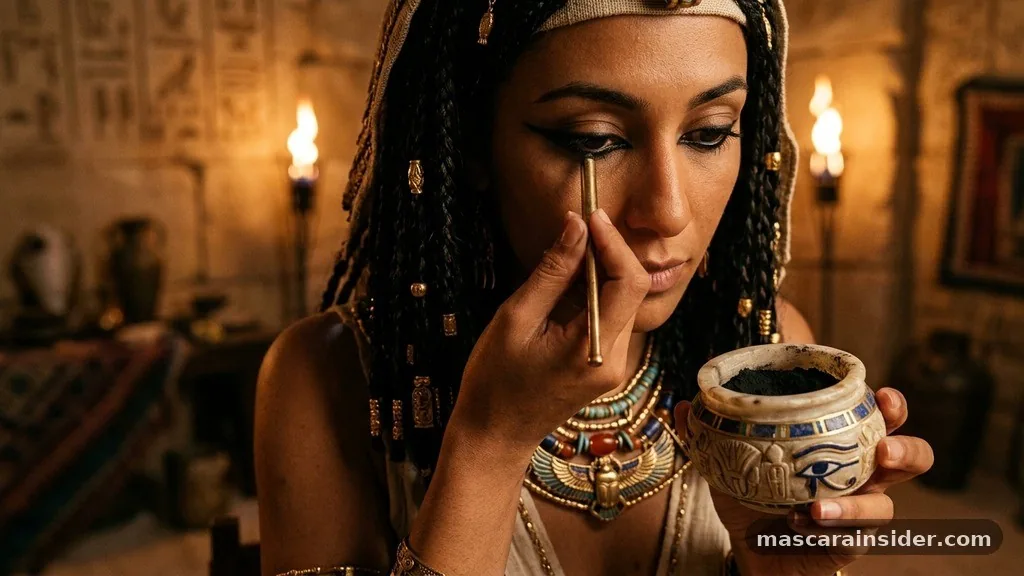
The quest for defined, dramatic eyes is hardly a modern obsession. While we often think of beauty products as contemporary inventions, the history of how mascara was invented stretches back thousands of years. It’s fascinating to see how a simple desire to accentuate the eyes evolved from ancient rituals to the high-tech, smudge-proof tubes we use today.
Understanding this timeline reveals that mascara isn’t just a cosmetic; it’s a reflection of changing social standards and technological leaps that transformed how we present ourselves to the world. Let’s look at the evolution of this staple and uncover the real story behind its development.
Ancient Roots: The Origins of Eye Darkening
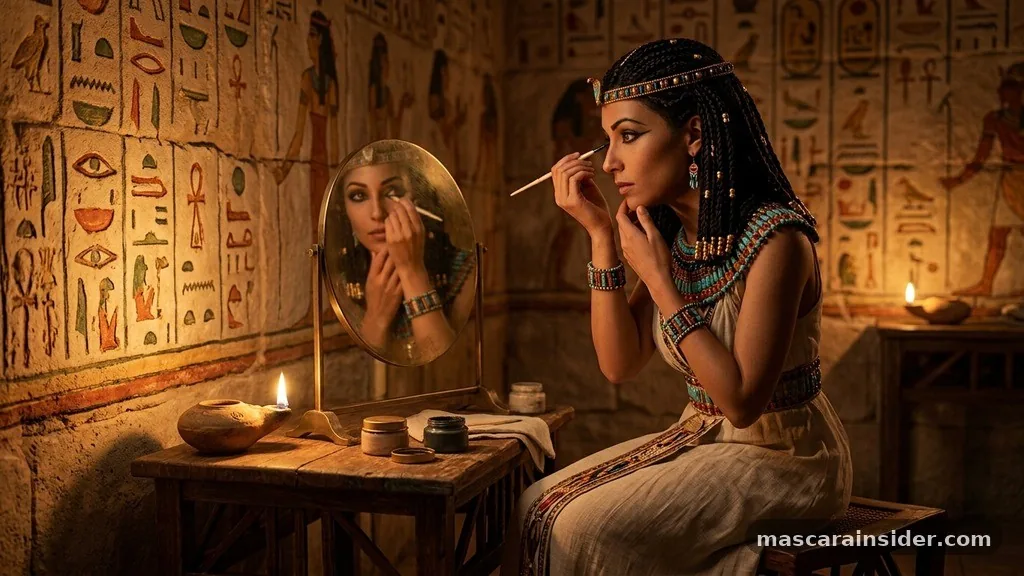
When considering when was mascara invented, one must look far beyond the modern industrial era. The practice of darkening the eyelashes and eyelids dates back to Ancient Egypt, around 4000 BCE.
Both men and women of the time believed that lining the eyes with dark substances provided spiritual protection and warded off the “evil eye.” These early formulations were a far cry from the chemical blends we recognize today.
The primary substance used in these ancient times was kohl, a mixture of galena (a lead sulfide), malachite, charcoal, and various oils. The application was a ritualistic process, often involving a small stick or spatula to apply the paste directly to the lashes and the surrounding skin. This was not merely about vanity; it served a practical purpose by helping to shield the eyes from the harsh glare of the desert sun and potentially acting as a disinfectant against eye infections.
This early form of eye makeup set the stage for thousands of years of cultural significance. While these ingredients would be considered dangerous or ineffective by today’s safety standards, they established the foundational human desire to create contrast around the eyes. The cultural weight of this practice persisted through the ages, influencing various civilizations, including the Greeks and Romans, who continued to value dark, thick lashes as a symbol of beauty and status.
The 19th Century and the Birth of Modern Cosmetics
For centuries after the fall of the Roman Empire, the use of heavy eye makeup fell out of favor in many parts of the Western world. It wasn’t until the 19th century that the concept of commercially available mascara began to emerge.
The pivotal figure in this transition was Eugene Rimmel, a French perfumer living in London. By the mid-1800s, he had successfully developed a non-toxic product that allowed women to darken their lashes safely.
Rimmel’s invention was a solid cake of pigment—often made from coal dust and soap—that had to be activated with water. Users would rub a damp brush against the cake and then apply the darkened paste to their lashes. This cake mascara became the standard for decades, eventually making the name “Rimmel” synonymous with eye makeup in many languages, including Italian and Portuguese, where the word for mascara is still “rimmel.”
This era marked the shift from homemade, often hazardous concoctions to regulated, mass-produced beauty items. While it was still cumbersome to use, it provided a level of consistency that previous generations lacked. This was the true commercial beginning of the product, laying the groundwork for the mass-market explosion that would follow in the early 20th century.
The Maybelline Revolution and the Role of Chemistry
The story of how mascara was invented takes a dramatic turn in 1915 with Thomas Lyle Williams. Observing his sister, Mabel, attempting to darken her lashes with a mixture of coal dust and petroleum jelly, he realized there was a massive market opportunity for a convenient, pre-mixed solution. He founded the company that would eventually become Maybelline, combining his sister’s name with the key ingredient: Vaseline.
Williams’ innovation was a massive hit because it simplified the application process significantly. Instead of scrubbing at a dry cake, consumers had a ready-to-use product that offered a more natural look and a much easier application.
This period saw the intersection of domestic ingenuity and industrial chemistry. By utilizing petroleum jelly as a base, the product was more emollient, preventing the flaking that plagued the earlier, soap-based cake formulas.
This development also coincided with the rise of the film industry. Hollywood stars began wearing darker, more defined lashes to stand out under the intense studio lights, and the public quickly clamored to emulate this look.
Maybelline capitalized on this trend, marketing their product as a way to achieve that “screen siren” gaze at home. It was the birth of celebrity-driven beauty marketing, a strategy that remains the backbone of the cosmetic industry today.
Comparing Early and Modern Mascara Formulations
To understand the evolution, it helps to look at how the ingredients and delivery systems have shifted over time. The following table highlights the differences between the early methods and the innovations that defined the mid-20th century.
| Feature | 19th Century Cake Mascara | Mid-20th Century Tube Mascara |
|---|---|---|
| Base Ingredient | Soap and Pigment | Petroleum Jelly and Waxes |
| Application | Damp brush on solid cake | Wand inside a tube |
| Portability | Low (messy) | High (compact) |
| Durability | Poor (smudges with moisture) | Improved (resisted sweat) |
This shift in technology was not just about convenience. The move to the tube system allowed for the inclusion of synthetic polymers and resins, which provided better adhesion to the lash hair. As chemistry advanced, manufacturers were able to create products that were more resistant to clumping, flaking, and smudging, directly addressing the complaints of early twentieth-century users.
Helena Rubinstein and the Innovation of the Wand
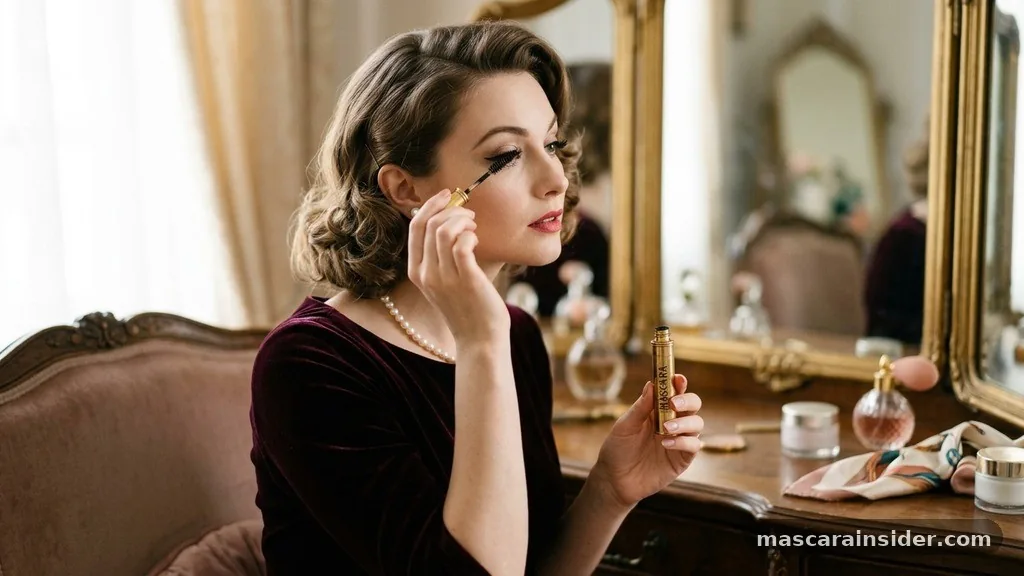
While Maybelline dominated the early market, Helena Rubinstein was a visionary who sought to refine the user experience even further. In the late 1950s, she introduced the first mascara that came with a built-in applicator wand.
Before this, you still had to use a separate brush, which was often sold as a standalone tool. Her “Mascara-Matic” was a revolutionary device that featured a spiral brush inside the tube.
This invention solved the biggest annoyance in the routine: the need for separate tools. By integrating the brush into the cap, Rubinstein made the process of applying makeup truly portable.
This was a critical step in the normalization of makeup in the modern workplace and social life. It allowed women to touch up their look on the go, making the product an essential item in every handbag.
The design of the wand itself also underwent rapid iteration. Manufacturers began experimenting with different bristle shapes and materials, realizing that the brush was just as important as the formula itself for achieving length, volume, or curl. This focus on the delivery system transformed how brands marketed their products, shifting the focus from just the “paint” to the “application experience.”
Topical Gaps: Addressing Common Misconceptions
Many people wonder if there was a specific “eureka” moment where the product was invented, but the reality is a slow, iterative process. A major gap in common knowledge involves the role of Helene Vierthaler Winterstein. While often overshadowed by the larger corporate names, she contributed significantly to the development of early mascaras in Europe, patenting a formula that was more stable and easier to use than the typical soap-based cakes.
Another point of confusion is the distinction between early eye-darkening agents and modern formulas. People often assume that the “mascara” mentioned in historical texts was the same as the product sold today. In reality, modern mascara relies on carbon black for its deep, jet-black appearance, a pigment that was not widely available or chemically stable in earlier formulations.
Finally, there is the question of why waterproof options were developed. The early products were notoriously susceptible to tears, rain, and humidity.
The demand for a waterproof formula led to the introduction of heavy, oil-based waxes and resins in the 1930s. These early waterproof versions were incredibly difficult to remove, often requiring harsh solvents, which ironically led to the development of specialized eye makeup removers that we now consider standard.
The Cultural Evolution of Lash Trends
The way we define “beautiful” lashes has shifted alongside the development of the product itself. In the 1920s, the “flapper” look emphasized a heavily defined, almost clumpy lash, which was achieved by layering thick, dark pomades. By the 1940s and 50s, the ideal shifted toward a more separated, curled, and “fluttery” lash, which required better brushes and more sophisticated formulas.
* The 1960s introduced the “Twiggy” look, where lower lashes were heavily emphasized using thick, black mascara.
* The 1980s favored vibrant, colorful mascaras, moving away from traditional black and brown shades.
* The 1990s and 2000s saw the rise of the “lash extension” effect, with products specifically formulated for extreme length and separation.
These trends were not just aesthetic shifts; they were enabled by the labs. As chemical engineers learned to manipulate the viscosity of the formulas, they could produce “volumizing” mascara, which contains fibers that cling to the lash, or “lengthening” mascara, which uses polymers to extend the lash tip. The product has effectively become a tool for sculpting the appearance of the eye, moving far beyond the simple darkening agents of the past.
Safety and Regulation in the Cosmetic Industry
The journey of mascara also tracks the history of safety regulations. In the early 20th century, before strict labeling laws existed, some mascaras contained dangerous substances like mercury, lead, or aniline dyes.
These chemicals caused severe allergic reactions and even blindness in some users. The public outcry led to the formation of stricter governing bodies, such as the FDA in the United States, which began to oversee cosmetic safety.
Today, every ingredient in a tube of mascara—from the preservatives that keep it free of bacteria to the pigments that give it color—is strictly monitored. The move toward “clean beauty” has further pushed brands to remove parabens, phthalates, and synthetic fragrances. This evolution shows that the industry has shifted from a “buyer beware” mindset to one where consumer safety is a primary marketing pillar.
The complexity of modern formulas is immense. A typical tube contains a precise balance of water, waxes, film-formers, and pigments, all stabilized to ensure the product doesn’t dry out or harbor microbes during the three months it is typically used. This level of sophistication is a long way from the ancient kohl pots of Egypt, yet the fundamental goal remains exactly the same.
Why the History Matters Today
Understanding when was mascara invented provides context for why we value certain features in our beauty products today. We have come to expect high-performance, long-lasting, and safe options because of the centuries of trial and error that preceded us. The industry has moved from dangerous, homemade pastes to highly engineered, safe, and effective tools that allow for immense creative expression.
Looking back, it is clear that mascara has always been about more than just aesthetics. It is a tool for confidence, a marker of cultural identity, and a testament to human ingenuity.
Whether it was the ancient Egyptian seeking spiritual protection or the modern consumer looking to complete a professional look, the desire to draw attention to the eyes remains a constant. As we look toward the future, with the rise of lash serums and advanced synthetic brushes, it is clear that the evolution of this product is far from over.
Frequently Asked Questions
Did they have mascara in the 1800s?
Yes, early commercial forms like cake mascara were developed in the mid-19th century by Eugene Rimmel.
What is the oldest makeup product?
Kohl, used in Ancient Egypt, is considered the oldest form of eye makeup and a precursor to mascara.
Was mascara originally for men?
In Ancient Egypt, both men and women used kohl to line their eyes for spiritual and practical reasons.
How did they do mascara in the 1920s?
Women typically used cake mascara, wetting a small brush and rubbing it against a solid pigment block.
Who invented the mascara wand?
Helena Rubinstein is credited with popularizing the modern mascara tube with an integrated applicator wand in 1958.
When was waterproof mascara invented?
The first waterproof formulas were introduced in the 1930s to withstand moisture and prevent smudging during wear.
What was the key ingredient in early Maybelline products?
Thomas Lyle Williams used a mixture of coal dust and petroleum jelly to create his first successful mascara.


