

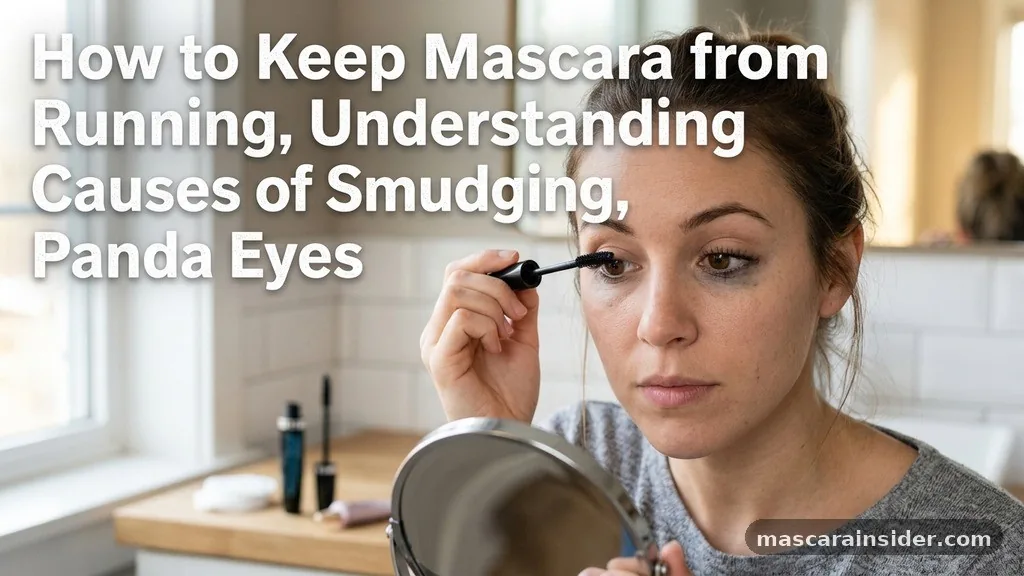
Dealing with raccoon eyes by midday is a common frustration for anyone who loves defined lashes but struggles with oily skin or humid weather. Understanding how to keep mascara from running involves more than just buying a different tube; it requires a strategic approach to your entire eye makeup routine.
By addressing how your skin interacts with your products, you can easily maintain a crisp, clean look from morning until night. Whether you are battling natural oils or environmental moisture, mastering these simple adjustments will ensure your eye makeup stays exactly where it belongs, providing long-lasting results that look fresh throughout the entire day.
Understanding the Causes of Smudging and Panda Eyes
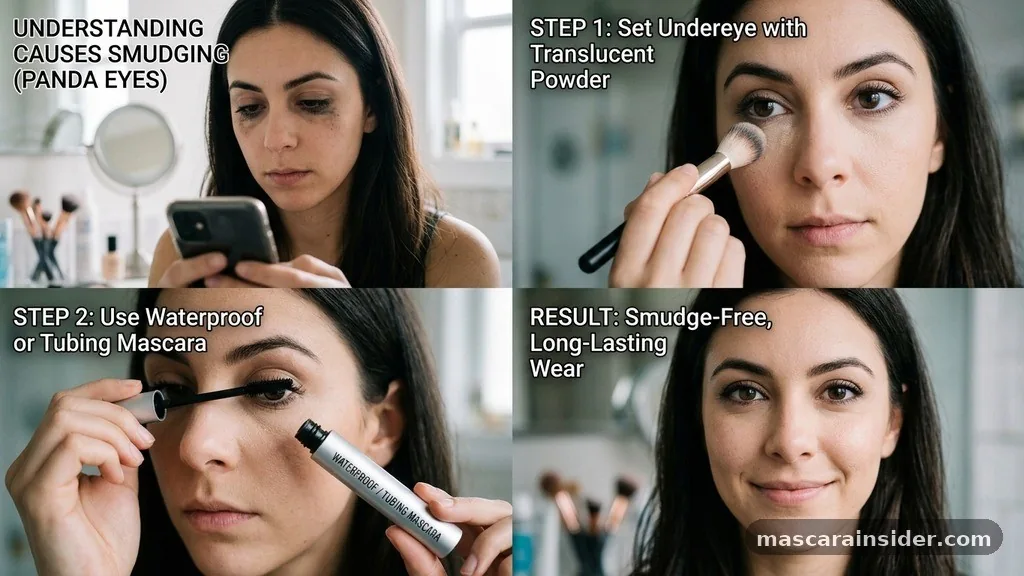
Most people experience smudging because of the chemical reaction between their makeup and the natural oils produced by their skin. Sebum, the waxy substance secreted by your sebaceous glands, acts as a solvent for many standard formulas. When your eyelids are oily, that sebum travels down to your lashes, effectively breaking down the wax and pigments in your mascara. This creates the dreaded panda eyes effect, where dark circles accumulate on your lower lash line without warning.
Beyond natural oil production, environmental factors play a massive role in product breakdown. Humidity is a significant culprit, as water vapor in the air can soften formulas that aren’t designed to withstand moisture. Even if you aren’t sweating, the ambient moisture in the air can cause non-waterproof products to lose their structural integrity. Furthermore, how you apply your skincare matters; using a heavy, oil-based moisturizer right up to your lash line creates a slippery base that makes it impossible for even the best products to adhere properly.
Choosing the Right Formula for Your Lifestyle
The most effective way to prevent smudging is to select a formula that aligns with your specific needs and skin type. If you have naturally oily lids, traditional formulas will almost always migrate. Waterproof mascara is the standard solution, as it is formulated with polymers that repel water and resist oil better than standard waxes. However, waterproof options can be difficult to remove and may cause lash breakage if you aren’t gentle during makeup removal.
For those who want longevity without the harshness of waterproof formulas, tubing mascara is an excellent alternative. These formulas wrap each individual lash in water-resistant tubes rather than painting them with pigment.
They do not smear or smudge because they aren’t oil-soluble; instead, they slide off cleanly when you use warm water and gentle pressure. This makes them a favorite for people who find that everything else melts off their face by three o’clock in the afternoon.
The Role of Eye Primer in Long-Lasting Makeup
Applying an eye primer before you even touch your lashes is a secret step that many people overlook. Just as you use a base for your foundation to ensure it lasts, a dedicated eye primer creates a matte, grippy surface on your lids.
This barrier prevents your skin’s natural oils from reaching your lashes and disrupting your mascara. By controlling the oil levels around the eye area, you significantly reduce the chance of transfer occurring throughout the day.
When choosing a primer, look for formulas that are specifically designed for the eyelids, as they are often formulated to be both tacky and oil-absorbing. Apply a thin layer across your entire lid, making sure to blend it right up to the lash line.
Wait a few seconds for it to set before applying your eyeshadow or mascara. This simple preparation step acts as a shield, keeping your makeup locked in place regardless of how long your day lasts.
Setting Your Under-Eye Area Correctly
Even if your lashes are perfectly prepped, your under-eye area can cause issues if it isn’t properly set. Many people use a creamy concealer that remains slightly tacky, which acts like a magnet for stray mascara fibers.
Using an oil-free concealer is the first step, but locking it down with setting powder is where the real magic happens. A light dusting of translucent powder absorbs excess oil and creates a dry surface that won’t grab onto your lashes if they brush against your skin.
When applying your powder, use a small, fluffy brush to get right up to the base of your lower lashes. Don’t go overboard, as too much powder can look cakey or settle into fine lines, but ensure the area is no longer shiny or sticky.
This technique is especially important if you wear mascara on your lower lashes, as the proximity to the skin makes transfer much more likely. By creating a dry, matte environment, you eliminate the primary surface where smudging typically begins.
Strategic Application Techniques for Better Wear
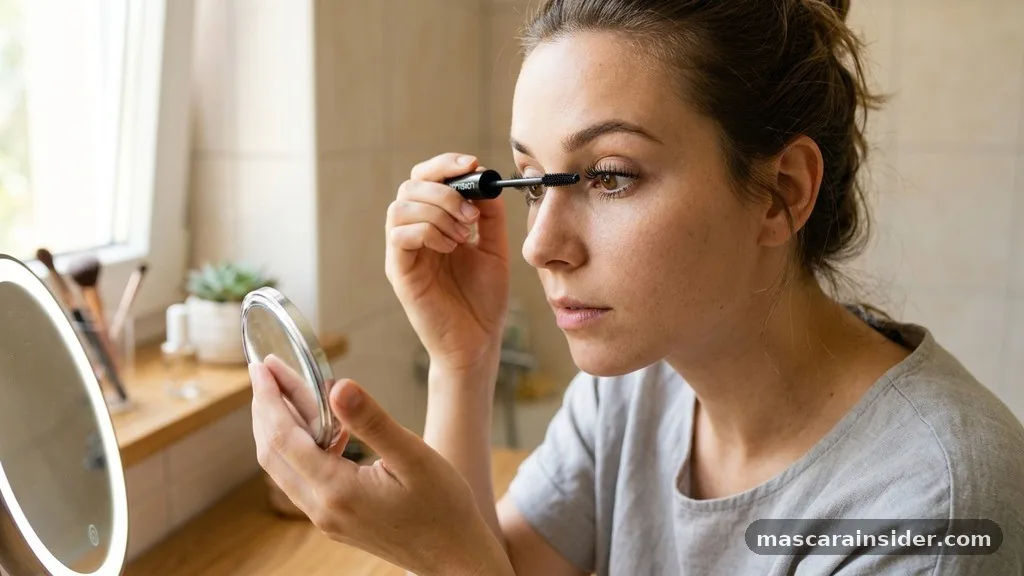
How you hold your wand and where you focus the product can make a massive difference in preventing transfer. Avoid overloading the tips of your lashes with too much product, as this extra weight makes them more likely to touch the skin above or below your eyes.
Start at the root and wiggle the wand, focusing the majority of the volume there. This technique provides the illusion of fullness without creating heavy, drooping tips that are prone to hitting your brow bone or cheek.
If you struggle with smudging on the upper lid, try looking downward into a mirror while you apply. This keeps your lashes away from your skin while the product is still wet. Wait at least thirty seconds before looking up or blinking fully to allow the formula to set.
Additionally, consider using a lash primer before your mascara. A good primer adds length and separation, which can help prevent clumping, a common cause of flakes and smudges that often drop onto your cheeks.
Comparing Different Mascara Types
Selecting the right tool for the job is essential for a smudge-free experience. The following table highlights the differences between common mascara types to help you decide which is best for your specific needs.
| Formula Type | Best For | Smudge Resistance | Removal Difficulty |
|---|---|---|---|
| Standard | Sensitive eyes, easy removal | Low | Very Easy |
| Waterproof | High humidity, athletic activity | High | High |
| Tubing | Oily eyelids, avoiding panda eyes | Very High | Medium |
| Volumizing | Dramatic, thick lashes | Low to Medium | Easy |
Managing Environmental and Daily Habits
Sometimes, the way we interact with our environment is the primary reason for makeup failure. If you live in a high-humidity area, you might need to carry a small travel-sized fan or stick to strictly waterproof formulas.
Avoid rubbing your eyes, even if you feel tired or itchy, as this mechanical agitation is the fastest way to move product from your lashes to your skin. If you must touch your eye area, use a clean cotton swab to gently pat away any moisture rather than wiping.
Another factor is your choice of skincare routine. While hydration is vital, try to avoid putting heavy creams or serums directly on your lash line in the morning. Let your skincare sink in for at least ten minutes before starting your makeup application.
If you have an excess of product, gently blot your eyelids with a tissue before applying your primer. This removes the oily residue that often leads to your mascara breaking down and running down your face.
Advanced Techniques to Lock in Your Look
If you find that your mascara still smudges despite your best efforts, you might need to use a makeup setting spray. While these are typically meant for your face, they can provide a final protective layer that keeps everything in place. You don’t want to spray your eyes directly, of course.
Instead, spray a small amount of setting spray onto a clean spoolie brush and gently run it over your finished, dried lashes. This acts as a topcoat, sealing the formula against sweat and oil.
Another advanced trick involves the “sandwich method.” Apply a coat of your favorite volumizing mascara, let it dry completely, and then apply a thin layer of a tubing or waterproof topcoat.
This gives you the desired aesthetic effect of your volumizing product while utilizing the smudge-proof technology of the second formula. It takes a little extra time, but it is a reliable way to ensure that your lashes remain dramatic and perfectly placed for twelve or more hours.
Addressing Topical Gaps and Common Misconceptions
Many users wonder if clear mascara is a viable alternative to prevent running. Clear mascara is essentially a brow gel and will not smudge, but it also won’t give you the definition or volume that colored mascara provides. It is a great option for a “no-makeup” look, but it doesn’t solve the issue of dark pigment moving under your eyes.
Another common misconception is that “all waterproof mascaras are the same.” In reality, the quality of the polymers used differs greatly; cheaper options might flake, while high-end waterproof formulas are designed to remain flexible and flake-free.
Furthermore, consider the age of your product. Mascara formulas begin to break down and oxidize the moment they are exposed to air. If you are using a tube that has been open for more than three months, the formula may be separating, which directly contributes to smudging.
Keeping your products fresh is an often-ignored aspect of makeup maintenance. If you notice your mascara is becoming clumpy or smells unusual, it is time to replace it, regardless of how much product is left in the tube.
- Replace your mascara every 3 months to prevent bacterial growth and formula breakdown.
- Use an oil-free cleanser to remove makeup to ensure no residue is left behind for the next day.
- Apply a small amount of translucent powder to your eyelids to combat excess sebum production.
- Always wait for your moisturizer to fully absorb before applying eye makeup.
- Consider using a lash curler before applying mascara to help lift lashes away from the skin.
- Keep your makeup brushes clean to avoid transferring oils from one product to another.
- Check the ingredients list for oil-based components if you struggle with persistent smudging.
Conclusion
Keeping your eye makeup looking flawless doesn’t have to be a daily struggle against the elements. By understanding that sebum and environmental moisture are the primary enemies of a clean look, you can build a routine that effectively blocks these factors. Whether you opt for a reliable tubing formula, commit to setting your under-eye area with powder, or simply adjust how you apply your morning skincare, these small changes yield significant results.
Achieving long-lasting, smudge-free lashes is entirely possible with the right approach and a bit of consistency. Start by evaluating your current products and identifying which of these techniques fits your specific needs.
Your journey to perfect, long-wearing lashes starts with a few simple adjustments to your daily habit. Feel free to experiment with these methods and see which combination works best for your unique skin type and lifestyle.
How can I stop my mascara from running?
Use an eye primer, set your under-eyes with translucent powder, and opt for a tubing or waterproof formula.
Why does mascara run under my eyes?
Excess sebum from your skin or environmental humidity breaks down the wax in your mascara, causing it to smear.
Why has Gen Z stopped wearing mascara?
Many are prioritizing lash health, low-maintenance routines, or preferring lash lifts and tints over traditional, smudge-prone mascara formulas.
How do I make my mascara stay on all day?
Prep the eye area to remove oil, use a quality primer, and seal your lashes with a setting spray.
Does waterproof mascara prevent smudging?
Yes, waterproof formulas contain polymers that resist oil and water, making them significantly more smudge-resistant than standard mascara.
Can I put setting spray on my lashes?
Yes, apply it to a clean spoolie and brush it through dried lashes to create a protective, long-lasting seal.
How often should I replace my mascara?
Replace it every three months to prevent formula degradation, which can cause flaking, clumping, and increased risk of smudging.


