

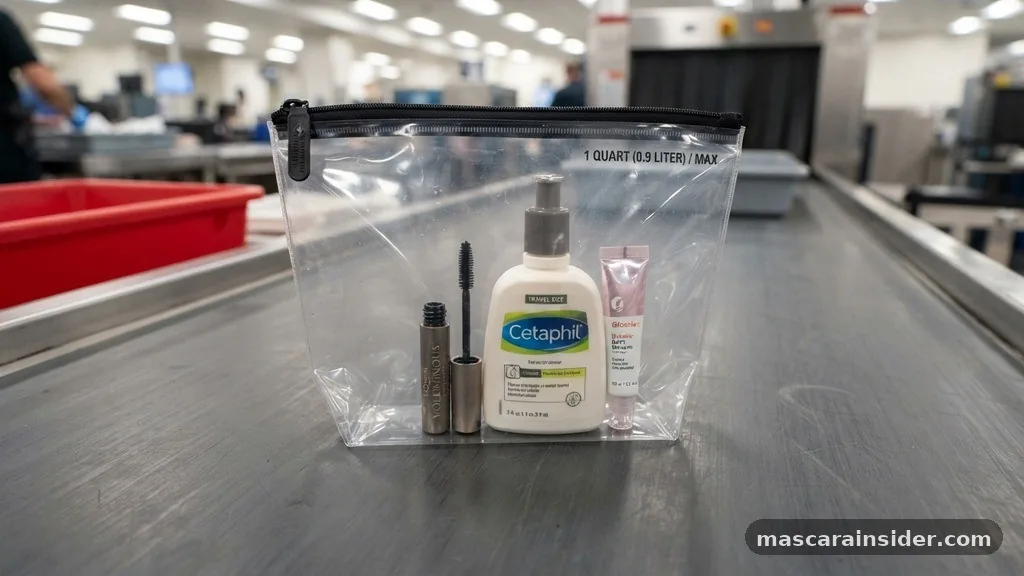
When you are packing for a flight, determining whether your makeup bag will pass through airport security is a common source of stress. Many travelers find themselves questioning the classification of their favorite beauty products, specifically wondering if is mascara considered a liquid by the authorities. Because security officers require clarity on these items, understanding the distinction between solids, gels, and fluids is essential for a smooth journey.
Knowing how your cosmetic bag items are categorized helps you avoid the frustration of having your belongings confiscated at the checkpoint. This article clarifies the regulations surrounding your beauty routine so you can pack your carry-on luggage with confidence.
The Classification of Cosmetics in Airport Security
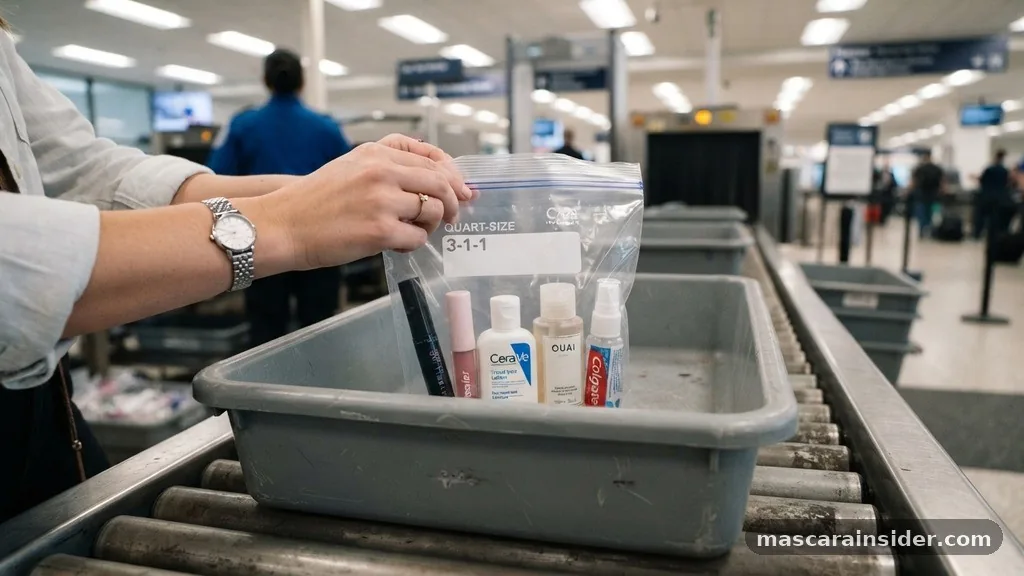
At its core, the TSA 3-1-1 liquids rule dictates what you can bring in your carry-on baggage. The agency defines liquids, aerosols, gels, creams, and pastes as items that must comply with specific volume constraints.
Since mascara is a viscous substance designed to coat lashes, it falls squarely into the category of a gel or liquid. Even though it feels thicker than water, the cosmetic consistency of mascara is categorized as a fluid by security screeners.
When you present your bag for airport security screening, officers look for items that could potentially hide prohibited materials or that exceed the allowed volume for a single container. Because mascara is sold in a tube and applied as a fluid, it is treated exactly like a travel-sized bottle of shampoo or lotion. If you are preparing for a flight, you should always include your mascara inside your quart-sized transparent bag to ensure you remain compliant with flight travel regulations.
Understanding the TSA 3-1-1 Liquids Rule
The primary rule governing your carry-on is the 3-1-1 requirement, which simplifies the packing process for millions of passengers. This rule states that each passenger is allowed to carry liquids, gels, and aerosols in containers that hold no more than 3.4 fluid ounces (or 100 milliliters). All of these items must fit comfortably into one single, clear, quart-sized plastic bag.
Mascara tubes are almost universally smaller than the 3.4-ounce limit, meaning they rarely pose a volume issue. However, the rule isn’t just about the size of the container; it is about the grouping of items.
If you have several tubes of mascara, they all occupy space within that single quart-sized bag. Failing to group your personal care products properly can lead to delays or the need for a secondary screening of your carry-on baggage.
Is Mascara Considered a Liquid Compared to Other Makeup?
Distinguishing between various types of makeup is often where travelers get confused. While a powder blush is clearly a solid, other items occupy a gray area that security officers resolve by looking at the physical state of the product. Mascara, liquid eyeliner, and lip gloss are almost always classified as liquids or gels due to their flowable nature.
Makeup Consistency Categories
To help you organize your bag, we have categorized common cosmetic items based on how they are typically treated at security checkpoints. This breakdown ensures you know which items need to be pulled out for inspection.
| Makeup Category | TSA Classification | Packing Requirement |
|---|---|---|
| Mascara | Liquid/Gel | Must be in quart-sized bag |
| Pressed Powder | Solid | No restrictions |
| Cream Blush | Cream/Paste | Must be in quart-sized bag |
| Lipstick (Solid) | Solid | No restrictions |
| Liquid Foundation | Liquid | Must be in quart-sized bag |
Addressing Common Misconceptions About Makeup Tubes
A frequent point of confusion is whether the small size of a mascara tube exempts it from the liquid rule. Some travelers assume that because the product is barely a quarter of an ounce, it doesn’t count as a “liquid” in the context of security.
This is incorrect. The restriction is based on the cosmetic consistency, not the total volume of the specific container.
Security officers are trained to identify gel formulations regardless of the packaging. Even if a product is in a solid-looking tube, if the contents can be squeezed, pumped, or spread, it is a liquid for the purpose of the TSA 3-1-1 liquids rule.
Treating your mascara as a liquid from the start is the safest way to avoid any issues at the checkpoint. It is better to have it in your clear bag and not need it to be checked than to have it buried in your luggage and cause an alarm during the X-ray process.
Why Viscosity Matters at the Security Checkpoint
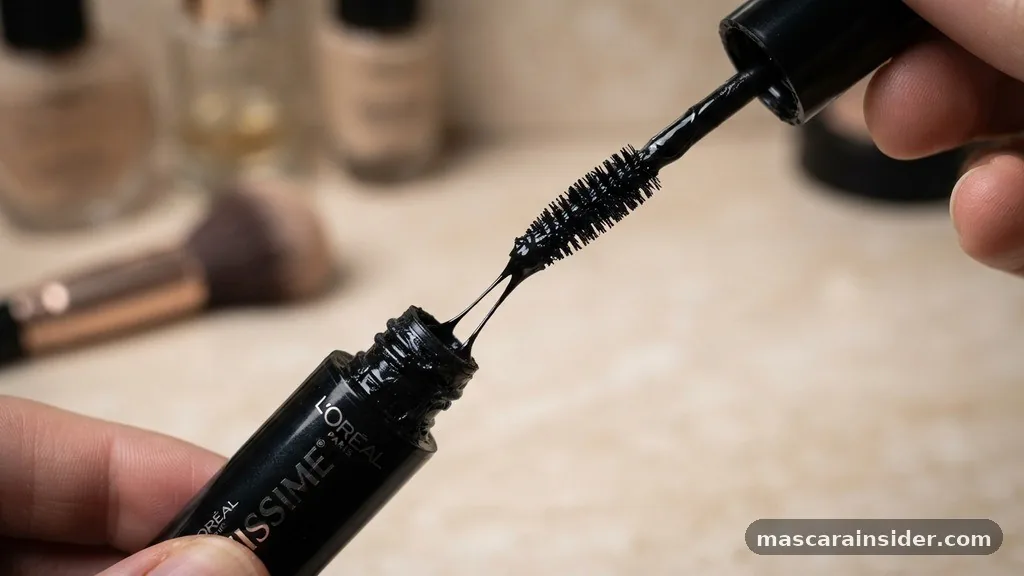
Security screeners rely on visual and physical cues to categorize items. When an X-ray machine scans your bag, it looks for density and material composition. Viscous substances like mascara look different on a screen than powders or solid pencils. Because mascara has a high density and a flowable state, it is easily identified by security technology as a substance that requires scrutiny.
If you are carrying high-end makeup, you might worry about the pressure changes or the way it is handled during screening. However, the standard screening process is non-invasive for your cosmetics.
The main goal of the officer is to ensure that you are not carrying more than the allowed amount of fluids in your carry-on baggage. By keeping your mascara alongside your other cream-based makeup products, you show the officers that you are aware of the rules, which often leads to a faster and more professional interaction.
Managing Cream-Based Makeup and Gel Formulations
Many modern beauty products are hybrids, such as cream eyeshadows or gel-based liners. These items often blur the line between a solid and a liquid.
If you are ever in doubt about whether a product is a liquid, the best advice is to treat it as one. If it has a paste consistency or moves when you tilt the container, it belongs in your transparent bag.
Checklist for Packing Your Makeup Bag
* Review your current makeup collection for items that are not solid.
* Group all gel formulations and liquids together in a single pile.
* Ensure the plastic bag you use is truly quart-sized to meet flight travel regulations.
* Check that no single container exceeds 3.4 fluid ounces, even if the product is expensive.
* Keep your bag accessible in your carry-on so you can remove it quickly during screening.
* Consider using travel-sized versions of your favorite liquid products to save space.
Topical Gaps: What Happens if You Forget?
One common concern is what happens if you accidentally leave your mascara in your main makeup bag rather than the quart-sized plastic bag. In many cases, if the item is small and clearly a cosmetic, security officers may let it slide.
However, they are under no obligation to do so. If the volume of liquids in your bag is high, they may force you to consolidate everything into a compliant bag or, in rare cases, discard items that do not fit.
Another gap in traveler knowledge involves “solid” perfumes or balms. While these are technically semi-solids, they are often treated as liquids if they melt at room temperature.
If your product is a paste consistency that could turn into a liquid in a warm cabin, packing it as a liquid is the only way to guarantee it stays with you. Don’t risk your favorite items by assuming they are exempt from the standard airport security screening procedures.
International Variations in Security Regulations
While the TSA 3-1-1 liquids rule is a US standard, most international airports follow similar guidelines set by the International Civil Aviation Organization. The 100ml (3.4 ounce) limit is a global benchmark. Even when traveling abroad, you should assume that mascara is a liquid and pack it accordingly.
Some countries have invested in newer screening technology that allows passengers to leave liquids in their bags. However, until these machines are universal, you should not assume you can bypass the bag requirement.
Always check the specific rules for the airports you are visiting. Being prepared for the most stringent version of the rules means you will never be caught off guard, regardless of the destination or the local security policies.
The Future of Liquid Restrictions in Air Travel
As technology advances, the way we perceive and screen personal care products is changing. Newer 3D X-ray scanners are becoming more common, and these machines can distinguish between benign liquids and prohibited substances with much higher accuracy. Eventually, we may reach a point where the distinction between a solid and a liquid in carry-on bags is less critical.
For now, though, the rules remain firm. Mascara is a liquid, and it must be treated as such to ensure your travel remains seamless.
By understanding the reasoning behind these regulations—which are ultimately focused on safety—you can appreciate why the TSA 3-1-1 liquids rule exists. It is not designed to inconvenience you, but to provide a consistent standard that allows security officers to perform their jobs effectively.
Conclusion
Navigating airport security is much simpler when you understand how your belongings are classified. We have confirmed that is mascara considered a liquid by the authorities, and therefore it should always be packed inside your quart-sized transparent bag along with your other cream-based makeup. By adhering to the 3.4-ounce container limit and organizing your personal care products before you reach the checkpoint, you effectively eliminate the most common hurdles associated with carry-on baggage.
Whether you are a frequent flyer or an occasional traveler, keeping these rules in mind will help you breeze through the airport security screening process. Remember that the goal of these regulations is to ensure safety for everyone on board, and being a prepared, informed passenger makes the entire experience better for you and the security staff. Pack smart and enjoy your next trip.
FAQ
Is mascara considered a liquid by the TSA?
Yes, the TSA classifies mascara as a liquid or gel, and it must be packed in your quart-sized bag.
Do I have to take my mascara out of my bag at security?
Yes, you should remove your quart-sized bag containing your mascara and other liquids for the security screening process.
What happens if my mascara is over 3.4 ounces?
Mascara tubes are almost always well under 3.4 ounces, so they are generally safe to bring on a flight.
Are there any makeup items that aren’t considered liquids?
Yes, solid items like powder blush, pressed eyeshadow, and standard lipsticks do not count toward your liquid allowance.
Can I put my mascara in my checked luggage?
Yes, there are no liquid restrictions for items placed in your checked luggage, only for your carry-on bags.
Does waterproof mascara change the classification?
No, the formulation, whether waterproof or standard, does not change the fact that it is a liquid/gel for screening.
What if I have multiple tubes of mascara?
You can bring multiple tubes, provided they all fit within your single, quart-sized plastic bag with your other liquids.


