

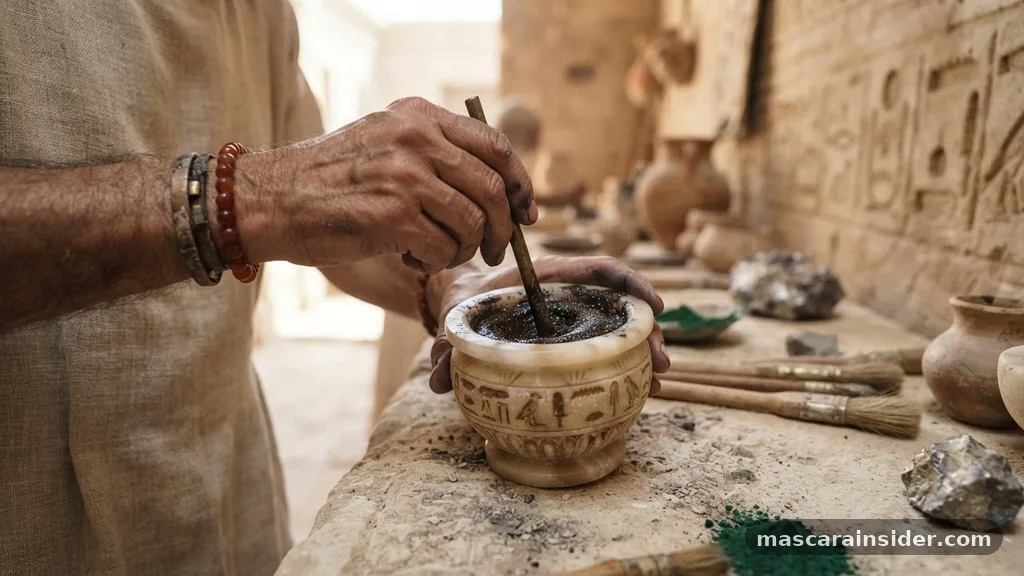
Finding out who invented mascara takes us on a journey from the dusty tombs of Ancient Egypt to the sleek, modern cosmetic aisles of today. While we often think of makeup as a contemporary invention, the desire to darken and define our lashes is a practice that spans thousands of years.
It wasn’t just one person who suddenly decided to paint their eyes; rather, it was a slow evolution of chemistry, culture, and business ingenuity. By looking at the key figures who pushed this product into the mainstream, we can better understand how a simple mixture of soot and oil became a staple in millions of makeup bags across the globe.
The Ancient Roots of Eye Darkening
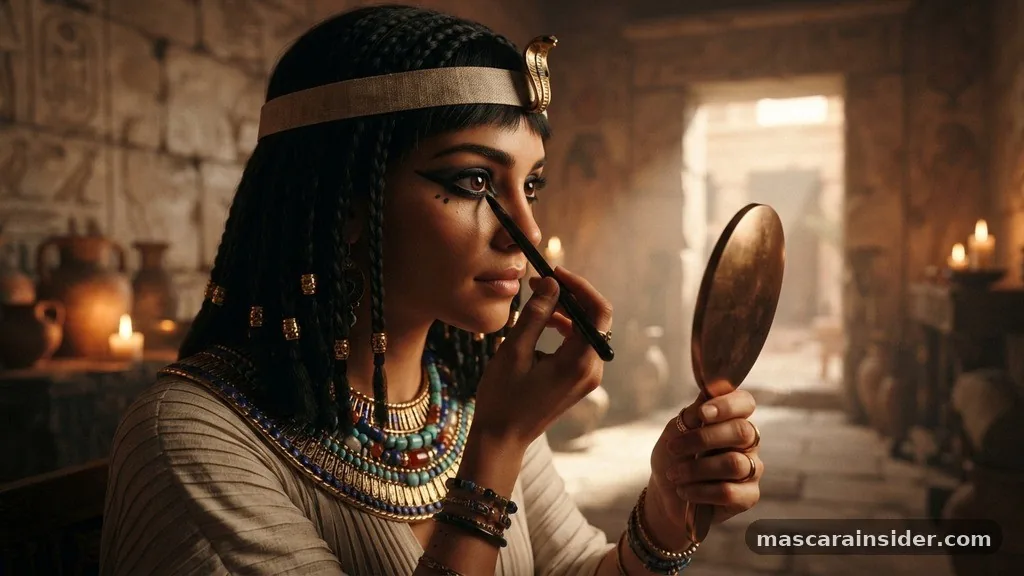
The earliest versions of what we might consider mascara date back to Ancient Egypt, around 4000 BCE. Long before modern chemistry labs, people used natural substances to create a dark pigment for their eyes. This substance, known as kohl, was a mixture of galena, malachite, charcoal, and other minerals.
It served more than just a decorative purpose; it was believed to ward off evil spirits and protect the eyes from the harsh glare of the sun. The practice of applying dark substances to the eyelids and lashes was common among both men and women, signaling status and providing a degree of practical relief in the desert heat.
This early form of lash enhancement was fundamentally different from the liquid tubes we use today. It wasn’t a “mascara” in the modern sense, but it established the cultural precedent for framing the eyes. The materials were often stored in small pots or jars, applied with sticks or fingers.
While the specific recipes changed as trade routes expanded into the Middle East and beyond, the core concept—using dark minerals to make lashes appear thicker and darker—remained a consistent beauty standard for centuries. This foundational era proved that humanity has always been obsessed with the aesthetic power of the eyes.
Victorian Era Modesty and Innovation
Moving forward to the Victorian era, the approach to makeup took a dramatic turn toward subtlety and secrecy. During this time, heavy makeup was often associated with actresses or ladies of the night, meaning respectable women had to be extremely discreet. Despite these social pressures, the desire for dark, lush lashes didn’t disappear; it simply went underground.
Women often experimented with home remedies, using mixtures of ash, elderberry juice, or even burnt matchsticks to achieve a darker lash line. The focus was on looking naturally enhanced rather than obviously painted.
This was a time of DIY beauty. If you wanted to darken your lashes, you essentially had to be your own chemist, mixing powders with water or oils in the privacy of your vanity. It was messy, time-consuming, and prone to smudging, but it laid the groundwork for the commercial products that would soon follow.
The Victorian obsession with the “natural look” actually helped drive the industry toward finding a formula that could provide color without looking like theatrical greasepaint. It was the tension between societal expectations and personal vanity that set the stage for the first real breakthroughs in cosmetic manufacturing.
Eugene Rimmel and the Rise of Commercial Cosmetics
Eugene Rimmel is a name that remains synonymous with mascara to this day, and for good reason. In the mid-19th century, this French-born perfumer moved to London and began creating a variety of beauty products, including his own version of a lash darkener.
Rimmel recognized that the market was ready for a more convenient, reliable alternative to the messy concoctions women were making at home. His product, which was essentially a compressed cake of soap and pigment, became so popular that in many languages, the word for mascara is still “rimmel.”
Rimmel’s contribution was crucial because he transitioned the product from a homemade remedy into a standardized, branded item. His “cake mascara” required a damp brush to activate the pigment, which was then carefully applied to the lashes.
While it was still a far cry from the easy-to-use wands we know today, it was a massive step forward in terms of accessibility and safety. By providing a consistent formula, Rimmel helped professionalize the cosmetic industry and proved that there was a massive, untapped demand for eye makeup that could be purchased off the shelf rather than brewed in a kitchen.
The Story of T.L. Williams and Maybelline
If Eugene Rimmel brought the product to the masses, Thomas Lyle Williams—commonly known as T.L. Williams—is the person who perfected the modern commercial mascara. The story begins in 1913, when Williams observed his sister, Mabel Williams, applying a mixture of petroleum jelly and coal dust to her lashes.
She was trying to enhance her appearance to catch the eye of a suitor. Williams, who was an ambitious young chemist, realized that this could be a viable product. He refined the formula, gave it a more pleasant scent, and packaged it for sale.
He named the company Maybelline in honor of his sister, combining her name with “Vaseline,” the brand name for the petroleum jelly he used as a base. This was a pivotal moment in history. Williams didn’t just invent a product; he invented a brand that would dominate the market for decades.
He understood the power of advertising and distribution, eventually selling his products through mail order and later in drugstores. By making lash enhancement affordable and available to the average woman, he helped democratize beauty in a way that had never been done before.
The Evolution of the Mascara Wand
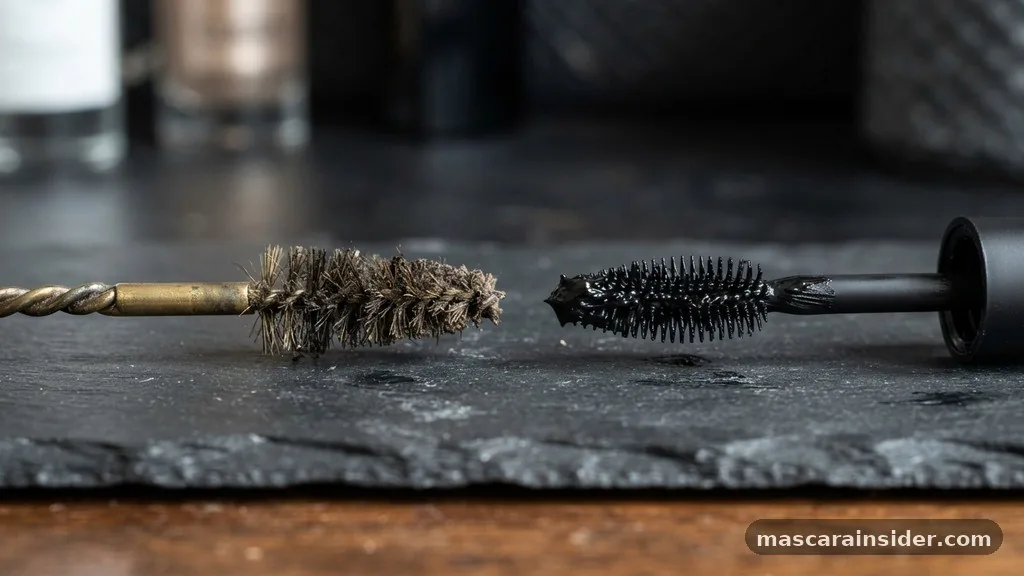
For a long time, mascara remained in cake form, but the true revolution occurred with the introduction of the mascara wand. Early users were still relying on small brushes or even their fingers to apply pigment, which was rarely precise.
In the 1950s, the industry began to shift toward the liquid formulas and built-in applicators we recognize today. The invention of the spiral-bristled wand allowed for much better separation and coating of the lashes, minimizing clumps and making the application process significantly faster and more hygienic.
This shift was a game-changer for the cosmetic industry. Once the wand was attached to the cap of the tube, the product became portable and incredibly easy to use on the go. This convenience factor cannot be overstated.
It transformed mascara from a chore that required a mirror and a steady hand into a quick, daily habit. As the technology evolved, companies began experimenting with different brush materials—from nylon to silicone—to target specific needs like lengthening, volumizing, or curling. The wand became the heart of the product, turning every user into a miniature makeup artist.
Chemical Breakthroughs and Modern Safety
Safety has always been a concern in the history of beauty products. Early formulas, which sometimes contained coal tar or even lead, were far from ideal. As regulations tightened throughout the 20th century, manufacturers had to become much more sophisticated with their chemistry.
The move toward using safer alternatives like carbon black and synthetic polymers allowed for products that were not only effective but also gentle enough for daily use near the sensitive eye area. This transition was essential for the product to gain widespread public trust.
Modern mascara is a complex emulsion of waxes, oils, pigments, and film-forming polymers. Each ingredient serves a specific purpose: waxes provide the structure, oils ensure the product glides on smoothly, and polymers help the mascara adhere to the lashes without flaking. This level of technical precision is a far cry from the simple soot-and-oil mixtures of the past.
Today’s products are tested extensively for ophthalmological safety, ensuring that they don’t cause irritation or infections. This dedication to science has allowed mascara to become one of the most frequently used products in the beauty world.
Addressing Topical Gaps in Mascara History
Many historical accounts focus heavily on the 20th-century American inventors while glossing over the global and gender-specific history of eye makeup. A common misconception is that mascara was always a feminine product. In reality, in many ancient cultures, it was a masculine signifier of status and health.
Furthermore, the transition from “cake” to “tube” wasn’t instantaneous. There was a long period where the two formats coexisted, and the adoption rate varied wildly based on geography and social class.
Another gap often overlooked is the role of the film industry in popularizing these products. While T.L. Williams was a marketing genius, the rise of Hollywood in the 1920s and 30s did much of the heavy lifting.
Actresses like Theda Bara and Clara Bow, with their dramatic, dark-rimmed eyes, created an insatiable demand for similar looks among the general public. Mascara wasn’t just a product; it was an aspiration. By bridging the gap between the screen and the vanity table, marketers successfully turned a niche grooming tool into a universal necessity, regardless of one’s social standing.
| Era | Primary Ingredient | Application Method |
|---|---|---|
| Ancient Egypt | Galena and Coal | Stick or Finger |
| Victorian Era | Ash and Elderberry | Homemade Brush |
| Early 20th Century | Petroleum Jelly and Coal | Small Brush |
| Modern Day | Waxes, Polymers, Pigments | Spiral Wand |
Cultural Impact and Changing Beauty Standards
The widespread use of mascara has fundamentally altered how we define beauty. For much of human history, “bright eyes” were associated with youth and health, and darkening the lashes was one way to emphasize this. However, the cultural perception of mascara has shifted from a subtle enhancement to a dramatic statement piece.
In the mid-20th century, the “mod” look popularized thick, clumpy lashes, while the 1980s favored volume and length. These trends highlight how mascara acts as a mirror for the times, reflecting changing fashion and social values.
Today, we see a diverse range of preferences, from the “no-makeup” makeup look to heavy, dramatic lash extensions. This versatility is exactly why the product remains so popular. It is one of the few items that can be adapted to almost any personal style.
Whether you are aiming for a professional look or a high-glamour evening aesthetic, a few swipes of a wand can change the entire frame of your face. This adaptability is the secret to its endurance; it doesn’t try to change your features entirely but rather enhances what is already there.
Common Questions About Mascara Origins
Was mascara originally made for men?
Yes, in Ancient Egypt, men and women both used kohl to protect their eyes and signify status.
Did mascara exist in the 1800s?
Yes, though it was usually a homemade mixture of ash or elderberry juice applied by hand.
Who invented the modern mascara wand?
The modern, spiral-bristled wand was popularized in the 1950s as part of the move to liquid formulas.
What is the connection between Maybelline and petroleum jelly?
T.L. Williams created the first Maybelline mascara by mixing petroleum jelly with coal dust for color.
Why is it called rimmel in some countries?
The name comes from Eugene Rimmel, who created the first mass-marketed, commercial cake mascara in the 1800s.
Did Victorian women wear mascara?
They used it discreetly, often relying on DIY recipes because heavy makeup was considered socially inappropriate then.
Why has mascara remained popular for so long?
It provides a simple, effective way to define the eyes and enhance facial features with little effort.
The history of who invented mascara is not a singular event but a long, fascinating timeline of human creativity. From the early days of kohl in the desert to the sophisticated chemical blends of the current era, the goal has remained remarkably consistent: to define and accentuate the eyes. We have moved from using simple minerals to relying on complex polymers, yet the underlying human desire to frame our lashes remains unchanged.
Understanding this history helps us appreciate the small, daily ritual of applying mascara as part of a much larger narrative of beauty and personal expression. As you continue to experiment with different formulas and wands, remember that you are participating in a tradition that has spanned thousands of years. We would love to hear which type of formula you prefer and how your own routine has evolved over time.


