

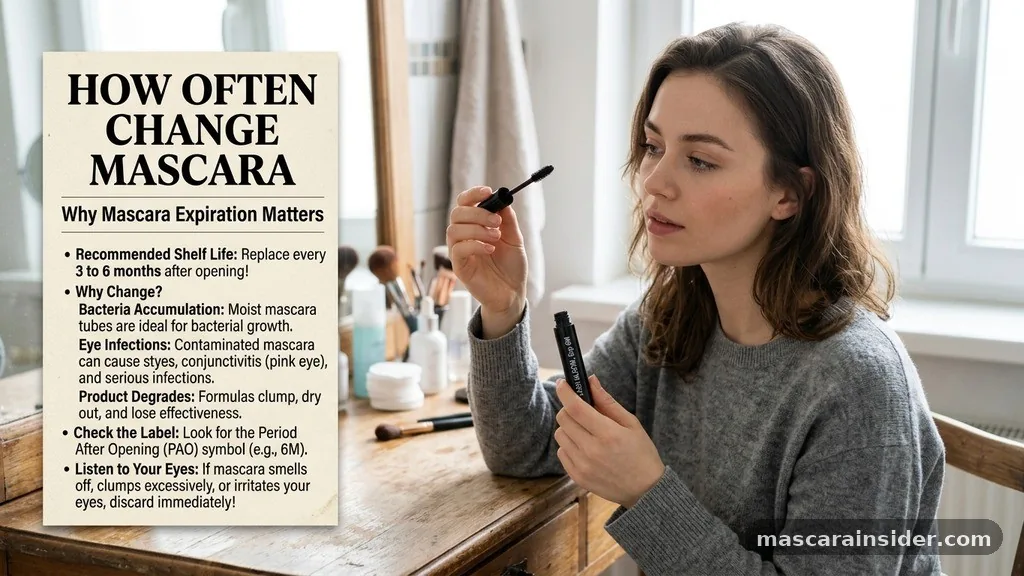
Knowing how often change mascara is essential for protecting your vision and maintaining optimal makeup hygiene. Most beauty experts and dermatologists recommend replacing your tube every three months to prevent the buildup of harmful microorganisms. While it might be tempting to hold onto a favorite formula until the last drop, extending its life beyond this window increases your risk of developing uncomfortable and potentially serious eye health issues.
Why Mascara Expiration Matters
The primary reason to track how often change mascara is necessary centers on bacterial contamination. Every time you pull the mascara wand out of the tube and apply it to your lashes, you introduce microscopic particles, oils, and bacteria from your skin into the container. Once these contaminants enter the warm, dark environment of the tube, they multiply rapidly.
Even with a preservative system designed to keep products stable, these chemicals eventually break down. Once the preservatives are no longer effective, the product becomes a breeding ground for pathogens like Staphylococcus aureus. Using expired makeup can lead to persistent eye infection symptoms, such as redness, itching, or even conjunctivitis, which is commonly known as pink eye.
Understanding the PAO Symbol and Expiration Dates
Most consumers overlook the tiny icon printed on their packaging that serves as a guide for product longevity. Look for the PAO symbol—a small image of an open jar with a number and the letter “M” inside, such as 3M or 6M. This denotes the number of months the product is safe to use after you first open it.
While the expiration date printed on the packaging provides a general guideline for unopened products, the PAO symbol is your most reliable metric for daily use. If you cannot find this symbol, default to the three-month rule. Treating your eye makeup with the same caution you apply to perishable food ensures you avoid unnecessary open-eye irritation.
Does the Formula Affect Longevity?
Different formulas react differently to the environment. A dried-out formula is not just an aesthetic issue; it is a physical indicator that the product’s chemistry has changed. When water evaporates from the solution, the remaining ingredients become concentrated, which can lead to clumping and flaking.
If your mascara starts to smell off, change color, or develop a gritty texture, toss it immediately regardless of how much time has passed. Attempting to revive a dry tube by adding water or oils is a major safety violation. This practice introduces new contaminants and further dilutes the preservative system, making the product even less safe to use.
The Link Between Makeup Hygiene and Eye Health
Your eyes are incredibly sensitive, and they lack the same protective barriers found on the rest of your skin. Poor makeup hygiene is a leading cause of avoidable ocular irritation. Beyond just knowing how often change mascara, you should adopt habits that keep your products clean for their entire active lifespan.
| Practice | Impact on Eye Safety |
|---|---|
| Pumping the wand | Introduces excess air and bacteria into the tube |
| Sharing makeup | High risk of cross-contamination between users |
| Using expired product | Increases potential for staph and fungal infections |
| Removing makeup nightly | Prevents follicle blockage and lash damage |
Addressing Common Topical Gaps
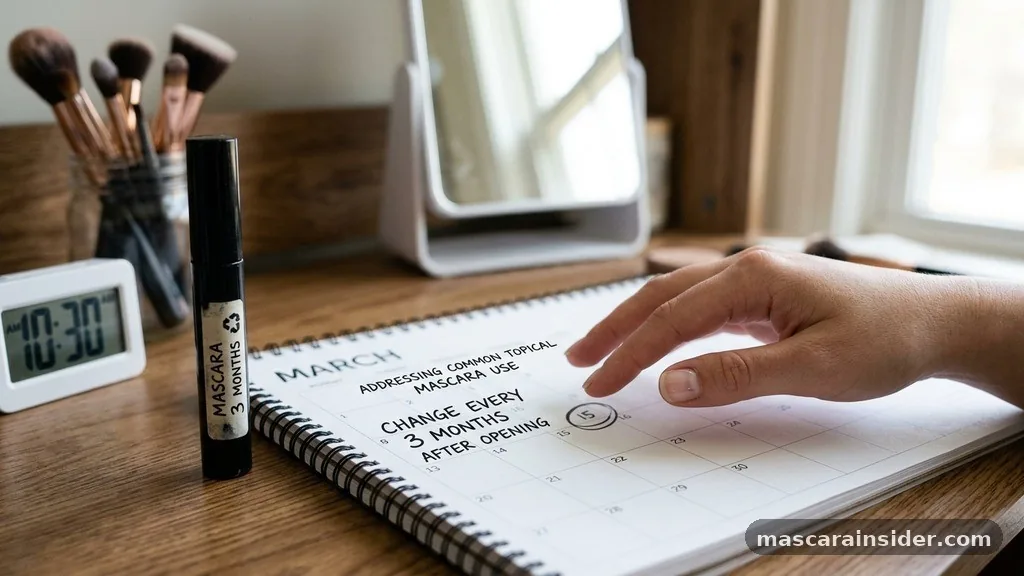
Many users wonder if they can “stretch” the life of a luxury product or if specific ingredients make a difference. The truth is that FDA cosmetics guidelines do not require products to have an expiration date, placing the burden of safety entirely on the consumer. This creates a gap in knowledge regarding whether natural or “clean” beauty products expire faster.
Products formulated without synthetic parabens or traditional preservatives often have a significantly shorter lifespan. If you prefer organic or water-based mascaras, you should be even more vigilant about how often change mascara. These formulas may provide a more hospitable environment for mold and bacteria, sometimes requiring replacement every six to eight weeks rather than the standard twelve.
What About Unopened Mascara?
An unopened tube has a longer shelf life, but it is not indefinite. If kept in a cool, dark, and dry environment, most unopened mascara remains stable for up to two years.
However, if the seal has been compromised or the product has been exposed to extreme heat, the internal chemistry may degrade prematurely. Always check for signs of separation or unusual odor before using a tube that has been sitting in a drawer for an extended period.
Best Practices for Maintaining Mascara
To get the most out of your purchase while staying safe, follow these professional maintenance tips:
- Always close the cap tightly after every use to prevent the formula from drying out.
- Avoid sharing your mascara with friends, as this is the fastest way to transmit bacteria.
- Never apply makeup while driving or moving, as the risk of scratching the cornea with the wand is high.
- Write the date of first use on a small sticker and attach it to the tube to track your replacement frequency.
- Store your makeup in a cool area, avoiding the bathroom if possible, as humidity accelerates bacterial growth.
- Clean the wand periodically if you notice heavy buildup, though replacing the product is safer.
The Risks of Ignoring Expiration
Ignoring the three-month rule is a gamble with your vision. Chronic exposure to contaminated makeup can lead to a condition called blepharitis, where the eyelids become inflamed and crusty.
This condition is notoriously difficult to treat and can cause permanent damage to the eyelid margins. Furthermore, if you use waterproof formulas, the ingredients used to make them durable can trap bacteria closer to the lash line, making the consequences of using expired products even more severe.
Conclusion
Prioritizing your ocular health means being disciplined about your beauty product expiration schedules. While it might feel wasteful to discard a tube that isn’t empty, the cost of a new product is significantly lower than the cost of treating an infection. By tracking how often change mascara, you ensure that every application is fresh, effective, and safe.
Stick to a strict three-month cycle, keep your wands clean, and never ignore the signs of a degraded formula. Your eyes will thank you for the extra caution, and your makeup application will look better than ever. If you have been using the same tube for longer than a season, it is time to make the switch today for your long-term health.
Is it safe to use mascara after 6 months?
No, using mascara beyond three months significantly increases the risk of bacterial infections and eye irritation.
How can I tell if my mascara has expired?
Look for a change in smell, a clumpy or dried-out texture, or any separation in the formula.
Does waterproof mascara last longer than regular mascara?
No, all mascara formulas should be replaced every three months regardless of their specific type or durability.
Why does mascara cause eye infections?
The wand collects bacteria from your lashes and skin, which multiplies inside the dark, moist tube environment.
Can I use a new wand with old mascara?
No, the bacteria is inside the formula itself, so a new wand will instantly become contaminated upon use.
What should I do if I get an eye infection?
Stop using all eye makeup immediately and consult a healthcare professional to determine the appropriate treatment plan.
Do expensive mascaras last longer than drugstore brands?
No, price does not correlate with shelf life; all mascara formulas are subject to the same bacterial contamination.


