

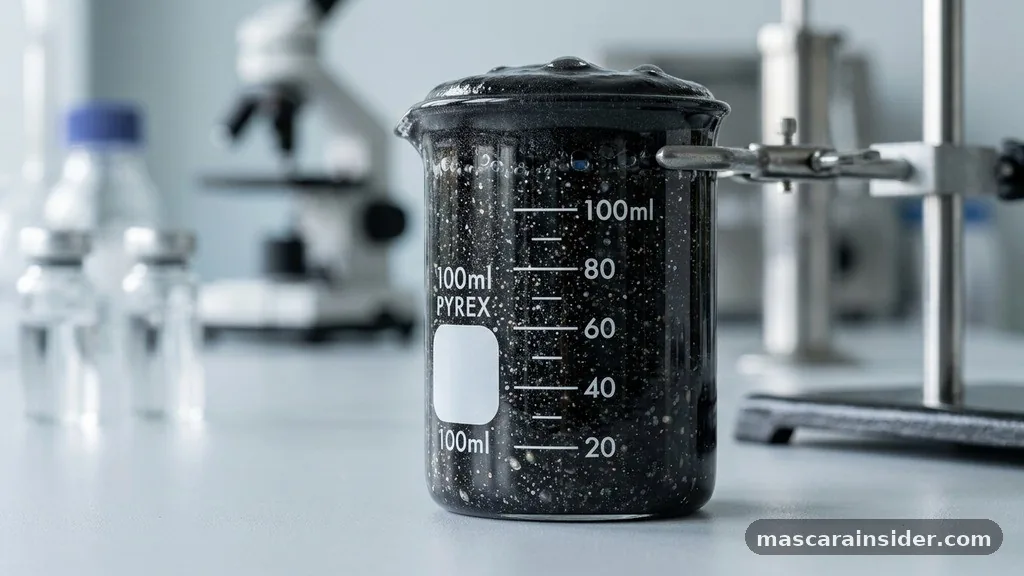
Understanding how does mascara work requires looking beneath the surface of the tube. When you swipe that wand across your eyes, you are essentially applying a sophisticated chemical cocktail designed to coat, color, and restructure your natural lashes. It isn’t just about painting them black; it is about manipulating the physical properties of each individual hair to create the illusion of fullness and length.
This process involves a delicate balance of physics and chemistry. By combining specific binders, waxes, and intense pigments, manufacturers create a formula that adheres to keratin while drying quickly enough to hold a curl. We will break down exactly how these ingredients interact with your lashes to provide that instant transformation you see in the mirror every morning.
The Chemical Composition of Modern Mascara
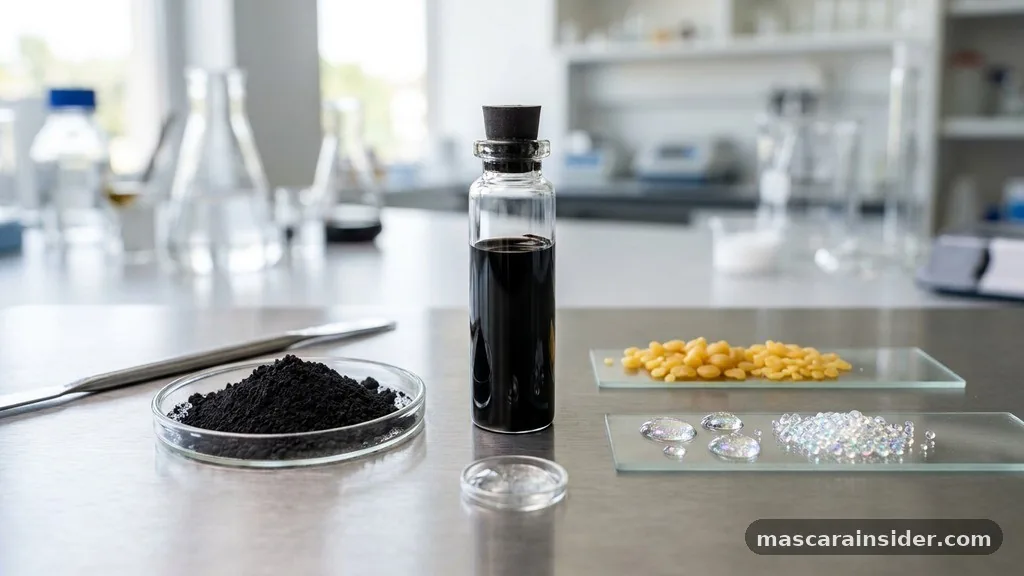
At the most basic level, mascara is a complex emulsion of water, waxes, and pigments. The primary goal is to deposit enough material onto the lash without causing it to become brittle or heavy. To achieve this, chemists rely on polymers and waxes that work in tandem to build structure.
The waxes, such as carnauba wax or beeswax, provide the body and thickness. These ingredients are essential because they create a soft, pliable coating that can be molded to the lash’s shape.
While waxes provide the bulk, pigments—most commonly iron oxides—provide the deep, rich color that defines the lashes against the skin. These mineral-based colorants are finely milled to ensure a smooth texture.
Without these high-quality pigments, the formula would appear streaky or translucent. Manufacturers often add preservatives to keep these emulsions stable, ensuring the product remains safe for the delicate eye area throughout its shelf life.
How Polymers and Film-Formers Build Length
If you have ever wondered how a liquid can actually extend your lashes, the answer lies in film-formers. These specialized polymers create a thin, flexible layer around the lash shaft as the water in the formula evaporates.
This process, known as polymerization on a molecular scale, allows the mascara to stretch slightly beyond the natural tip of the lash. By building up these layers, you effectively increase the apparent lash length.
This coating also serves a secondary purpose: it protects the eyelash cuticle. By smoothing down the rough edges of the cuticle, the formula makes the lashes appear shinier and more uniform. This is why high-quality mascaras often include conditioning agents that keep the hair flexible.
If the film-former is too rigid, the lash can snap or flake; if it is too soft, it will smudge. Finding the perfect balance is the primary challenge for cosmetic chemists.
The Mechanics of the Mascara Wand
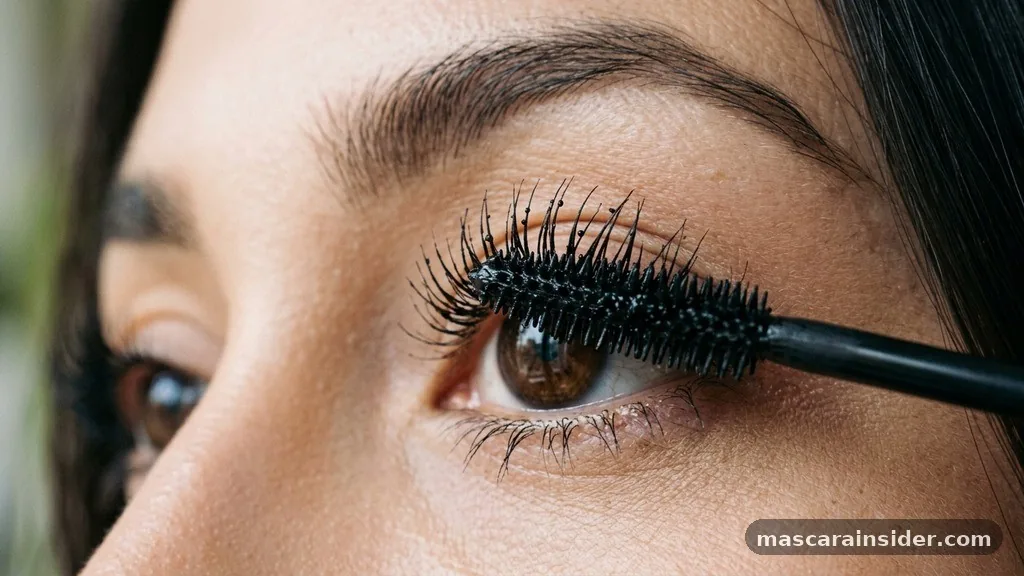
The mascara wand is just as important as the formula itself. It acts as the delivery system, determining how much product is deposited and how it is distributed across the fringe. The geometry of the bristles dictates whether you achieve maximum lash volume or precise lash definition.
A dense, bushy brush will pick up more formula, depositing thick layers that create dramatic, volumized looks. Conversely, a comb-like or plastic-molded wand is designed for separation.
When you pull the wand through your lashes, you are using tension and friction to coat the hair from root to tip. The bristles physically push the lashes upward, while the formula acts as a temporary structural support. This is why the technique of “wiggling” the wand at the base is so effective; it ensures the thickest part of the deposit is at the root, which provides the necessary leverage to keep the lashes lifted throughout the day.
| Feature | Function |
|---|---|
| Waxes (Carnauba/Beeswax) | Provides structure and thickness to the lash coating. |
| Film-Formers/Polymers | Creates a flexible, long-wearing seal for length and hold. |
| Iron Oxides | Delivers intense, durable pigment for high-contrast color. |
| Preservatives | Maintains product safety and prevents bacterial growth. |
Addressing Common Application Challenges
Achieving a clump-free application is often a matter of managing the interaction between the formula’s viscosity and the brush’s design. Clumping happens when too much product gathers in one spot, causing lashes to stick together.
This is usually due to the formula drying too slowly or the brush being overloaded. To avoid this, many users prefer to wipe excess product from the wand before application.
Another common issue is the “smudge factor,” which occurs when the oils on your skin break down the waxes in the mascara. If your eyelids are naturally oily, the formula may migrate, creating dark circles under the eyes.
This is why many people opt for tubing mascaras, which use different types of polymers that are resistant to oil but dissolve easily with warm water. Understanding your specific lash needs—whether you require volume, length, or smudge-proof wear—is key to choosing the right product.
- Always replace your mascara every three months to ensure hygiene.
- Look for ophthalmologist-tested labels if you have sensitive eyes.
- Use a lash comb after application to remove excess product and separate lashes.
- Avoid “pumping” the wand, as this pushes air into the tube and causes the formula to dry out faster.
- Start at the very root of the lash and pull upward in a zig-zag motion for best results.
The Science of Eye Safety and Ingredients
Because the eyes are incredibly sensitive, the chemistry of mascara must be strictly regulated. Ingredients are selected not only for their cosmetic performance but also for their compatibility with the ocular surface. Ophthalmologist-tested formulas are subjected to rigorous scrutiny to ensure they don’t cause irritation or allergic reactions. It is essential to recognize that mascara is a temporary coating; it does not permanently alter the lash structure, but it does influence how the lashes behave while the product is present.
Frequently Asked Questions
Does mascara actually make your lashes longer?
It creates the visual illusion of length by coating the tips with pigment and film-forming polymers.
What is the correct way to apply mascara?
Wiggle the wand at the lash base, then sweep upward to ensure even, clump-free distribution throughout.
Why doesn’t Gen Z wear mascara?
Many prefer natural, “clean girl” aesthetics or lash lifts over the traditional heavy, volumized look of mascara.
Why don’t people put mascara on bottom lashes?
Applying it to bottom lashes can emphasize dark circles or cause smudging throughout the day’s wear.
How does mascara work for beginners?
It uses waxes and polymers to coat hair, making lashes look darker, longer, and more defined instantly.
What does mascara do to your eyes?
It enhances contrast and frames the eyes, though it requires careful removal to maintain lash health.
What are the disadvantages of mascara?
Potential issues include bacterial buildup, eye irritation, lash breakage from friction, and smudging during daily wear.
Understanding how does mascara work helps you appreciate the engineering behind your makeup bag. By selecting formulas that align with your natural lash type and applying them with a thoughtful, technique-driven approach, you can achieve professional results every day.
Whether you prioritize dramatic volume or a clean, defined look, knowing the science allows you to make better choices for your beauty routine. If you find your current product isn’t delivering, consider how its specific blend of waxes and polymers interacts with your unique lash structure, and don’t be afraid to experiment with different wand shapes to find your perfect match.


