

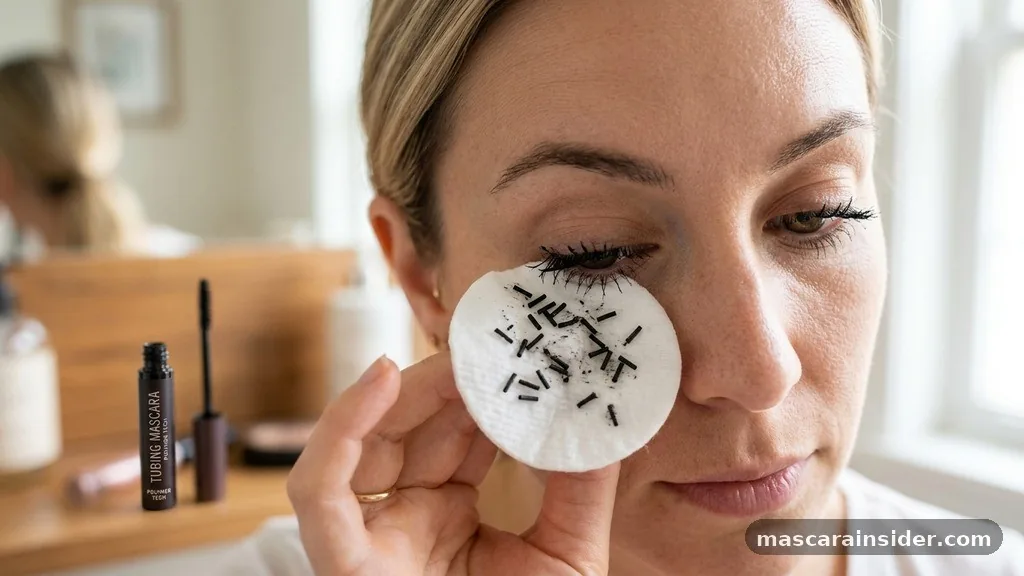
If you have ever found yourself staring at your makeup bag wondering about the specific chemistry behind your lash products, you are not alone. Many people struggle with the common confusion regarding how to know if mascara is tubing, as these formulas often look identical to traditional waxes in the tube. Unlike standard formulas that coat your lashes in pigment, tubing technology wraps each individual hair in a secure sleeve.
Understanding these subtle differences is the secret to a smudge-free look that lasts all day, regardless of your activity level or skin type. Learning to identify these products ensures you choose the right tools for your specific beauty routine.
Decoding the Science Behind Tubing Technology
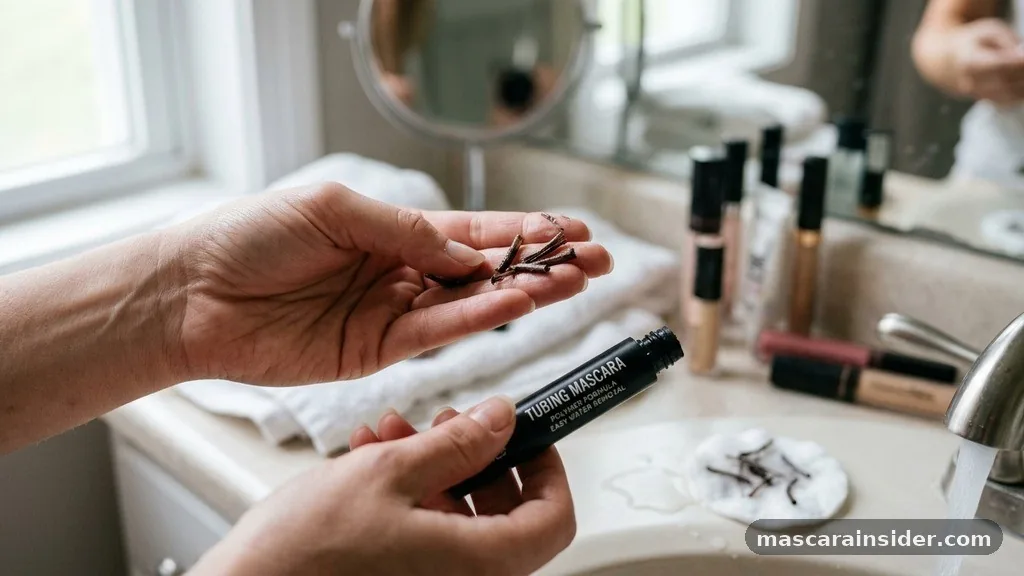
To understand how to know if mascara is tubing, you first need to look at the chemistry involved in the formulation. Traditional mascaras are typically oil-based or petroleum-based, meaning they rely on waxes and pigments that sit on the lash surface. In contrast, tubing formulas utilize advanced polymer technology to create flexible, water-resistant structures around each lash.
These polymers bond to the hair as the product dries, creating a physical “tube” that does not dissolve with standard oils or facial cleansers. This makes them significantly different from typical waterproof options, which often require harsh rubbing to break down the formula.
When you apply a tubing mascara, you are essentially applying a liquid wrap that sets into a firm yet elastic coating. Because these polymers are specifically designed to adhere to hair rather than skin, they are inherently smudge-proof. You will find that these formulas do not migrate under the eyes, even if you have oily lids or are prone to watery eyes.
Identifying this technology is easier once you recognize that the primary function is structural rather than just pigment-heavy. If a product claims to create a “caged” or “sleeved” effect on the lash, you are likely looking at a tubing formula.
The Definitive Test for Tubing Formulas
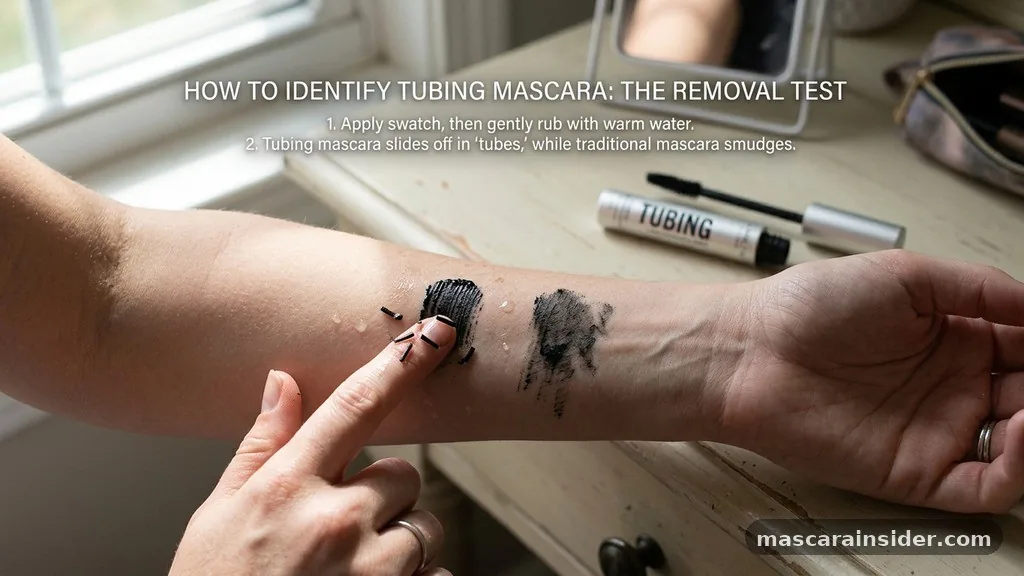
The most reliable way to determine if your product is a tubing formula involves the removal process. You do not need a laboratory to verify this; you only need access to warm water.
Because these formulas are thermal sensitive, they are designed to slide off the lashes when exposed to a specific temperature range, typically around 100 degrees Fahrenheit. If you splash lukewarm water on your eyes and the mascara begins to slide off in small, intact clumps or “tubes” without leaving a dark, oily smear on your skin, you have confirmed it is a tubing mascara.
Traditional mascaras will usually smudge or dissolve into a gray or black mess when you try to wash them away with water alone. Tubing formulas, however, remain essentially solid even when wet, allowing them to be gently pulled off the hair. This unique water-soluble nature is the hallmark of the category.
If you find yourself wiping away tiny, rubbery cylinders rather than scrubbing away liquid residue, you have found the definitive proof. This method is safe for your lashes and significantly reduces the friction required to clean your eye area each night.
Comparing Tubing and Traditional Mascara
It is helpful to look at a breakdown of how these two types of formulas behave in real-world scenarios. While both aim to lengthen and define, their chemical composition leads to very different results for the user.
| Feature | Tubing Mascara | Traditional Mascara |
|---|---|---|
| Primary Ingredient | Synthetic Polymers | Waxes and Oils |
| Removal Method | Warm water and gentle pressure | Oil-based makeup remover |
| Smudge Resistance | High (won’t migrate) | Variable (can melt/smudge) |
| Finish | Clean, defined, lash-extension look | Voluminous, can become clumpy |
As shown in the table, the primary difference lies in the interaction between the product and your skin oils. Traditional wax-based products can break down when they encounter the natural oils produced by your skin throughout the day. This leads to the dreaded “raccoon eye” effect.
Tubing formulas are completely immune to these oils because they are not oil-soluble. If you have struggled with your mascara moving throughout the day, switching to a tubing formula is often the most effective solution for achieving a flake-free and polished appearance.
Evaluating Ingredients and Labeling
When you are scanning the back of a package, look for specific terminology that hints at the underlying technology. You will often see ingredients like acrylates copolymer, which are the backbone of polymer technology. These ingredients are what give the formula its ability to wrap the lash.
While manufacturers rarely label a product as “tubing” on the front, the ingredient list is a dead giveaway for those who know what to look for. Avoid products that rely heavily on heavy waxes or thick oils if your goal is to find a true tubing experience.
Many brands are now highlighting the “lash extension” effect on their packaging, which is a common marketing term for tubing formulas. Because the product physically extends past the tip of your natural lash, it creates the illusion of lash extensions.
If a product promises a “long-wear,” “tubular,” or “easy-removal” finish, it is a strong indicator that you are dealing with a tubing mascara. Remember that “water-resistant” is not the same as “tubing,” but most tubing formulas are inherently resistant to water because they only react to the specific heat of warm water.
Addressing Topical Gaps in Mascara Knowledge
A common area of confusion is why some people mistake fiber mascara for tubing mascara. Fiber mascaras contain tiny synthetic fibers that adhere to your lashes to add volume and length. While they can be smudge-resistant, they are not the same as tubing formulas.
Fiber mascaras are often messy and can irritate the eyes, whereas tubing mascaras provide a clean, smooth finish. If you are trying to determine if your mascara is tubing, check for the presence of loose fibers on the wand. True tubing formulas are usually smooth and creamy, devoid of the gritty texture found in fiber-heavy products.
Another gap involves the myth that tubing mascara is bad for your lashes. In reality, because the removal process is so gentle, it is often much healthier for your delicate lash hairs than traditional formulas. Traditional mascara requires vigorous scrubbing with cotton pads and makeup removers, which can lead to lash breakage and irritation.
Tubing mascara slides off with minimal touch, preserving the integrity of your natural lashes. Always prioritize ophthalmologist-tested formulas if you have sensitive eyes, regardless of whether you choose a tubing or traditional option.
Why Formulation Matters for Daily Wear
The daily wear experience is where the difference between these two categories becomes most apparent. If you live in a humid climate or have a job that requires you to be active, you need a formula that won’t budge. Tubing mascaras are ideal for these environments because they are smudge-resistant and hold their shape against moisture.
Unlike wax-based mascaras that can soften in the heat, polymers remain rigid until the exact moment you decide to remove them with warm water. This provides a level of predictability that many users find essential for long workdays or special events.
Furthermore, these products are excellent for those with contact lenses or sensitive skin. Since the formula creates a self-contained tube, you do not have to worry about tiny particles of pigment falling into your eyes. Traditional mascaras can flake throughout the day, causing irritation for lens wearers.
A flake-free tubing formula stays exactly where you put it, ensuring your eyes remain comfortable from morning until night. It is a subtle difference in application, but a massive difference in long-term comfort and eye health.
Common Misconceptions About Tubing Formulas
There is a persistent belief that all tubing mascaras are “natural” or “clean” beauty products. This is simply not true. Most high-performance tubing mascaras rely on synthetic polymers to achieve their unique properties.
These are not typically found in organic or natural makeup lines. Do not be misled by marketing that suggests “natural” ingredients can replicate the structural integrity of advanced polymer chemistry. If a product claims to be 100% natural and also a tubing mascara, it is likely not a true tubing formula.
Another misconception is that you cannot layer tubing mascara with other products. While you can technically apply a primer, it often defeats the purpose of the tubing technology. The polymer needs to bond directly to the lash hair to create that secure, smudge-proof sleeve.
If you apply a thick, waxy primer underneath, the tubing formula will bond to the primer instead of your lashes. This can cause the entire coating to become unstable, leading to premature flaking or clumping. For the best results, use your tubing mascara on clean, dry lashes.
Expert Tips for Application and Removal
Applying a tubing mascara requires a slightly different technique than traditional products. Because these formulas are designed to set into a firm structure, you should work in thin, even coats. Avoid building up too much product at the roots, as this can lead to a heavy, weighed-down look.
Start at the base of your lashes and wiggle the wand upward to ensure the lash coats are evenly distributed. Since the formula sets relatively quickly, you have a limited window to layer before the polymers start to firm up.
When the time comes to remove your makeup, resist the urge to use a traditional makeup remover wipe. These wipes are often too abrasive and can cause you to pull on your lashes. Instead, soak a cotton pad in warm water and press it gently against your closed eyelid for about 20 to 30 seconds.
This heat exposure is the key to activating the removal process. Once the tubes have softened, you can gently slide the mascara off with your fingers or a clean washcloth. It is a satisfying and efficient way to clean your face without leaving any residue behind.
Benefits of Making the Switch
Transitioning to a tubing mascara can simplify your beauty routine significantly. You no longer need to invest in expensive oil-based cleansers or worry about oily residue clogging your pores. The simplicity of using only warm water means you can remove your eye makeup even when you are traveling or in a rush.
This is a game-changer for anyone who values efficiency and minimalism. Additionally, because these formulas are generally very lightweight, they keep your lashes looking curled and lifted for longer periods compared to heavy, wax-filled alternatives.
Ultimately, knowing how to identify these products empowers you to make better shopping decisions. You will no longer waste money on formulas that smudge on your lids or require intense scrubbing to remove. By understanding the role of polymers, thermal sensitivity, and the specific removal method, you can confidently navigate the beauty aisle.
Whether you are looking for a natural look or a dramatic, long-lashed finish, there is a tubing formula that fits your needs perfectly. Enjoy the peace of mind that comes with knowing your makeup will stay exactly where you applied it until you decide otherwise.
Frequently Asked Questions
Does tubing mascara work for short lashes?
Yes, the polymers add length by extending past the tip of your natural lash, making it perfect.
Is tubing mascara the same as waterproof?
No, they are distinct. Tubing formulas are water-resistant but specifically dissolve with warm water, unlike waterproof wax formulas.
Can I use an eyelash curler with tubing mascara?
Always curl your lashes before applying, as the set polymers may crack if you curl after they dry.
Why is my tubing mascara clumping?
Clumping usually occurs if you apply too many layers or don’t comb through the lashes while it’s wet.
Are all tubing mascaras expensive?
Not at all, as many affordable drugstore brands have introduced high-quality options using the same polymer technology.
Will tubing mascara irritate my contact lenses?
It is generally the best choice for lens wearers because it doesn’t flake or smudge into the eyes.
How can I tell if a label is misleading?
Check the ingredient list for polymers; if a product claims to be a tube formula but lacks them, ignore.


