

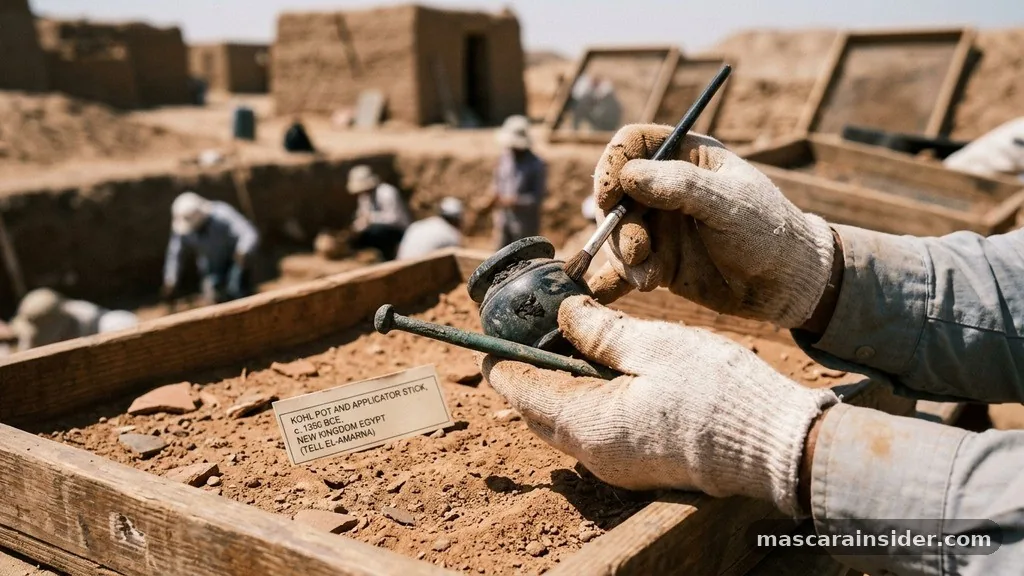
Tracing the origins of who made mascara requires looking back thousands of years before the modern beauty industry existed. While we often associate this essential cosmetic with twentieth-century innovation, the practice of darkening eyelashes dates back to ancient civilizations that valued both aesthetics and protection from the sun.
Understanding how we moved from crushed minerals to the sleek tubes found in every purse today reveals a fascinating evolution of chemistry and marketing. This journey involves ancient rituals, Victorian-era ingenuity, and the family name that eventually became synonymous with the product itself.
The Ancient Origins of Lash Enhancement
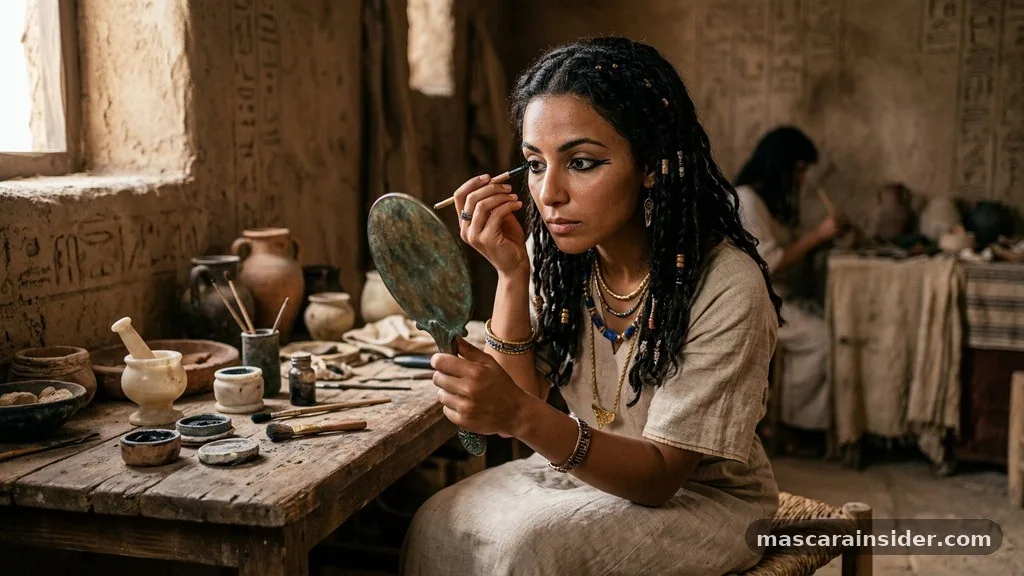
Before the twentieth-century boom, ancient cultures pioneered the use of darkening agents around the eyes. The earliest forms of what we recognize today as a lash cosmetic were not contained in tubes but were instead applied as thick, dark pastes.
In Ancient Egypt, both men and women utilized kohl, a substance typically composed of galena (lead sulfide), malachite, and charcoal. They applied this mixture to their eyelids and lashes for two distinct reasons: to ward off the evil eye and to protect their sensitive eyes from the harsh glare of the desert sun.
While this was not “mascara” by modern standards, it served the exact same functional purpose of framing the eyes and darkening the lashes. These ancient formulations were often stored in small, ornate jars and applied using thin sticks, marking the very first chapter in the long history of eye makeup.
Victorian Era Developments
The shift toward a more commercial product began during the Victorian era, a time when subtle beauty enhancements were preferred over the bold styles of previous centuries. High society women sought ways to emphasize their features without appearing painted or artificial.
During this period, women often experimented with homemade recipes to darken their hair and eyelashes. One popular method involved mixing coal dust with ash or elderberry juice to create a temporary darkening effect.
These early DIY attempts were messy and often irritated the skin, yet they demonstrated a clear demand for a reliable product. Because the Victorian aesthetic prioritized modesty, the goal was to achieve a naturally defined look that mimicked the appearance of thicker, healthier lashes.
Eugene Rimmel and the Commercialization of Mascara
The name Rimmel became synonymous with eye makeup in the mid-19th century thanks to the work of Eugene Rimmel. A French perfumer living in London, Rimmel recognized that the market was ripe for a mass-produced, safe, and effective beauty product.
In the 1870s, he developed the first non-toxic mascara. His invention utilized petroleum jelly combined with coal dust, creating a product that was much safer than the lead-based concoctions of the past.
Rimmel’s innovation was revolutionary because it moved the product out of the kitchen and into the retail shop. While it was still applied with a brush rather than a modern spoolie, it provided a consistent, reliable formula that became a staple for theater performers and socialites alike.
The Rise of Maybelline and Thomas Lyle Williams
The modern era of the product is inextricably linked to Thomas Lyle Williams, the man who founded Maybelline. In 1913, Williams observed his sister, Maybel, attempting to darken her eyelashes using a mixture of coal dust and petroleum jelly to attract a suitor.
Inspired by her resourcefulness, Williams used his knowledge of cosmetic chemistry to create a more refined version of the product. He named the company Maybelline, a portmanteau of his sister’s name and the ingredient vaseline (petroleum jelly).
The early product was sold as Cake Mascara, a solid block that required a damp brush to activate. This format dominated the market for decades, providing women with an affordable and effective way to define their eyes.
| Inventor/Brand | Era | Key Contribution |
|---|---|---|
| Ancient Egyptians | Ancient Era | Used kohl and galena for eye protection. |
| Eugene Rimmel | 1870s | Created the first non-toxic, petroleum-based formula. |
| Thomas Lyle Williams | 1913 | Founded Maybelline and popularized Cake Mascara. |
| Helena Rubinstein | 1958 | Introduced the first wand-in-tube mascara. |
Addressing Historical Gaps in Mascara Evolution
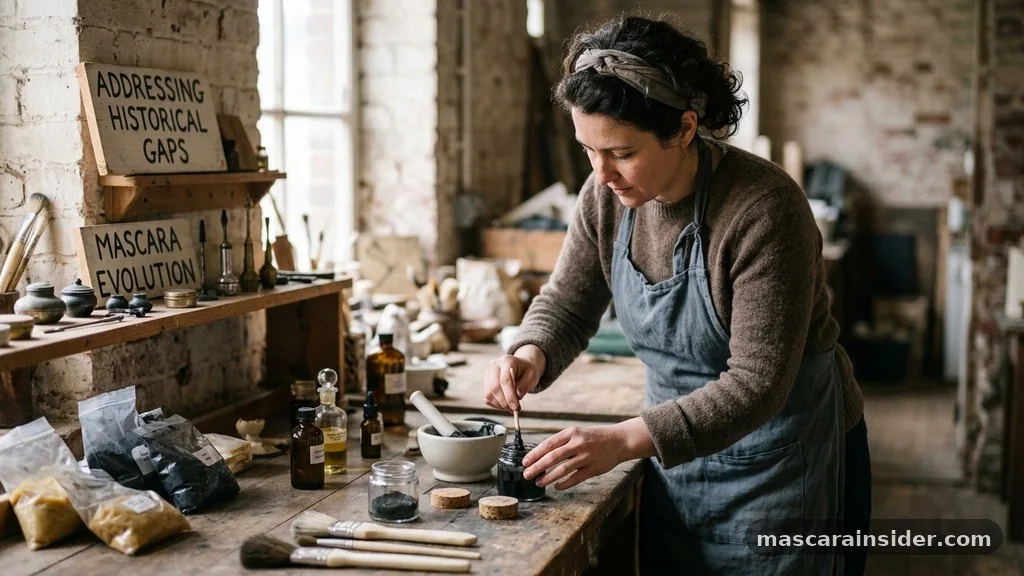
Many people ask why the transition from cake formulas to liquid tubes took so long. This gap in the beauty industry history was primarily driven by technological limitations in packaging.
While the formula existed, the challenge was designing an applicator that wouldn’t dry out the product or leak in a handbag. It wasn’t until the late 1950s that manufacturers perfected the mascara wand as we know it today.
Before this, the brush and the product were separate, which was inconvenient for daily use. By integrating the applicator into the cap, brands created a “ready-to-go” cosmetic that fundamentally changed how women applied makeup on the move.
Evolution of the Mascara Wand
The transition from a separate brush to the integrated wand was a turning point for the industry. Early wands were often made of stiff bristles that could clump, but as chemistry advanced, so did the design of the brush itself.
- Early wands utilized natural hair bristles for better product pickup.
- Synthetic bristles were later introduced to prevent bacterial growth.
- Modern silicone brushes allow for precise separation and lengthening.
- Curved wands were engineered to better fit the natural arc of the eyelid.
- Micro-brushes were developed for lower lashes and inner corners.
These design improvements ensured that the pigment was distributed evenly across every lash without causing the clumping issues that plagued early users. Today, the shape of the brush is just as important as the formula itself, with specific designs catering to volume, curl, or definition.
Technological Advances in Modern Formulas
Contemporary mascara is a marvel of modern chemistry. Unlike the simple petroleum and carbon mixtures of the past, today’s products contain complex polymers, waxes, and conditioning agents. These ingredients are designed to be long-wearing, water-resistant, and gentle on the eyes.
Manufacturers now prioritize safety through rigorous testing, ensuring that the pigment used is safe for sensitive ocular tissue. The shift from coal-based products to mineral-derived pigments has also reduced the risk of irritation. Furthermore, brands now include lash-strengthening ingredients like panthenol or biotin, transforming mascara from a purely decorative product into one that also cares for the health of the lashes.
FAQ: Common Questions About Mascara Origins
Who made the first mascara?
Ancient Egyptians were the first to use dark substances like kohl to darken eyelashes for cosmetic purposes.
Was mascara originally made for men?
Yes, ancient men used eye-darkening agents, though it was primarily for spiritual protection and sun glare reduction.
Why is mascara named mascara?
The term likely stems from the Spanish word “máscara,” meaning mask, referring to the way it hides features.
Did mascara exist in the 1800s?
Yes, Eugene Rimmel developed a commercially available, non-toxic version during the 1870s for the London market.
Who invented the mascara wand?
Helena Rubinstein is credited with introducing the first wand-in-tube mascara, known as “Mascara-Matic,” in 1958.
What was the original Maybelline product?
The original product was a solid block of Cake Mascara that required a wet brush for application.
How has mascara chemistry changed?
It evolved from simple carbon and petroleum mixtures to sophisticated blends of polymers, waxes, and lash-conditioning nutrients.
Refining the Future of Lash Cosmetics
The history of who made mascara highlights our enduring desire to enhance the eyes. From the crude, protective rituals of the ancient world to the precise, polymer-rich formulas of the modern beauty industry history, the product has consistently adapted to the needs of the time. Whether you prefer a dramatic, volumizing look or a subtle, defined finish, the evolution of this cosmetic reflects a broader trend of combining safety with performance.
As we look toward the future, it is clear that innovation will continue to drive the category, focusing on sustainable ingredients and even more ergonomic applicator designs. Understanding where these products come from gives us a better appreciation for the simple tube of color we often take for granted.
Next time you reach for your favorite lash enhancer, consider the centuries of chemistry and creativity that went into its development. Feel free to share your thoughts on your favorite types of mascara in the comments below.


