

Knowing how long is mascara good for is essential for anyone who wears eye makeup regularly. Because the eyes are incredibly sensitive and prone to irritation, the products we apply near them require a higher standard of care than those used on the rest of the face. Unlike powder-based products that can last for years, liquid formulas stored in dark, damp tubes create the perfect environment for unwanted growth.
By understanding the specific timeline for replacement, you protect your vision and maintain the quality of your cosmetic application. This article breaks down the science behind product degradation and provides actionable tips to keep your routine safe.
Understanding the Standard Mascara Shelf Life
The general consensus among beauty experts and dermatologists is that you should replace your mascara every three months. While some high-end brands might claim their formulas remain stable for longer, the three-month rule is the gold standard for makeup hygiene. This timeframe is not arbitrary; it is based on the reality of how these products are used.
Every time you pull the wand out and push it back in, you are pumping air into the tube. This process introduces oxygen and potential contaminants, which gradually degrade the preservative systems designed to keep the formula stable.
Most people don’t finish a tube of mascara in ninety days, which often leads to the temptation of keeping it longer. However, the product’s shelf life is determined more by the frequency of exposure to the outside environment than by how much liquid remains in the container. Once the seal is broken, the clock starts ticking immediately.
Even if the product still looks and smells fine, the chemical composition begins to shift. Sticking to a strict quarterly replacement schedule is the easiest way to avoid the risks associated with aging cosmetics.
Interpreting the PAO Symbol on Packaging
If you look closely at the back of your makeup packaging, you will often spot a small icon shaped like an open jar with a number and the letter “M” inside. This is the PAO symbol, which stands for period after opening.
This symbol is a manufacturer’s guide indicating how many months the product is considered safe to use once the seal is broken. For most mascaras, you will see “3M” or “6M,” suggesting a useful life of three to six months.
It is important to treat this symbol as a maximum limit rather than a suggestion. While a manufacturer might test a formula and determine it remains stable for six months in a controlled laboratory, your bathroom is not a lab. Variations in humidity, temperature, and your personal application habits can significantly shorten this window.
When in doubt, always default to the shorter timeframe. Relying on the expiration date printed on the box is only helpful if you remember the exact day you first twisted the cap off, so writing the date on the tube with a permanent marker is a clever trick for those who lose track of time.
The Risks of Bacterial Contamination
The primary reason we worry about how long is mascara good for involves the risk of bacterial contamination. Mascara is a wet, nutrient-rich substance that provides an ideal breeding ground for microorganisms.
Every time the wand touches your lashes, it picks up skin cells, oils, and bacteria from your eyelid and transfers them back into the tube. Over time, these microbes multiply, turning a simple beauty tool into a potential source of irritation or infection.
Common pathogens found in old eye makeup include Staphylococcus epidermidis and various types of fungi. When these organisms are introduced to the eye area, they can cause conditions like conjunctivitis, also known as pink eye. Symptoms of an eye infection often include redness, itching, swelling, and discharge.
In severe cases, a persistent infection can damage the delicate tissues of the eye or even impact your vision. Because the eyes lack the thick skin barrier found elsewhere on the body, they are uniquely vulnerable to these types of contaminants.
Identifying Signs of a Dried Out Formula
Aside from the health risks, there is also the issue of product performance. A dried out formula is one of the most common signs that your mascara has reached the end of its useful life.
As the solvents in the mascara evaporate, the texture changes, becoming thick and difficult to apply. You might notice that the product no longer glides smoothly onto your lashes but instead leaves behind a clumped texture that looks uneven and spiky.
If you find yourself having to work harder to get the desired look, or if the mascara starts flaking off under your eyes throughout the day, it is time to toss it. Trying to revive a crusty tube by adding water, oil, or eye drops is a major mistake.
These additives can disrupt the chemical balance of the product, effectively neutralizing the preservatives and creating a “soup” that encourages even faster microbial growth. Respecting the lifespan of the product ensures that your makeup application remains smooth, effortless, and professional-looking.
Proper Cosmetics Storage for Longevity
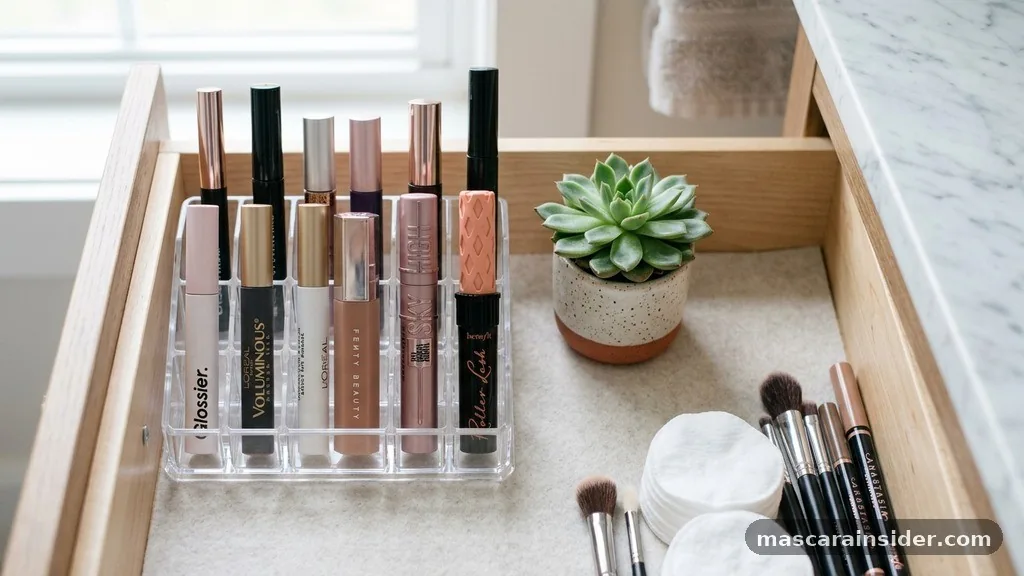
How you store your beauty products plays a massive role in their longevity. Many people keep their makeup in the bathroom, which is ironically the worst place for it. The fluctuating temperatures and high humidity levels from showers create a climate that accelerates the breakdown of chemical formulas.
To maximize the life of your mascara, you should store it in a cool, dry place away from direct sunlight. A vanity drawer or a bedroom makeup organizer is much better than a steamy bathroom cabinet.
Keeping the cap screwed on tightly is also a non-negotiable habit. Air exposure is the enemy of liquid makeup; the more air that enters the tube, the faster the product will thicken and become a magnet for dust and bacteria.
Never share your mascara with friends, as this is the fastest way to cross-contaminate your product with someone else’s unique bacterial flora. If you are prone to eye infections, you should be even more diligent about these storage habits and perhaps consider switching to travel-sized tubes that you can finish before they have a chance to go bad.
Expert Advice from an Ophthalmologist
When discussing the health of your eyes, it is always best to listen to an ophthalmologist. These medical professionals see the consequences of poor makeup habits firsthand. They often emphasize that the eyes are a mucous membrane, making them highly susceptible to foreign substances.
An expert will tell you that the preservatives in mascara are only effective for a limited duration. Once those chemicals break down, the protection they offer against bacterial invasion disappears.
Many eye doctors recommend that if you have recently recovered from an eye infection, you should immediately discard all eye makeup that you were using at the time of the infection. Even if the mascara is brand new, it is likely contaminated with the bacteria that caused the issue.
It is better to spend a few dollars on a new tube than to risk a recurring infection. Taking this professional perspective into account helps reframe mascara usage as a matter of ocular health rather than just a cosmetic choice.
Comparing Different Types of Mascara
Not all mascaras are created equal, and some formulas may expire faster than others. For example, natural or organic mascaras often lack the strong synthetic preservatives found in conventional brands.
While these products are better for the environment and potentially less irritating for sensitive skin, they tend to have a shorter cosmetic shelf life. You should be extra vigilant with these types of products.
| Mascara Type | Typical Lifespan | Key Considerations |
|---|---|---|
| Standard Synthetic | 3 Months | Check for clumping or odor. |
| Natural/Organic | 1-2 Months | Lacks strong preservatives; use quickly. |
| Waterproof | 3 Months | Often contains more solvents; dries out fast. |
| Travel-Sized | 1-2 Months | Ideal for frequent replacement. |
As shown in the table above, the formula type dictates your replacement strategy. Waterproof formulas often contain different solvents that can evaporate quickly if the cap isn’t perfectly sealed. Meanwhile, travel-sized mascaras are a fantastic option for those who don’t wear makeup every single day, as they allow you to follow the three-month rule without feeling like you are wasting product.
Addressing Common Topical Gaps
There is often confusion regarding whether unopened mascara has a different expiration timeline. If you have a backup tube sitting in a drawer, it is generally safe for much longer than an opened one, provided it is kept in a cool, dark environment.
Most unopened cosmetics are stable for two to three years. However, once the factory seal is broken, the three-month rule applies regardless of how long it sat in your drawer previously.
Another gap in common knowledge is how to tell if a product is “off” without visible signs. Sometimes, mascara doesn’t look clumpy or smell strange, but it can still be teeming with bacteria. You cannot always rely on your senses to detect microscopic contamination.
If you have had the product for more than three months, you should discard it as a precaution, even if it seems to be performing perfectly. Relying on time rather than appearance is the safest approach for your long-term health.
Developing Healthy Makeup Habits
To wrap up, maintaining healthy eyes while enjoying beauty products requires a consistent routine. Here are a few simple habits to adopt to ensure your mascara remains safe throughout its life:
- Always wash your hands before applying makeup to prevent transferring finger bacteria to your lashes.
- Avoid pumping the wand in and out of the tube, as this forces air into the container and dries out the formula.
- If your mascara develops a sharp, chemical, or “off” smell, throw it away immediately.
- Clean the wand periodically if you notice dried product buildup on the bristles.
- Never apply mascara while in a moving vehicle, as you risk scratching your cornea.
- Replace your mascara after any eye infection or bout of conjunctivitis.
By following these guidelines, you can enjoy your beauty routine without compromising your health. Knowing how long is mascara good for is a small but vital part of self-care. It keeps your eyes clear, your vision sharp, and your makeup looking its absolute best every single day.
Taking these precautions might seem like extra work, but the payoff is a safer, more hygienic approach to your daily beauty rituals. Remember that your eyes are irreplaceable, so treat them with the care they deserve by being mindful of the products you apply to them.
Frequently Asked Questions
Can I use 4-year-old mascara?
No, you should never use four-year-old mascara; it is likely heavily contaminated and will cause severe irritation.
Is it safe to use 20-year-old makeup?
Absolutely not; makeup that old poses significant health risks and has likely degraded into a chemical hazard.
Is it okay to wear expired mascara?
Wearing expired mascara increases your risk of bacterial infections, corneal scratches, and chronic eye irritation or redness.
How do you know when to throw out mascara?
Throw it out after three months, if it smells strange, or if the texture becomes thick and clumpy.
How long does mascara last with daily use?
With daily use, most standard-sized tubes of mascara will last between two and three months before drying out.
What happens if you use old mascara?
You may experience itching, burning, discharge, or a serious eye infection that requires medical treatment from a doctor.
How long is unopened mascara good for?
Unopened mascara is generally safe for two to three years if stored in a cool, dry, dark environment.


